Focused on story structure, I was recently discussing tactics other than the usual chronological structure with some other writers. It was an interesting discussion of not only how to use these, but some general thoughts on these devices.

Past prologue:
This is a device detailing an important event that happened in the past and has effected the current situation.
This is one of the most common non-chronological devices used in fiction, and the first one that comes to mind for me is the first chapter of “Harry Potter and the Sorcerer’s Stone.” It’s not listed as a prologue, but it happens ten years prior to the next chapter, so it’s really a prologue.
This gives the reader enough information about the situation to get them interested, but it doesn’t infodump everything the reader needs to know to dive into chapter two. It only gives enough background to let the reader know something strange and interesting, and quite dangerous, is about to happen.
Past prologues can be overused and can end up being very tell-y and not show-y enough. Use them with caution and with purpose!
Future prologue:
This device details a tension-filled or dramatic future event meant to capture readers’ attention.
One of the writers in the discussion mentioned that she doesn’t like future prologues because she finds them very jarring as a reader. She felt a prologue should naturally be something that happens before the main story. Another writer mentioned these have been very popular lately and are beginning to feel overused and a bit annoying.
Laini Taylor’s “Strange the Dreamer” was mentioned as a good example of a future prologue because it reads, at first, as if it’s a past prologue. As the reader continues on, they realize that isn’t the case and this realization causes more worry and tension for the reader.
Alternating timelines:
When using this device, past/present or present/future timelines alternate between different characters or the same character in different time periods.
“As Long As Love Lasts” by Jea Hawkins was mentioned as a good example of alternating timelines. The story shows a relationship on the edge of collapse then alternates to the story of an aunt and how a relationship ended for her. The house connects the two storylines, and the aunt’s story helps to inform the reader about the couple’s failing marriage.
Flashbacks:
Flashbacks break from the current story to tell of an event that happened in the past as a complete scene.
Slaughter’s “The Good Daughter” was mentioned as a good example of flashbacks. The timeline flashes back to an event from the two sisters’ childhoods, then later flashes back to the same scene and telling it from the other sister’s perspective. This allowed for more detail and seeing the event from multiple perspectives.
Parallel timelines:
This type of timeline device tells two stories chronologically in different time periods. Both move forward together and inform the other.
I recently read Amy Harmon’s “What the Wind Knows” and loved how she handled the timeline changes. It wasn’t a traditional parallel timeline, but at the same time it was. Without giving away too much, I really enjoyed how multiple timelines were in play simultaneously and they all came together at the end really beautifully without any confusion or lingering questions.
Time jumping:
This is when a character moves through different time periods. Scenes are connected in some way and inform the other scenes.
“The Kept Woman” by Karin Slaughter was mentioned as a good example of a time-jumping story line. The first half of the book investigates a crime, and just when the reader thinks they’re beginning to put all the pieces together, the timeline jumps to before the crime and progresses forward through the events from a different perspective.
 Writers work in a variety of situations: work from home full time, work outside the home and work from home part home, work full time outside the home and fit in writing on lunch breaks and down time, and on and on. Achieving a work-life balance that works is often a challenge.



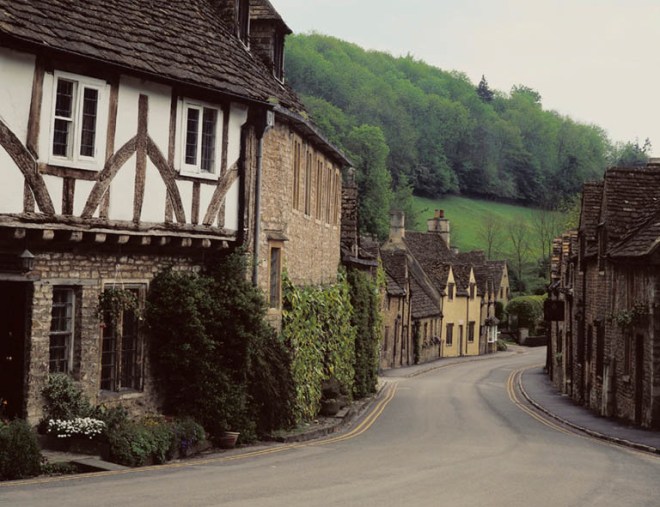 Creating a fictional town is definitely the most involved type of worldbuilding in contemporary realistic fiction. You’ll draw from real places with the goal of developing something new and interesting. A huge benefit of making up a location is that you aren’t bound by anything. Another benefit is that you won’t spend hours researching a real place and worry about whether you’ve portrayed it correctly. A fictional location allows you to build the exact setting you need to develop your plot and characters.
 Start off based in reality. For those who’ve watched Twin Peaks and paid attention to the opening credits, the welcome sign claims the town has 51k people, yet everyone knows each other and there seems to be only one restaurant. Take the time to research town sizes and amenities in order to make sure everything lines up.
 Whether you’re creating a fictional town or using a real town, you still need to develop the small-scale details of the neighborhood or apartment building your characters inhabit.
 Thinks Friends when you’re creating your characters’ daily habits and local haunts. Who’s apartment/house does everyone tend to hang out at and why? What features make it desirable? When they’re out and about, where do they often stop for coffee or to catch up, and how does that environment help the story? If characters need a quiet place to trade secrets or go over plans, a busy, noisy coffee shop might not work as well as a used bookstore.
 Similar to building a neighborhood, it’s important to develop the work or office life of a character. How much it needs to be developed depends on how important it is to the story. If a character has social anxiety, a busy and fast-paced office will provide conflict. If a teen character is itching for excitement but works at an outdated video rental store only a few old people visit every week, that also provides conflict. If work is only mentioned in passing to acknowledge that the character does indeed have a job, minimal development is needed beyond the fact that it eats up a large portion of their time and provides an income.
 A very important, overarching detail to develop is how your MC relates to the world. This is most often going to develop from backstory. Some writers develop the backstory first while others let it come to light as they write. The important thing about backstory is that it forms a starting point for your character and helps determine an end point.
 I’ve been editing a young adult project I wrote a few years back and never got back to, and it reminded me of a comment I saw on social media a while back about whether YA is an age group or a genre.
 This past February I started a job as an editorial assistant at a local newspaper. I’ve been writing since I was a teen, and got started publishing fiction almost ten years ago, but journalism is a whole new world of writing for me. I’ve learned a lot so far, some writing-related and some just plain interesting.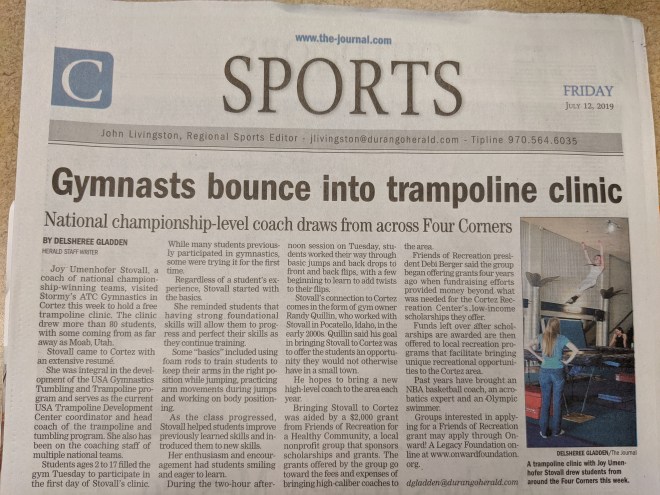
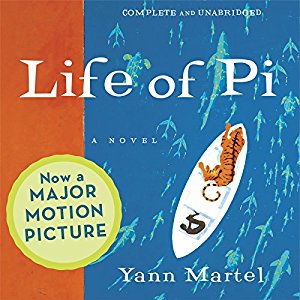 For those who haven’t read or seen Life of Pi, it’s about a young man who survives his ship sinking in the middle of the sea during a journey from India to Canada. He makes it to a life boat, but finds himself in the company of several of the zoo animals his family was transporting…including a Bengal tiger named Richard Parker.
 Infodumping is often a struggle for writers who do in-depth research for a book. You found out all these awesome things about whatever and now you HAVE TO SHARE THEM ALL! Unless you are writing a non-fiction book about your topic that is meant to give a detailed history of whatever, please, please, please for the love of all things bookish DO NOT vomit up every seemingly fascinating tidbit of research you uncovered while preparing to write your book.
 I also struggled to listen at length to the religious discussions, which I usually enjoy quite a bit. I think religion is a fascinating topic and enjoy learning about many different religions. What I didn’t enjoy was, again, too much straight information that took me away from the story, and the sometimes condescending way the information was presented. I don’t hold with any particular religion, but I was still bothered by the sense I got that if a reader didn’t agree with the author’s opinions on eating meat, practicing multiple religions at once, or who or what God or gods might be they were simply wrong or not as smart as the author. I enjoy learning about how others view God, religion, the Universe, etc., but in a way that invites thoughtfulness rather than looking down on others’ beliefs or viewpoints.



 After running a half marathon, I take a good couple weeks (or maybe a month) off from running. It’s time for yoga, core work, maybe a little biking. My body needs to recover, and honestly so does my motivation.
 You’re not the only one who makes mistakes. We all do. While I was on a panel at Denver Comic Con last year, we were all asked what was the biggest mistake we ever made in a book. Jim Butcher was on that panel as well (which was seriously the highlight of that entire weekend!) and he said when writing the early Dresden Files books, he didn’t have the income to visit Chicago, where the books are set, and wrote a scene with characters meeting in the parking lot of the baseball stadium. Problem was, that stadium was built before the majority of people had cars. Hence: it has no parking lot.