Story Structure: 3-Act Structure

One of the most commonly taught and used story structures in the 3-Act Structure. In this post I’ll break down each act and what should be in it.

Act 1 – The Beginning

Act one compromises about the first 25% of the story and has three main parts.

  • Introduction: The introduction should establish who the main characters are and what their “normal” life looks like at that point in time.
  • Inciting Incident: The inciting incident presents a situation that will prove to be a catalyst for change and which will set the story in motion. In a romance novel, this is usually the meet-cute.
  • Plot Point 1: This first major plot point will introduce the central conflict and present a call to action for the character. The character(s) then react to the inciting incident and call to action, usually accepting the call and setting themselves on the path of the story and character arcs.

Act 2: The Middle

Act two compromises about the middle 50% of the story and contains the bulk of the plot.

  • Confrontation: During the confrontation, the main character faces the first obstacle to achieving his or her desire or goal. In a romance novel this is often something that will prevent a real relationship or keep the main character’s apart, either physically or emotionally.
  • The midpoint: At the midpoint, the main character faces the central conflict in some way. The realization causes a change in the character. This is often a revelation about the self, information about another character, shocking news, reflection on the main conflict, etc.
  • Rising action: During the rising action, the stakes must rise for the main character, building up to the central conflict he or she must face. This is usually achieved through subplots and new information about the central conflict.
  • The second plot point: This is the highest point of tension. It is a crisis that makes the desired ending seem impossible. This should use high emotion to engage the reader and make them concerned for the character. This MUST be believable enough to make the reader think a happy ending may not be possible. This should be big enough that it can’t be resolved easily.

Act 3: The End

Act three compromises the last 25% of the story and contains the worst moment for the characters as well as the resolution or climax and the final ending.

  • Pre-climax/darkest night: In this blackest moment, the character faces the possibly of not achieving their goal during a final clash with the antagonist and deals with the fallout of the crisis The character may realize a new goal that will help them move past the crisis (often alone).
  • Resolution/Climax: This is the final moments of the main conflict where it is resolved by providing an answer to the main problem/conflict. This is normally a single scene, but may extend to several scenes if the resolution/climax is complicated or involves interactions with multiple characters.The main conflict’s resolution MUST be believable and not a simple misunderstanding. The solution should be real and still have an element of risk. The benefits of taking the risk should outweigh staying safe.
  • Denouement:This final ending fulfills all promises to the reader. Make sure to tie up loose ends, answer questions, underscore the theme, in order to leave the reader satisfied.

There is, of course, room to make changes or try new tactics within a 3-Act story structure, but it is still important to make sure you hit all the main elements in some fashion.

Story Structure: Overview

This series will talk about how to structure a story that keeps the reader’s attention and tells a story in the best possible way.

The Basics of Story Structure

Exposition/Introduction

This is where you will introduce the characters, establish the setting, and present the primary conflict. All of this generally happens in the first few chapters or the first act. The goal is to orient the reader in the characters’ lives before you begin adding any major conflicts.

This helps the reader connect with the characters so they will be invested in the outcome of their story. If a reader can’t connect with the main character(s), there’s a good chance they will stop reading. The setting should also be relevant and interesting, so they character appears to be existing in a real world (whether realistic or fantastical).

It’s also important to give readers a good idea of what the main problem is that the characters(s) is dealing with so they know what type of story they are reading and what the character(s) must overcome. This sets up the reader’s expectations for the rest of the story.

Rising Action

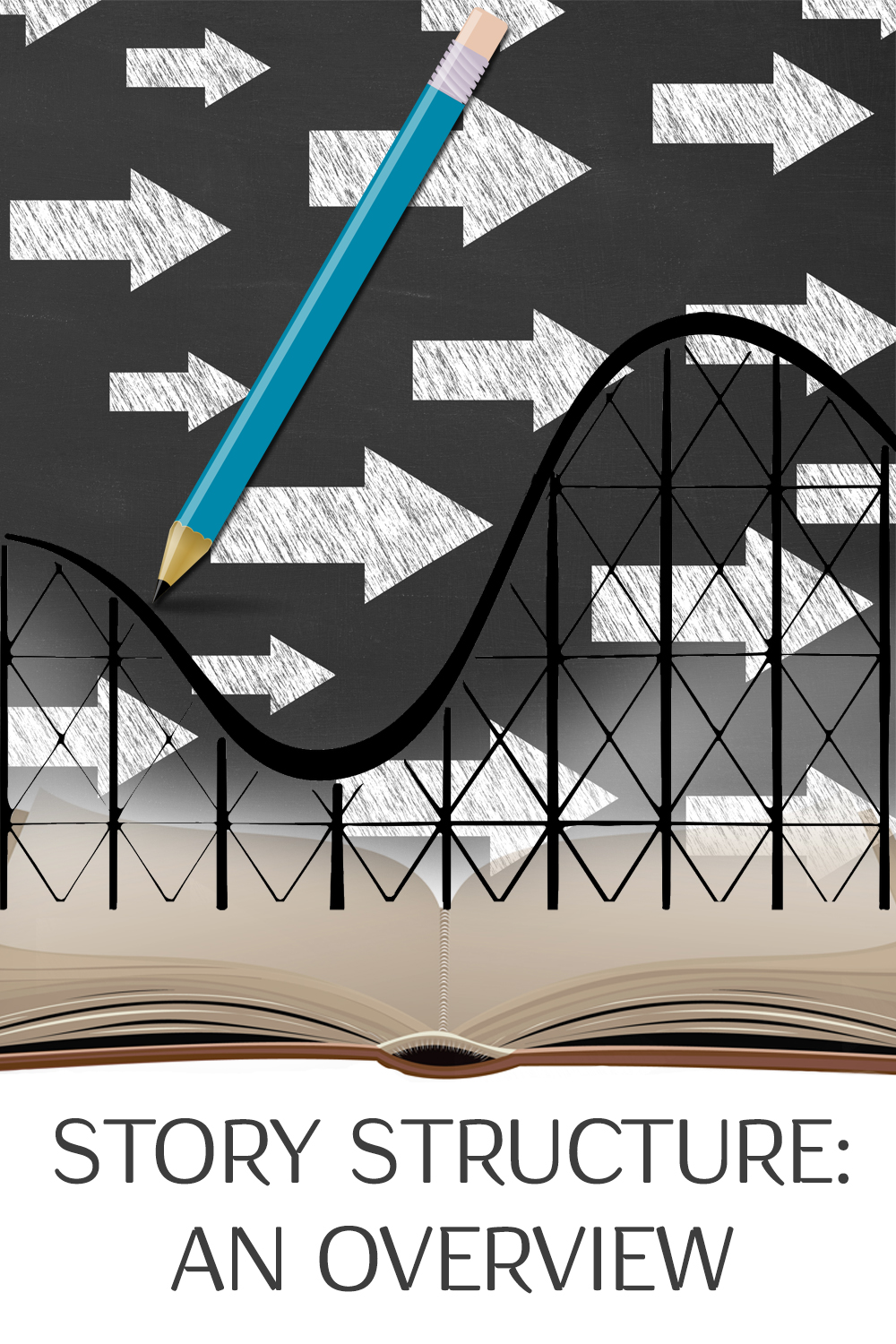
This section is where you should introduce the primary conflict and set the main storyline in motion. This should follow with the expectations you set up for the reader during the introduction. Succeeding events become more complicated as the story proceeds, creating stumbling blocks, tension, interest, and excitement.

Rising action isn’t a straight line, however, so problems and complications should be interspersed with moments of calm, reflection, or positive movement. The action will continue to rise overall, but with dips along the way. This gives the reader a break and allows time for reflection and thought.

Climax

This is the major turning point of the story. All the problems and complications established during the rising action will come to a head. There is high tension and conflict, and stakes are at their highest. The risk that things might not turn out should feel real to the reader, even if they know deep down that everything will turn out the way they are hoping.

This is often a moment of crisis that leaves the reader wondering what will happen next. If you are writing a romance, the reader expects there will be a happily ever after ending. You likely won’t get the reader to really think a happy ending is out of the question, but the goal is to make them doubt the how of how that happy ending will be reached. This heightens a reader’s investment in the outcome and deepens the connection with the characters.

Falling Action

After the climax, the story begins to calm down and starts working toward a satisfying ending. Characters decide what action to take to resolve conflict. These decisions and actions should be realistic and somewhat surprising. Easy and predictable resolutions tend to fall flat and disappoint readers. Make sure all the loose ends are tied up, explanations are revealed, and the reader learns more about how the conflict is resolved.

Resolution

At this point, the main conflict is resolved and the book ends. The story, however, should have the illusion of continuing on beyond the page. This is true even if the book is a standalone and will not have a continuation. Give the reader a chance to imagine how the characters’ lives play out. This adds to the satisfying quality of the ending.

Marketing Primer: Author Platform Basics

It’s never too early to start building your author platform and marketing base. This week, we’ll do a deep dive into what an author platform is and how to use it.

What is an Author Platform?

An author platform is a writers public face

An author platform brands the author, NOT the book. Set up your social media accounts and fan pages under your author name instead of your book or series name. It will save you from trying to manage multiple accounts or pages, or from being difficult to find.

An author platform presents you as an expert in your field. Many writers balk at this because most of us feel we fit the meme of an author knowing a little about everything but is a master of nothing. The truth is, you are the expert of your book and your characters. Start there and expand your expertise.

An author platform is also a means through which to share your message with your target audience. The more fans you accumulate, the more quickly and easily you can disseminate information about you and your books to an interested audience.

An author platform tells readers what makes your work unique. Your platform should reflect your personality and the aspects of your writing that set you apart from other writers.

An author platform implies a promise of quality. Always make sure you are putting out quality products, images, information, etc. Present yourself online as a professional and release professional quality work.

An author platform says something about you as an author. What keeps you writing? What fills your spare time (if you can find any)? Share more than just your books. Share your writing process and experiences in publishing. Remember that you’re building a community with your platform, not just a customer base.

What does an Author Platform do?

It gives authors an opportunity to shows their personality to their readers. In today’s interconnected world, readers want to know their favorite writers. It adds to their reading experience to have some insight into who wrote the book.

It fosters relationships with readers, turning casual fans into super fans who will help promote you and your work. Friendships are also developed which can help authors feel more engaged with the reading community.

It establishes expertise as an author, writer, and whatever other areas of knowledge you have to share. If you write police procedurals, share some of your research. If you write a character who likes to cook, share recipes. Create a world for readers to explore with you.

It builds communication with readers and opens up opportunities for feedback, help, and encouragement. Many writers get bogged down with deadlines, stuck in the middle of a manuscript, or overwhelmed by life. Open up a dialogue with readers.

It creates community with other writers and with readers. Writing can be a lonely endeavor. Use your platform to gather similarly minded book lovers to talk to and engage with.

It builds visibility and extends reach. The more you build your author platform, the more eyes you will have on your books. Engage regularly to encourage readers to do the same. The more welcome a person feels in a group, the more likely they are to invite others to join or talk about how much they enjoy participating.

Use your author platform to build an community of interested readers.

Indie Author Basics: Business

Making the move from hobby to business requires treating your writing like a business.

Disclaimer: I am not an accountant or business advisor. I’m simply sharing a few things I’ve learned over the past decade. Always consult industry professionals before making business decisions.

How to make Writing a Business

Schedule/consistency

Set a doable schedule and plan as far in advance as possible.

Write and market on a consistent schedule to keep readers interested. This is important to your success as a writer, and to being able to claim your writing as a business for tax purposes. U.S. Fderal tax laws have specific rules for claiming a business vs. a hobby. Talk to an accountant for more details.

Planning

Set up a doable schedule and plan releases, marketing events, newsletter schedules, and blog schedules according to the time, energy, and ability you have at this point in your life. Plan as far ahead as possible so you’re not always scrambling last minute to find content or submit deals or newsletter spots.

Expert Advice/Help

Ask for expert or professional help when you need to learn more about a topic.

Ask other writers or writing professionals about things you are unfamiliar with or don’t understand in order to avoid mistakes that could hurt your career or slow you down. Most writers are very willing to help. The indie writing community is wonderfully supportive in most cases. Research as much as possible (The Write Life, ALLi, Jane Friedman, Udemy, etc.), but then ask question about things you aren’t sure about or need help with.

Laws/Taxes

Find a professional familiar with self-employed creative arts businesses or LLCs. Royalties have specific rules that not all accountants are familiar with. If you know local authors or artists, ask for recommendations.

Learn about options for business setup and associated laws/taxes/liability. If your town has a local Small Business Center, set up an appointment and start learning. They have a lot of knowledge and a wide variety of contacts to help you.

Profit

The IRS has specific definitions of a business (purpose is to make a profit, it is engaged with continuity and regularity, etc.). You need to meet these requirements in order to claim your writing as a business for tax purposes. Again, consult a professional for advice on this!

If your business is reclassified as a “hobby” you will lose deductions, among other repercussions. Don’t begin claiming writing as a business until you can show at least some profit. You will be required to show a profit on a regular, yearly basis to keep from having your writing being reclassified as a hobby.

The goal of a business is to make a profit, which should be kept in mind when it comes to tax classifications.

Indie Author Basics: Responsibilities of an Indie Author

Without a traditional publisher, what do indie authors need to handle on their own?

The list may be long, but it doesn’t have to be overwhelming. Breaking everything down can help you decide which tasks to learn to do yourself and which to hire out.

I’ll break these down in the coming weeks, but here’s a broad list of what indie authors devote their time to when not writing:

Production costs

These costs include editing (developmental, copy editing, proofreading), cover design, formatting, setup, distribution fees. Next week, I’ll break down costs for each of these as well as options for reducing the overall cost of book production.

Marketing

Marketing includes building a plan and carrying it out, learning about paid advertising and booking ads, setting up and managing social media accounts, participating in online and in-person events, writing and sending out press releases, and much more.

Networking

When it comes to networking, it’s important to engage with the author community, join groups and lists, make friends for support, find beta readers or critique partners, and learn from others in the industry.

Collaborate

Collaborations that are popular right now include box sets, worlds, promo groups, etc. These collaborations help authors expand their audience and reach, as well as learn more about marketing and promotion.

Reaching Out

Reaching out to media, stores, businesses, etc. is part of marketing, but for many people it’s a different skill than interacting on social media or booking ads. Different types of stores have different requirements for booking an author signing, and bookstores aren’t the only option for signings. Learning how to approach a business, radio station, newspaper, etc. the right way can make a difference in being accepted.

Events

Without an agent or publisher, indie authors are often responsible for organizing their own signings, publicity events, participation in books fairs, speaking engagements, conferences, etc. Learning about what types of events are worth while, how to get involved, or what type of classes to submit to a conference can help you make solid plan.

Over the next few weeks I’ll be discussing each of these topics in more detail. Follow the blog to make sure you don’t miss a topic!

Indie Author Basics: What is an indie author and is it right for you?

What is an indie author?

An indie author is a writer who self-publishes to sell their work, who approaches publishing as a business, who retains all or most rights to their work, and who retains creative control over their work.

Authors today have many more publishing options than they have in the past. The three most common are traditional, indie, and hybrid. What are the differences between being a traditional, hybrid, and independent author?

Traditional: Contract with a publisher to have a book published. Sign over some or all rights to the work for a specific period of time. Most production decisions are made by the publisher. Publishers bear the cost of production and some marketing. Royalties are shared between the publisher, agent (if there is one), and the author.

Indie: Self-publishes all their books. Retains all rights to their work. Earns higher royalties. Author bears productions costs and marketing costs. Retains full creative control. Approaches writing as a business/career.

Hybrid: Publishes through a publisher and self-publishing. At least one book is self-published. Has a non-exclusive contract with a publisher, or self-publishes books that have been passed on/release by the publisher using a right of first refusal clause. Indie titles may be backlist books released from contracts.

When considering which option is right for you, consider some of the following questions:

What aspects of publishing can you learn to do yourself?

What aspects will you need help with?

How much of your royalties are you willing to give up in exchange for help?

How much time to do you have to commit to publishing?

How much creative/production control do you want?

What rights are you willing to give up and for how long?

There is no one-size-fits-all answer to publishing and deciding on a publishing route should be well thought out.

Next week, we’ll talk about some of the responsibilities indie author take on to build their career.

Lessons Learned: Brave New World

I just finished listening to Brave New World by Aldus Huxley and there were three main lessons I took away from the book.

Those who aren’t familiar with the novel should know a few things. It was published in 1932 and is a dystopian fiction novel set in largely London and, for a brief period, in a Native American reservation in New Mexico. The story explores themes of society vs. the individual, passion vs. stability, and the price of happiness.

Lesson 1: Use unique structure purposefully

In the early chapters, Huxley has a section where the Controller is explaining the dystopian world to the reader through a tour he’s giving to research students visiting a fertilization factory.

During this explanation, there are insertions of other character’s points of view, sometimes breaking in after only a few lines or mid-sentence. At first, the style was very distracting, especially since I was listening to the book and didn’t have visual cues of the shifts. The patched together structure was interesting, though, because as the Controller is explaining the process of creating humans ideal for their society, the reader is given examples of how these methods control the behavior of individuals.

If you choose to use a unique structure in your writing, make sure there is a good reason for it, or it may only serve to confuse or distract readers.

Lesson 2: Don’t preach to readers to get a point across

I have a personal dislike for preachy books, probably because I grew up in a very religious household and had more than enough of that growing up.

If you have a particular point or philosophy you want to share with readers, do so through the characters and story and NOT by directly telling them what the right way or answer is. Let them discover the idea or answer by experiencing the story.

Huxley does this very well in this book. The Controllers and other characters do, at times, directly state the theories and philosophies of the society, however there is always a skeptical character to give the reader another point of view or at least make them question the legitimacy of the concept.

Each of the four main characters have viewpoints that differ from the main society in different ways as well, so the reader isn’t inundated with only one character’s arguments or ideas. Each character is also given a strong reason for seeing things differently, so their struggle with society feels genuine and unforced.

As the reader, there were times it was hard to decide which idea or concept was “right” or “better” because Huxley did such a good job of showing both sides of an argument. Instead of telling the reader how to think, the story asks reader to thoughtfully consider the philosophies presented and decide for themselves.

Lesson 3: An unsatisfying ending can work when the story calls for it

Just as there were times while reading that I couldn’t fully commit to one side or another of an argument or philosophy, I couldn’t really think of a way the story could end in a satisfying way because the issues were too big to be wrapped up simply and easily.

Maybe Huxley felt the same, or maybe his purpose wasn’t to provide answers (which I think is very likely), because the book doesn’t have a satisfying end in the sense that any of the issues are solved. A few of the characters find relatively acceptable ends but, for the most part, story aspects are left either unhappy or up to the reader to puzzle out.

It didn’t bother me to have the book end like this, though, because a neatly wrapped up ending where everything was solved would have felt manufactured and trite. The purpose of the novel seemed to be to get readers to think more deeply about how individuals and society have to reach a balance, what it means to be happy, whether passion and stability can coexist, and who or what should set moral and ethical boundaries.

A story doesn’t need a satisfying ending if the purpose is to leave readers unsatisfied enough to keep thinking about the problem and the possible solutions.

Why worldbuilding is important in all genres

Fictional settings, whether modern in the real world, sci-fi, fantasy, or paranormal, require some level of worldbuilding.

The world your character lives in should have an impact on the story

Setting should transport the reader to that location and not feel like it could have taken place anywhere. Worldbuilding is creating a fictional world that still feels realistic.

Details make all the difference in worldbuilding, and keep a setting from feeling generic. Highlight unique and quirky elements and integrate them into the storyline and character profiles.

When worldbuilding, consider which of these will be relevant to the story:

Layout and geography, what lies beyond the immediate setting, politics, laws, and governing systems, culture and traditions, weather, local plants and animals, jobs, economy, imports/exports, history, enemies, and allies, folklore and urban legends, details only locals would know, and the hero’s feelings and opinions about the place.

All of these will affect the character’s views, way of thinking, actions, choices, and lifestyle.

Details make the difference in worldbuilding, whether high fantasy or the corner coffee shop. However, the level of detail depends on the genre.

Unless the color of every mug in a coffee shop is relevant to the story, leave it out. Developing an intricate system of magical spell-creation requires a higher level of detail so the reader can understand the process.

Details MUST be relevant, no matter the genre.

What characters eat can indicate location (coleslaw on pulled pork sandwiches in the south), income (another Ramen noodle dinner!), personality quirks (all food must be yellow), and more. Irrelevant details confuse readers and cause them to look for hints or twists where there aren’t any. Remember the advice that if you mention a gun in scene 1, it better be fired by someone by the end of the story!

Once you have the foundation and are starting to add details, do so in logical layers.

Real world example:

Choose the city relevant to the story line -> choose a professional that makes sense for the location and character -> choose a neighborhood with access to or amenities that will help progress the story -> choose frequently visited locations that provide opportunities for conversations, action, or conflict -> develop hobbies that allow for character growth, etc.

Paranormal example:

Choose a mythology base -> tweak the base to suit major plot points -> develop main powers/beasts that provide conflict between two or more groups -> develop rules for powers/beasts that keep winning from being too easy -> develop goals for each opposing group -> develop individuals goals that clash with others/the group -> develop individual power/beast uniqueness that needs to develop, etc.

In every genre there is a logical progression to worldbuilding and every element added should impact the characters and story in a meaningful way.

Incorporate details like region, weather, local plants and animals, etc. into a story to make it feel more real to the reader.

Going beyond familiar story structures

Most of us are familiar with the 3-act structure, the hero’s journey, and the classic structure. They work well for many stories, but occasionally another structure is better suited.

When choosing the structure of your story, don’t immediately go to the ones you’re familiar with

Classic: Consists of 4 main sections.

1) Begin with conflict, or throw the character into a bad situation as soon as possible. This might include a life or death situation, the protagonist meeting two love interests back to back, discovering dangerous secret powers, etc.

2) Nearly all actions or choices make matters worse. Don’t give your character a break through this section. Pile on complications and conflict.

3) The hopeless, dark moment. Convince the reader the story might not end well with deep, emotional conflict that doesn’t have an easy solution.

4) Let the hero succeed. Once you’ve put your character through the ringer, give him the spark of inspiration or light at the end of the tunnel that leads them toward a satisfying ending.

In Media Res: Start in the middle of something.

It doesn’t have to be a gun fight, but it does have to have conflict and grab the reader’s attention. The HOOK is extremely important in this structure. It then follows a pattern of rising action, explanation/backstory, climax, falling action, and resolution.

The Hero’s Journey: Begins with a call to adventure/action.

The MC then meets a threshold where their transformation begins. The MC then faces challenges and tribulations, meeting a mentor and one or more helpers along the way. The MC then faces an abyss/dark moment that symbolizes death and rebirth. They should have some kind of revelation at this point that spurs real transformation and leads to atonement. The character then returns to regular life.

Seven-Point: The seven-point structure is similar to the 3-Act structure

It has added structural elements the writers is expected to follow more closely. It consists of: The hook, plot turn 1 (and introduction of conflict), pinch point 1 (apply pressure to protagonist via antagonist usually), midpoint (MC responds to conflict with action), pinch point 2 (more pressure that makes achieving the goal less likely or harder), plot turn 2 (story turns toward resolution), and the resolution (the climax).

Snowflake: Start with one central idea and add to it.

Once you have your central idea, keep adding more ideas until you have a full plot arc. This structure is based on expansion of a central theme or idea. It starts very generally and becomes more specific as the details are developed. This can be very structured (start with one sentence, expand to a paragraph, summarize each character, etc.) or be approached more fluidly.

Three-Act: Based on Greek storytelling/theater.

Specific plot elements happen in each act. Act 1: Introduce characters and setting, present the inciting incident. Act 2: Introduce a problem that grows more complex as the story progresses. Act 3: Raise the stakes, characters face challenges and growth, protagonist finds a solution.

Disturbance/Doorway: Something disturbs the character’s regular life early in the story.

Doorway 1 pushes the MC further into the story. There is no turning back once it happens. Doorway 2 brings the MC to the final battle. Again, there it no return, and it often leads to disaster before a resolution is reached.

Five Milestones: Focuses on five main plot points and leaves the detail to be more flexible.

1) The setup introduces characters and the world.

2) The inciting incident introduces the main plot concept.

3) The 1st Slap sets the stakes and introduces the larger plot. The conflict is usually external at this point.

4) The 2nd Slap makes everything worse by adding more layers of conflict and barrier to the MC reaching their goal.

5) The climax should be tied to the inciting incident and wrap up the plot arc in an exciting and memorable way. It should then naturally flow into a resolution.

Narrative: Focuses mainly on story and plot.

It is less restrictive on when and where story/plot elements occur. It also uses the Fitchean Curve of crises driving the rising action to the climax, then falling action leading to the resolution. Exposition is limited and the story focuses more on the action and crises.

For some film examples of unorthodox story structures, check out this list!

The problems with second person narration and directly addressing the reader

I’ve been reviewing a lot of writing samples lately for the ghostwriting company I train writers for, and I’ve noticed a trend of using sections of second person narration and directly addressing the reader quite frequently.

While second person narration can be used effectively, it’s generally not ideal for commercial adult fiction. Directly addressing the reader can be used sparingly, but it is often jarring and pulls the reader out of the story by reminding them that they’re reading a book.

Second person narration is when the story is told in the voice of an onlooker (the reader). “You are not the kind of guy who would be at a place like this at this time of the morning. But here you are, and you cannot say that the terrain is entirely unfamiliar, although the details are fuzzy.” Jay McInerney’s Bright Lights, Big City

Directly addressing the reader is when the narrator “breaks the fourth wall” and speaks to the reader directly using YOU. “Good. Now I know I can trust you. You’re curious. You’re brave. And you’re not afraid to lead a life of crime.” Pseudonymous Bosch’s The Name of this Book Is Secret

Why these are rarely used in fiction:

Directly addressing the reader is NOT a replacement for an omniscient POV. This is often used to remind the reader of something (Now, I told you this wouldn’t have a happy ending) or tell the reader what will happen next (If only she had known the cable was lose, she wouldn’t have climbed out onto it.) If a story is not being written from an omniscient POV, this is incorrectly breaking out of the POV and is jarring to the reader. Choose a POV and stick to it.

They break suspension of disbelief. It’s very difficult for a reader to suspend disbelief and feel they are immersed in the story when they are being asked questions, told direct information, or reminded that they are being told a story.

Both are extremely difficult to use correctly. To make these techniques work, they have to be done consistently throughout the story, to avoid startling the reader every time they are addressed. Few stories are suited to constant commentary from the narrator and can frustrate and tire the reader.

The use of YOU reminds readers of children’s fiction, blog posts, and self-help books. The Tale of Despereaux has a wonderful narrator voice that explains difficult words and concepts to young readers and helps them understand the story. When adult readers are directly addressed, many feel they are being condescended to or instructed on how to read or enjoy the story. Both can be major turnoffs for readers.

It is difficult to develop characters and a story that suits second person narration. The narrator is limiting to watching from a distance with second person narration. Even when omniscient, the reader never truly gets inside the characters’ heads and feels less involved in the story.

Second person narration is difficult to maintain in pieces longer than a few pages. Second person narration is tiring for readers to read. It feels like they are being asked to answer questions or be actively involved in a story rather than enjoying it as an observer.

For a list of more things readers don’t like, check out the link below!