Where Does Your Book End…Literally

Many writers start a project with an end goal in mind. Even those of us who are pantsers (write by the seat of our pants) tend to know generally where our story or book will end. Those who outline and thoroughly plot know exactly where their story will end.
Globe2I’m talking in terms of the end goal of the plot. Will the MC meet their goal or fail so spectacularly that readers will be hard-pressed to forget? This is important. VERY important. Having a weak ending or no ending at all is a major turn-off for readers, but that’s also another discussion all together. What I’m talking about today is where your book ends physically.

How many of you decide or even just consider the physical location where your plot will come to fruition?

You may be asking if it really matters. It does. A lot.

Let’s Consider Neo and the Matrix…
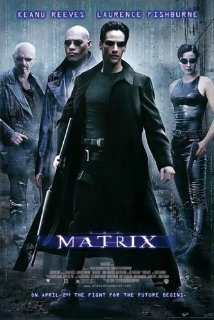
MatrixThe final fight scene in the matrix blew people away when it originally hit theaters in 1999. The special effects have been copied over and over by now, but the bullets halted mid-flight and Neo’s ability to move like the Agents wasn’t the only thing that made this final scene so memorable.

Setting had a huge role to play as well.

The end goal of the plot in Matrix was that Neo realize he is “The One” and figure out how to defend the freed humans against the machines. Fabulous plot, but what would that final realization have been like if Neo had reached it outside the Matrix?

Not nearly as impactful.

Neo being pretty much dead and losing hope while faced with his enemy, inside their fabricated world — of which he has little control of at this point — while his mentor is being tortured in that same building, and no chance of escape…well, that’s a pretty bad place to be, right? The exact kind of place he where you either need to dig deep or give up. Being outside of the Matrix, relatively safe and surrounded by people who are trying to help him…what would have pushed him to find his true strength? Neo realizing he was the one person meant to save the humans wouldn’t have had anywhere near the same effect if it had come over his morning bowl of mush as he worried about Morpheus having been captured.

Where your final scene happens should be connected to your character in some way.


Is it a place from their past, something symbolic of what they’re trying to overcome?

Such as a childhood home or the location of a traumatic experience, or perhaps a place they once loved and they return to at the end of their quest to put their life back together? The location should be relevant to your character’s history and journey.

Has it been previously referenced?

Ending up somewhere that readers are familiar with, even in passing, will mean more to them than a brand new, never before seen venue. Foreshadowing is a great tool in setting up the final location where the book will take place. A brand new location risks seeming irrelevant to the reader, and may not be the most logical place either.

Does the location make sense for what’s going to happen?

If the final scene is a verbal confrontation (Ex: standing up to a tormentor), think about what type of space will make this more intense. Wide open areas provide room to escape or avoid while small spaces may pin the character into the situation until it’s resolved. Public locations vs. private ones can have a great impact as well. A public location means there will be witnesses. Will there be action involved? Will they be on the move or stuck in one area? What obstacles will the location provide?

Is there meaning behind the setting?

Whatever setting you choose, there should be a reason for that choice. Think about your character arc. Where did this character begin emotionally, mentally, physically, and in reference to the overall plot? Where do they end up? Does your final setting reflect the changes your character has made during the journey that is their character arc. A character arc should come full circle. Setting should as well. That doesn’t mean your final scene should be in the same location as the beginning scene, however, the final setting should be chosen just as carefully as the initial setting was chosen. It needs to reflect what the character has overcome and what their future may hold.



What final scenes of books or movies have stuck with you, thanks in part to the setting?

Creating A Protagonist With Depth: Part Four

If you haven’t read the first three part in the series, you can find Part One HERE, Part Two HERE, and Part Three HERE.


Now let’s discuss how to fill out your character with some backstory, faults, contradictions, and conflict.

iStock_000014115888LargeBackstory

Now that we have the basics of your character and who they are at the beginning and end, it’s time to fill in the middle.

We do that with backstory. Why is your character the way they are?

Remember those personality flaws, fears, and annoying habits you created earlier? Now it’s time to find out where they came from.

The reason behind the flaw is what makes it interesting.

Ex: Lena from “Beautiful Creatures” is afraid of falling in love because of the curse on her family that tells her she’ll turn evil and hurt the people she cares about.
That’s more interesting than just being too shy to ask a guy out.

Like an iceberg, most of the backstory you come up with will never appear on the pages, but it will make your character who they are. 


Depressed young homeless womanFaults

Nobody likes perfect characters. They’re boring.

Every character needs a few faults.

Make a list of 5 faults your character has – let’s go deeper than not being able to make a free throw.

Personality flaws: unreliable, eccentric, immoral, volatile.

Fears: common or complex – Indiana Jones’ fear of snakes got him in trouble a few times.

Weaknesses: unemotional, domineering, perfectionist.


IMG_0454Contradictions

Faults aren’t enough. Your character needs to be contradictory at times.

Why? No real person behaves the way they should all the time.

We do things we know are wrong, go against our own beliefs, and do the opposite of what we intended to do.

This can go the other way too. Does your bad guy had a soft spot?

No one is all good or all evil. Your characters need to have a mix of both.


Man with SwordConflict

Every good character needs plenty of conflict, not just from situations they find themselves in, but internal conflict as well.

Go back to your list of fears…

Which of these fears will your character face and try to conquer in your story?

While trying to overcome the main conflict in the story, your character must also overcome internal conflicts that are holding them back.

If they don’t, their character arc won’t be completed.


Full, rounded out characters can make or break a story. Giving your character a life outside the story will help them come alive on the pages for your readers.

Making Pizza and Pleasing Readers

9e9dd-largestackofbooksUsually, I don’t read reviews of my own books. It’s better for my sanity, even though I usually have pretty good reviews. It’s hard not to read a review when a reviewer sends you a direct email to tell you they didn’t like the second book nearly as much as the first and includes a link to their two star review that contains their opinions on the quality of your characters and story. I told her I was sorry she didn’t enjoy the book, but thanked her for taking the time to review and left it at that.

Compared to the 70 5-star reviews on this particular book, this one shouldn’t bug me, but it was kind of bumming me out. Not necessarily because it was a bad review, but because I felt like I had let this reader down. Honestly, it was really getting me down until I started making homemade mini pizzas one night for dinner.

Sounds totally random, right? 

Let me explain. 

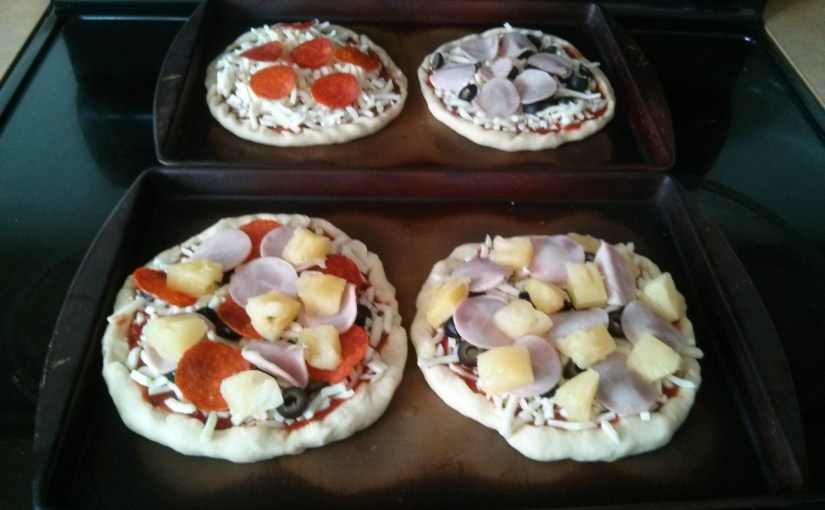
Not only were we making mini pizzas because I thought it sounded like fun, but because it’s the only way everyone can actually get what they want on their pizza. I love Hawaiian pizza. My kids think pineapple on pizza is the weirdest thing ever. The kids and my hubby like sausage. I don’t. My daughter has something against pepperoni. My son refuses to eat olives. Solution: Mini Pizzas topped by whoever’s going to eat it.

What does this have to do with writing? 

I know you can’t please every reader. I’ve heard it a million times. I’ve said it to other people at least half as many times. I know this is true.

But I didn’t really know it, know it until I was making pizzas that night and trying to get my kids to put all their toppings on without making a huge mess (failed on the mess part). I looked at our lovely pizzas…

2015-03-09 17.32.04

…and that’s kind of when it hit me. You can’t please everyone and that really is okay. Heck, I can even get four people to agree on pizza toppings! What chance do I have of getting every reader who picks up one of my books to think it’s awesome? Clearly, not going to happen because everyone has different tastes and interests when it comes to books.

This particular reader wanted something different than what I provided. I wrote the best book I could, and a lot of people have really enjoyed it. She didn’t. All I can do is shrug and move on. If I tried to write every book so every person who read it would be perfectly pleased with it, I would lose my mind. I feel like my head might explode just trying to contemplate such an impossible feat.

I’m proud of how this book turned out. I wrote it in a way that I felt was true to the story and characters. Had I written it any other way, I would have disappointed myself, and that would have hurt more than a few not-so-great reviews. Yes, it’s disappointing that this reader didn’t enjoy the story. I hope she finds another series she falls in loves with. We didn’t click on this one. I can’t do anything about that. What I can do is keep writing the kind of books that I feel proud of when I put them out in the world for readers to eat up. That’s really all I can do, and I’m okay with that.


Connect with me online:

Facebook: AuthorDelShereeGladden

Twitter: @DelSheree

Pintrest: DelSheree

Google+: DelSheree Gladden

The Plus Side of Insomnia

I had some book goals for the beginning of 2015…and then my husband and I decided to sell our house, so everything book related happily got put on hold in the face of the excitement of moving.

We’re all pretty pumped about moving next month. Fingers crossed everything goes smoothly!
giphy

So, back to insomnia.

Moving is stressful. Well, trying to sell your house and keep it clean with two kids and a dog who is constantly eating crap he should and having…shall we call it intestinal troubles?…that’s stressful. My hubby and I had a tough time keeping up with that in addition to all the other craziness of inspections, offers, surveying, and on and on.

You’d think all that would make you fall asleep as soon as you hit the pillow, but not so much. When I get stressed, I don’t sleep well.

What do I do while I’m lying there staring into the darkness?

PLOT

Sounds ominous, right? I’m not talking revenge or mayhem. I’m talking BOOKS.

With all the hoopla of the last few months…

giphy (1)

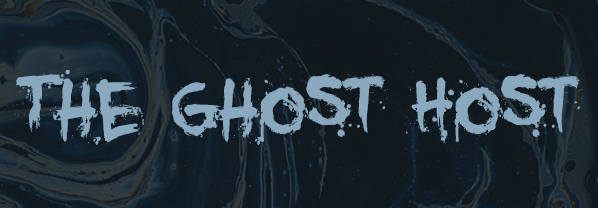
I haven’t done much writing, or marketing, or anything actually book related. The last week or so, with all the insomnia I’ve been having, I have at least had the chance to work out the kinks I had been stumped with on The Ghost Host.

Ghost Host Title

What’s been bugging me about The Ghost Host?

Trying to capture the decision making skills of a troubled 18-year-old girl on her own for the first time.

She thinks she has things under control. Her friends are with her. A guy she really likes has promised to protect her. She and the ghost who’s stalking her seem to be on decent terms for the moment, and the FBI is actually looking like a good move.

Echo doesn’t actually have anything under control, and I was too the point in the story where things needed to start unraveling but I wasn’t sure how to do that. How exactly does a girl in that situation react when her first boyfriend, first time on her own, first kind of job, and first time trying to handle the ghosts on her own?

I finally figured it out.

She makes a lot of mistakes.

So, now that I’m finally making progress on The Ghost Host again, I can hopefully finish the last quarter of the book a start making plans for a summer release.

So, keep checking back to see what trouble Echo and the ghosts manage to get themselves into.

Runts and Writing

Calendar DeadlineI’m one of those people who likes to do the things they don’t like first…except when it comes to cleaning bathrooms. I put that off as long as possible. It struck me, though, as I was eating some Runts, that you can’t really do that with writing. As I was picking out all the bananas and oranges to eat first because I like them the least but feel bad just throwing them away, I had the thought that most of my least favorite parts of writing and publishing can’t really be done first just to get them out of the way.

My two least favorite parts of writing are editing and marketing. Editing, I just don’t like because it’s time consuming and annoying and I can never remember how to use a comma properly in every situation. Marketing is just plain tough and time consuming and will totally eat up your whole day if you let it.

In a perfect world, I could just do both of those first, get them out of the way, and then move on to the fun parts. Writing. I can do it with food and chores, so why not writing? Admittedly, it’s tough to edit something you haven’t written, and even though you can start to market a book before it’s published, you still have to have something concrete to market and know how to do it right.

So, how important is having a plan and sticking to it when writing?

Important. 

Here are a few thoughts to consider:

Marketing

The hardcore marketing will usually start once a publication date is finalized, but more general marketing needs to start 6-9 months pre-publication. How do you do that when you’re only on chapter 3?

Ask for input on social media. 

  • What do you think of these names for a (fill in the blank) type of character?
  • Anyone live in ___________? What’s a great first date restaurant, unique location, bad area of town, etc.?
  • Do you believe in ghosts/werewolves/demons?

Get them invested in the idea of your book before you ever even finish it. Make them a part of the writing process so they feel connected to it before they even read a single page. Just remember to include the title or working title in your posts.

Give readers sneak peeks.

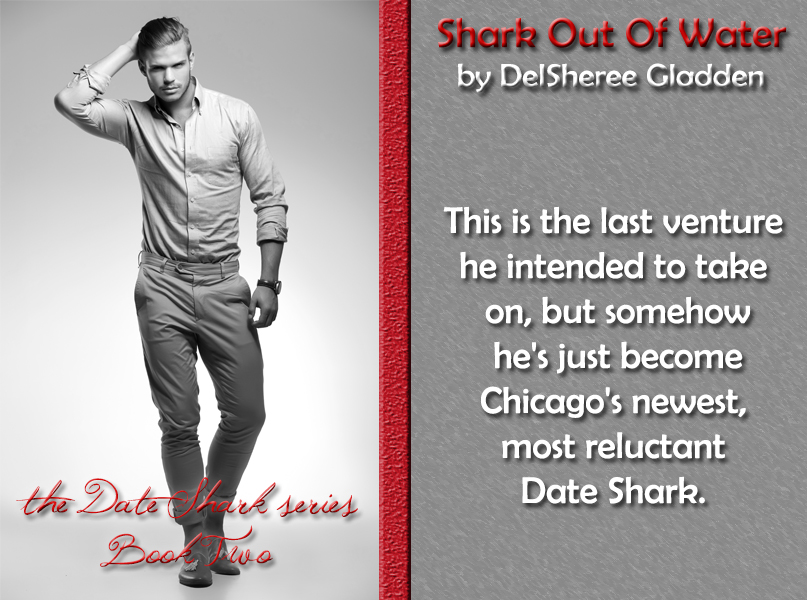
Shark2 Teaser 3Post a short excerpt. Tell readers what your character said or did that made you cry/laugh/stare at your computer screen in shock. Make some promo teasers like the one below with interesting quotes or taglines that readers can share.

The more you get readers involved in the pre-publication process, the more excited they’ll be to finally get their hands on a copy once it’s released.

Tours, Guest Posts, etc.

On a more technical note, you also need to be setting up tours, guest posts, events, etc. well before the day your book is going to come out. Most good tour companies are booked at least two months out. Plan ahead.


Writing

Sadly, there’s really no way to knock out the editing before you actually do the writing. So, how do you stay on schedule with your writing? Everyone is different, but here are a few ideas that have worked for me and author friends I know.

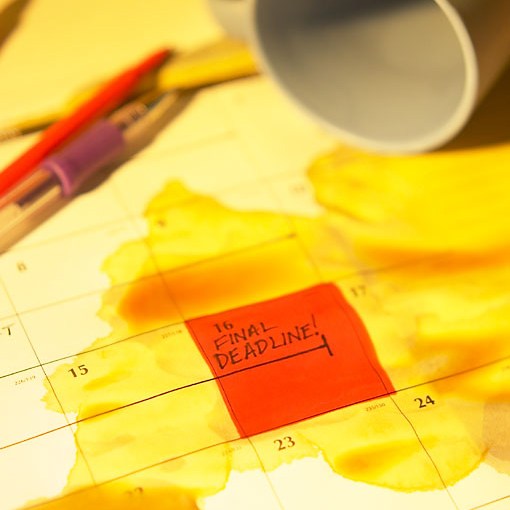
  • Deadlines: whether this is a deadline for finishing the book, a chapter, or section, sit down and give yourself a reasonable time period to accomplish a set amount of work. Mark it on your calendar.
  • Writing Groups: Make yourself accountable to someone else. Readers can be great at keeping you on track when they’re waiting for a new book, but a writing group that meets regularly and requires you to have something for the other members to critique can help you stay on track.
  • Daily/Weekly Goals: whether this is a word count goal, set amount of time, plan a time that you will use just for writing. Your creativity often needs to be trained to come out and play at certain times.
  • Bribery: Seriously, this works. Give yourself a reason to meet your goal. Chocolate? Shoes? A night out? Whatever motivates you, use it.


Sometimes we’re stuck dealing with the order things just have to be done in, but there are ways to make it work for you. I’d love to hear your ideas and suggestions for dealing with some of your least favorite parts of the writing/publishing process.

Falling Flat or Finishing Strong

0b191-istock_000024086772large

Ever feel like this guy when you’re trying to work out the ending to your book? 

I agonize over the endings of my books, series endings especially. I’ve mentioned this before, but instead of just whining about it, I thought I’d share some insights I’ve learned and some tips from other authors.

Tips From Other Authors

KM Weiland offered up some great tips on her YouTube video. You can watch the full video for her whole discussion, but here are the highlights.

1. Wait until the resolution to tie up any loose ends. In other words, don’t interrupt the action to talk about Carlos’s shoe size or Betty’s grade on her science paper. Rope 2

2. Tie up loose ends BEFORE the climax. If you really need to let everyone know whether or not Skippy found his lost shoe, spit it out before Joe and Susie head off to fight the zombie horde.

3. Make the unfinished business exciting enough to be included in the climax. If Clara’s long lost aunt is going to drop back into the picture, she better have something to do with the solving the mystery or winning the fight or it’ll just be a distraction that pulls readers out of  the story.

Brian Klems offered up some great writing tips in his Writer’s Digest article, but here’s what relates to finishing a book:

1. The hero should be the catalyst. No one wants to invest time and energy in a character only to see someone else step in at Sexy young soldierthe end of the MC’s story and save the day. What was the point of that character going through everything they did if they don’t do anything in the end?

2. The hero should grow internally. What does this means? Basically, the problems the hero faced or struggled with in the beginning need to be resolved in the end and be part of the reason he’s able to triumph at the climax. If you’re dealing with a series, maybe the growth is incomplete, but there should be growth all the same.

3. A new and better hero should emerge. The MC needs to have earned the right to be called a hero by the end of the story. If they don’t demonstrate that they can do something the others characters can’t (and we’re not just talking supernatural abilities), why is he or she able to save the day over any other Joe-schmoe in the book?

What I’ve Learned

The ending can make or break a book. I’ve been disappointed too many times for it not to effect the way I write. I’m slightly obsessed with making sure my books don’t peter out in the last few chapters because, as a reader, I hate that! Here are a few of my own tips to avoid writing that ending that makes your readers cringe.

1. Complete your character arc. What was it in the beginning of the book that your character struggled with the most, that defined who he or she was and why they felt like they couldn’t meet their goals? Have you resolved it by the end of the book? I’m not talking situational problems. This needs to be deeper emotional wounds that have held your character back. Have they overcome some part of what’s been holding them back? If not, take note of what those wounds are and how they need to be fixed in your final chapters. Questions

2. Answer the freaking question! Okay, this makes me think of “Lost” and how confused and irritated I was when they wrapped up the sixth season and 90% of the hints and mysteries were completely abandoned. If you bring up a challenge, hint, clue, noticeable item, etc. and then never mention it again, readers are going to be left saying, “What about…?” And that’s annoying. Either get rid of those plot points that never panned out, or make sure they’re followed up on.

3. Redemption and justice are musts. Unless you want to end things ambiguously on purpose, take a look at the major players in your book and make some tough decisions about what they really deserve. Does your bad guy need to die, or will he find redemption? Is your MC going to save the day or meet with spectacular failure because of his less than stellar choices? If your readers don’t feel like everyone got what they deserved, even if it wasn’t the ending they saw coming or wanted, the ending will feel incomplete and leave them at odds when they set the book down.

Crafting the perfect ending can make you want to tear your hair out. Maybe it will never be perfect, but hopefully some of these tips will help you write a complete ending that will hold readers’ attention and leave them feeling satisfied and ready to go grab the next book!

Connect with me online:

Facebook: AuthorDelShereeGladden

Twitter: @DelSheree

Pintrest: DelSheree

Google+: DelSheree Gladden

Holiday Writing…or Not Writing: Choosing a Genre

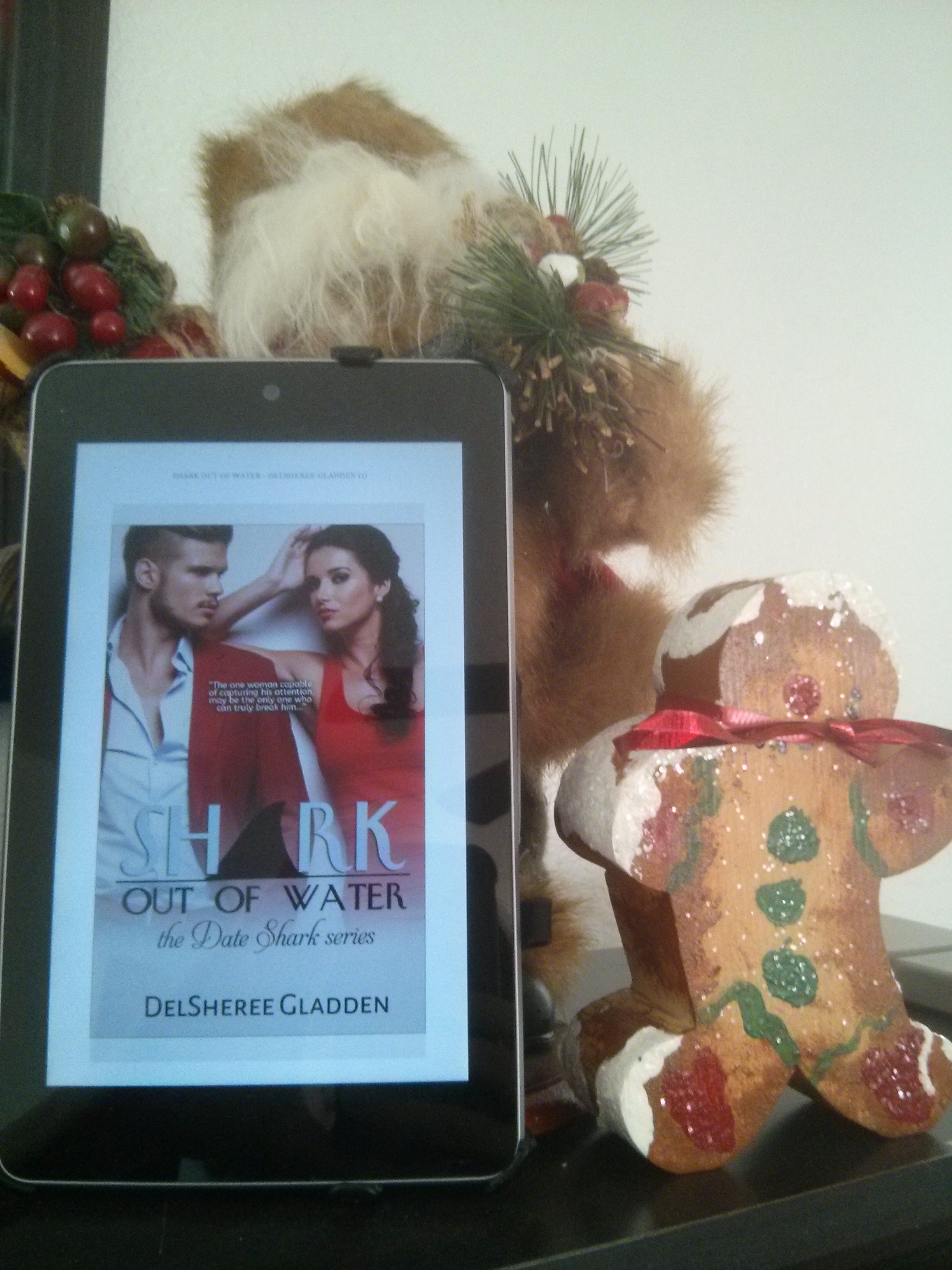
2014-12-08 09.13.19With the holidays approaching, I’ve been seeing loads of posts and promos for Christmas books. I was even a part of one promo for #ChickLit4Xmas, which was lots of fun. I’ve never been particularly into reading Christmas themed stories. I have nothing against them. I’ve simply never been drawn to them.

As I’ve been seeing all the holiday books being promoted, I realized I’ve never even written a single Christmas scene is any of my books. At least I don’t think so. It’s been a while since I’ve reread some of my early books. I’m pretty sure all I have are some birthday parties and a brief mention of Christmas in Shark Out Of Water.

One might start to think I have an aversion to writing holiday scenes. It’s kind of funny actually. I really don’t know why I haven’t written a holiday scene before, but it got me thinking. How do writers choose what genre they’re going to write? Obviously, I can’t speak for all authors, and I didn’t think about this early enough to take a poll, but here’s why I write what I write along with a few tips on how to choose your genre.

I write in several genres and subgenres ranging from YA paranormal/sci-fi/dystopian/urban fantasy, to straight up romance, to new adult (a rather new venture), to some unpublished projects that are just plain YA drama no otherworldly twists and turns at all. So what genre for what story?

Basically, the way I decide how to choose a genre depends on three things.

1: What is the main conflict of the story?

Is it personal or situational? Personal implies a lot more internal struggles while situational may be more event-driven. Figuring out what you want the driving force behind the conflict to be can be a challenge, but this question helps you narrow down whether you’re going to be thinking along the lines of faster paced/question driven writing or deeper emotional trials that won’t need bam-bam-bam events to pull the reader through the story.

2. What type of stumbling blocks will your characters face? 

This question in particular helps me chose the age range of my characters. With YA, parents are an issue, as are friends (more so than in other genres usually), limits on what they can and can’t do, firsts (big decisions, relationships, sex, drugs, alcohol, etc.), and self-discovery.

2014-12-08 09.22.48With New Adult, some of the YA issues still apply, but you add in facing the grownup world with jobs, bills, being on their own, dealing with consequences without parental backup, failure, and so much more. There’s more freedom for the characters in some ways, but a new set of responsibilities can limit them as well.

With fiction for adults, you’re facing day-to-day life with work and family, dealing with past mistakes, reality of the life they’ve chosen/ended up with, wanting more or something different, having to grow up and actually be an adult, serious relationship issues, etc. Asking yourself these question can help point you in the right direction for ages of your characters, which will help you narrow down your genre choices.

3. To paranormal or not to paranormal? 

Maybe this isn’t a question every writer asks, but I do. So far, all of my published YA books have some sort of paranormal/sci-fi/urban fantasy element, but I have other projects, finished and unfinished, that just didn’t work as anything but straight drama. Why? Because the source of their main problems are real problems, not imaginary ones. My adult romance series, Date Shark Series, doesn’t have a single ghost, demon, curse, or magic power anywhere. I wanted to focus on actual relationship problems we’ve all faced at one point or another and I didn’t need anything outside reality to do that.

Figuring out the driving force behind your conflict will help you decide whether or not your story needs something paranormal.

So, these are the questions I ask myself when I start a new project. Sometimes I already have these worked out when the idea hits me, but sometimes I don’t. If you’re uncertain about what direction to take your story, try asking yourself these questions. If you have questions you ask yourself to help you decide, I’d love to hear them! 

Connect with me online:

Facebook: AuthorDelShereeGladden

Twitter: @DelSheree

Pintrest: DelSheree

Google+: DelSheree Gladden

Surviving November… #nanowrimo

For anyone who participates in National Novel Writing Month (NaNoWriMo), they know how crazy hectic November can be for a writer. This year was no different, of course!

This is where it all starts, signing up for NaNo, putting in all your info and telling yourself your going to spend the month working on ONE book until you hit 50,000 words. 

For me, sticking with one book for an entire thirty days is nearly impossible. I’ve yet to make it through NaNo without cheating and taking some time off to write something else. 

This year was no different! 

The official project I uploaded to NaNo was INVINCIBLE, because my poor Wattpad readers have been begging me to finish it. Yes, they think an author can produce a book in a week, and they are teenagers who tend to be a little impatient, but I still love them 🙂 
My goal was to have Invincible finished by November, 30th, which meant writing about 65,000 words in FOUR weeks. I’m a fast writer, so I figured this was doable. What I didn’t count on was my usual writer’s block-inspiring fear of finishing a series added in with family, work commitments, and a funeral this November. 
I get so anxious about wrapping up a series, hoping I didn’t forget anything important, double checking to be sure I didn’t leave anything out, making sure I wrapped up all the lingering questions, and just plain making sure the ending doesn’t SUCK! As you can probably guess, feeling like this makes me not want to touch my manuscript with a ten-foot pole. Makes writing a little bit hard. 

So, what do I do normally? Work on something else until I mellow out and quit being a spaz. 

BUT IT’S NANO MONTH!!! 
Yeah, I still did it. Completely unable to focus on Invincible, I switched to a new project I’m working on, my first New Adult novel, THE GHOST HOST. Before the start of NaNo I had maybe 10k words written on TGH, and had dutifully abandoned it for NaNo and my poor Wattpad readers. I got about three chapters written on Invincible before I just had to step away and work out my weird issues. 
I spent the first two weeks of NaNo writing TGH, and finally hit a wall where I needed to stop and think about things 55k words later. So, I had already hit my NaNo goal, but on the WRONG BOOK! 
Maybe that part doesn’t really matter since I was writing, and that’s the whole point of NaNo, but I still had my Wattpad readers to pacify since I had PROMISED to finish Invincible by the end of the month and have it ready for publishing by Christmas. 

So, back to work! 

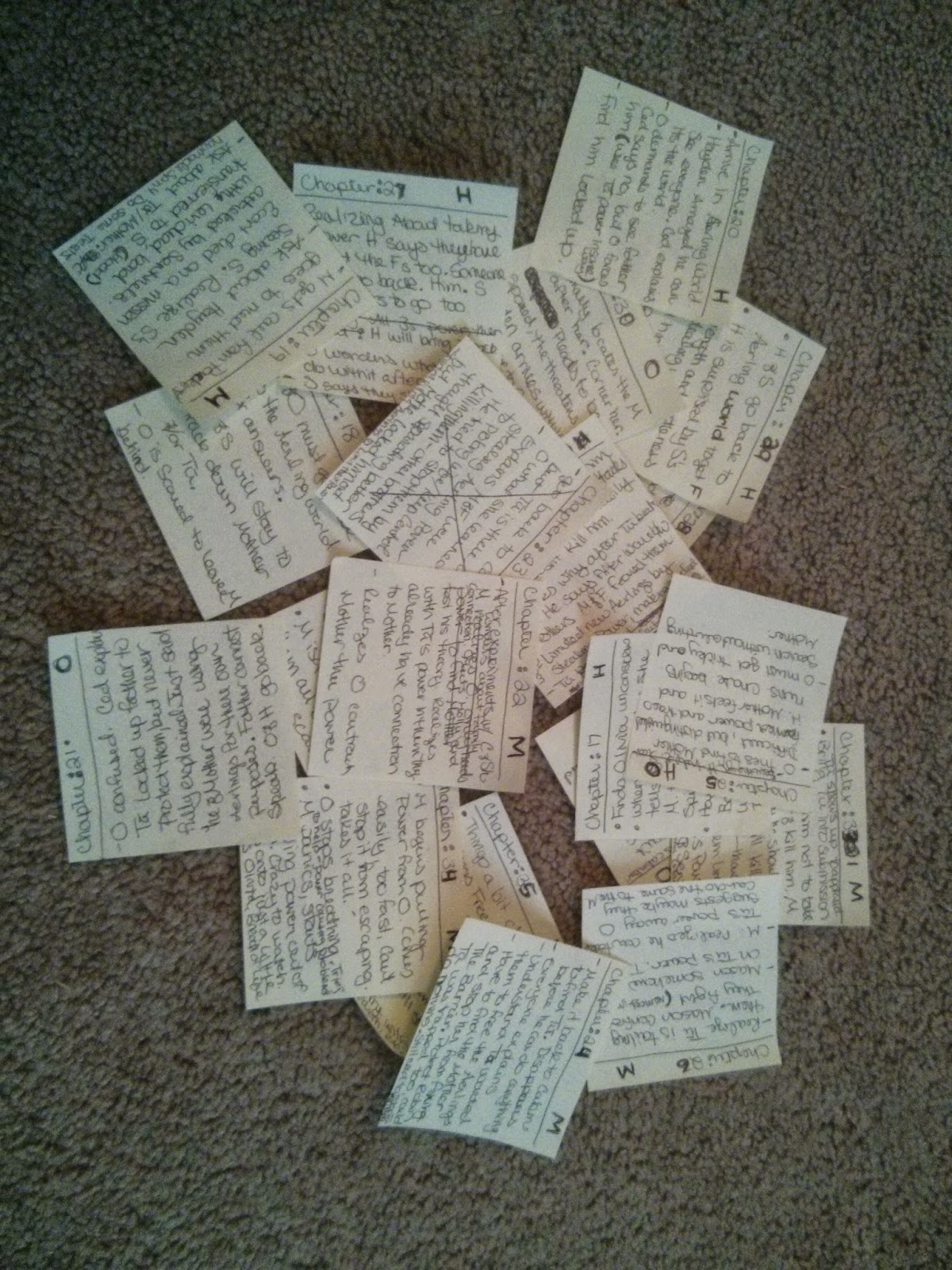
I had already had Invincible planned out on a couple dozen sticky notes, so that wasn’t the issue. It was making sure this series that has been read several million times on Wattpad (literally) wouldn’t disappoint the dedicated fans who have stuck by me since last October when Invisible first popped up on everyone’s news feeds on Wattpad. How could I let down all the Robin-haters and Olivason-ship fans who were dying to know what happened in the end and whether Mason and Olivia would be able to stay together? 
I had to get writing. 
As I do with housework and errands, I bribed myself. Seriously. It wasn’t chocolate this time. Normally that does the trick. So long as it the good chocolate. No, this time, I told myself I wasn’t allowed to watch even a single episode of Supernatural until Invincible was finished, and I couldn’t read the Denise Grover Swank book all my friends have been telling me I HAVE to read. (Okay, I cheated on both of those toward the end, but shhhhh!) 
To really get myself moving, I posted it publicly that I’d be releasing Invincible by Christmas Eve. Facing angry teens from all over the world if I failed finally got me motivated and broke past my end-of-the-series anxiety. 
So long story not so short, I hit 50k words on Invincible by November 28th. I missed my self-imposed deadline of Nov 30th to finish the book by two days and Finished on Dec 2nd, but I was pretty close, so I’m calling it a win. As depicted below 🙂 

So…the plan…

Right now I’m working on editing Invincible and I plan to have it up for pre-order by December 12th, with the final release on Christmas Eve, because…that just seemed appropriate! 

Merry Christmas to all my “Invisible” fans. You guys are awesome and I’m so thankful for all your support with this series. The final chapter of Mason and Olivia’s story will be arriving for Christmas this year. I hope you enjoy it!

#TensList: Top Ten Reasons Writers are Crazy

If you know any writers (which you must if you’re here), you probably already know that they are usually a bit strange. Well, here’s just a few of the reasons why…

#1. 

When you’re standing in line at the check out counter or sitting in a restaurant and someone inevitably makes a scene because the line doesn’t move or your waiter has disappeared, most people look away and pretend nothing’s happening. 
Not writers. We may not outright stare, but we’re listening closely and catching all the glorious details out of the corner of our eye. Why? Because we love to make our characters lose it. Sometimes over completely silly things like bad food or poor service. Sometimes at the end of a long line of

tragedies. Most writers, however, tend to be introverts, and don’t make a lot of big scenes, so we need inspiration for turning our characters into raving lunatics. Just keep that in mind next time you want to lose your cool in public. There are a lot of writers out there. 😉

#2. 

Ever been stuck in a conversation where the other person just won’t stop talking about the most random things? Most people politely listen trying to come up with a polite excuse to escape. What do writers do? Pull out a pen and start taking notes! We love random facts, fun tidbits of knowledge, and bizarre happenings. Why? Because you never know when a story might call for knowledge that there’s a guy who’s job it is to roam the world weighing a garden gnome to test the effects of gravity at different heights. 

#3. 

People watching is a lost art for most people. It used to be an actual thing back in the day. Now, it’s a trick just to get people to put their phones away long enough to walk from their car to the front door. Writers may be some of the few groups left who still love to people watch. Not that we go around staring at people all day… well, not usually. Why do we watch people, though? It’s not just to see how they talk and interact with people so we can write more realistic characters and scenes. We might be looking for our next over model too! Be sure to pick your outfits for the day with that in mind. 

#4. 

Conversation skills are important, but writers aren’t always the best at this particular talent. We may write great dialog, but we’re also highly distractible when immersed in a project, and half our conversations with real people end up starting with things like… “I need you to read something for me.” or “How hard do you think it is to drag a body in high heels?” or “Which of these sentences sounds better…” 

#5. 

Speaking of conversations… at least half, probably more, of our conversations take places with people who don’t exist. It’s not just working out dialog, either. True, I’ll repeat pieces of dialog out loud, acting out the voices and intonations to see if I’m getting the right effect, but many writers take it beyond that as well. You get to the point where you find yourself consulting your characters, asking things like, “Would you really do that?” or “How could you do something so awful?” If we zone out while talking to you, don’t take it personally. We probably had at least two other conversations going in our head at the same time and forgot which one was taking place in the real world for a second there. 

#6. 

Writers tend to be contradictory by nature. We have this dual concept of ourselves that on one hand we are creative geniuses to some degree, and on the other hand have this crippling fear that we are utter failures. It’s boggling, even for us, but a tough one to shake. Please forgive us when we jump around like crazy to celebrate a great idea or contract, then have to be drug out from behind out desks to face actually letting someone read our work.

#7. 

Writers may be the only group of people who are selective perfectionists. Our houses may not get cleaned the week we’re trying to finish those last blasted five chapters, appointments may be missed, and we may have forgotten to shower once or twice that week, but by golly… every freakin’ word in our manuscript will be absolutely perfect! That will likely be the only thing that’s perfect, and even that’s a big delusion, but we’ll certainly work at it until our fingers go numb. 

#8. 

There’s something to be said for becoming an expert on something. It takes a lot of hard work to learn that much about a certain topic. Experts are a writers’ best friend, but most writers are not experts on anything, even writing. Sure, there are some writers who become experts on a specific topic while writing a particular piece, but most writers can really only claim to be semi-experts on about a hundred different topics. Why? Book research. We’ll research anything under sun, but only enough to make what we’re writing believable. We have to get back to writing, after all.

#9. 

We all know that friend who constantly asks you for advice but doesn’t listen to a single word you say, right? Sorry, but a lot of writers are that friend when it comes to writing. We constantly ask people’s advice about words, phrases, ideas, and concepts. We take in all the comments and suggestions, and then we do whatever the heck we want, which is often exactly what we planned on doing in the first place. It’s not that we don’t value what other people say. Most of the time, we already knew what we wanted to do, but just needed to talk through it from twelve different sides before we’re sure. It’s nothing personal. 

#10.

There are times when writers really HATE writing. It’s can make us miserable at times, but we still love it. Why? For many writers, it’s simply part of who we are. Writing is like an appendage. Even if it hurts or refuses to work properly, we can no more ditch it than we could an arm. Bear with us when we rant about characters and plot holes and endings that fall flat. We may want to quit at times, but we never will because writing is a part of us. 

What are you passionate about that makes you a little crazy?

#Perfectionism and #Writing…

I think a lot of writers will agree that making sure their books are “perfect” is a bit of an obsession. 

We obsess over every word, line, paragraph, chapter… you get the point. We’ll research something until our fingers are about to fall off from too many internet searches. Our friends will be sick of hearing about a particular troublesome scene and threaten to throw a book at us if we ask them to read it one more time. 

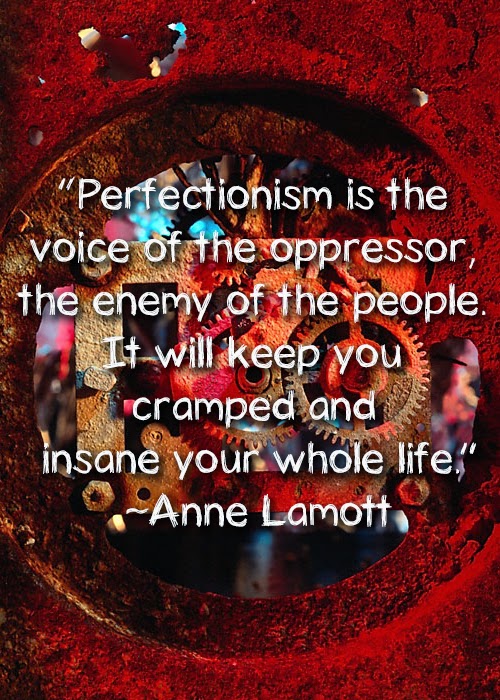
Having said all of that, I completely agree with Anne Lamott when she said… 

“Perfectionism is the voice of the oppressor, the enemy of the people. It will keep you cramped and insane your whole life.”

All that obsessing over how we write our books or scenes can really kill a story. When you over think while writing, you second-guess your decisions, which leads to endlessly rewriting particular scenes, changing whole passages to try it another way, or scrapping the whole project. 
Now, yes, sometimes these things have to be done, but not every time you sit down to write. If this is your process, it’ll be awfully hard to ever finish a book or story. Every writer has to develop their own process, but here are a few tips I’ve picked up over the years. 
Tip #1: Whether you like to outline or not, don’t limit yourself to sticking to your outline or notes verbatim. If you feel like the story needs to take a left instead of a right, or a U-turn in a whole new direction, go with it. Let your plot develop organically and don’t feel like you have to go back to an outline and re-outline after every change. Just write. 
Tip #2: Don’t edit while you write. You’ll kill your progress if you go back and edit what you’ve just written. Give yourself some time to let that chapter or scene sit and solidify. Even if you have to reread a chapter or two when you come back so you know where you left off, DON’T EDIT, aside from maybe a few typos. Even when you finish the entire book, don’t jump right into editing. Work on something else. Give it at least a week (longer if you can) and come back to it when you have fresh eyes. 
Tip #3: Sending your work out to beta readers (readers who read an early draft in order to give you feedback and suggestions) can be anxiety laden. It always is. Waiting to send it out until your book is perfectly edited and all the holes are filled in just isn’t reasonable. Find beta readers you trust to be honest, let them know it’s not a perfect story and you need helpful critiques, and hit the send button. There are always problems with a manuscript that you as the author won’t be able to see. Waiting until it’s perfect just prolongs the inevitable and often leaves you with more revisions to make than you would have had otherwise. 
Tip #4: Give yourself permission to make mistakes. Don’t want to put a scene on hold to do a little research? Not sure if what you’re writing is possible, but the scene is just begging to be written? Great! Keep writing! You can always go back and correct mistakes. In fact, you usually learn a lot from making those mistakes, and then you don’t make them as often in the future. It’s tough to get into a writing groove sometimes, and if you’re in one, let yourself just get your ideas down on paper and worry about refining later on. 
Tip #5: Accept the fact that your book will never be perfect. That’s just how it is. There will always be something you think could have been better, or should have been changed. Reviews will make you doubt scenes or chapters or endings. It will never, ever be completely perfect…and that’s okay. 

What perfectionist habits keep you from getting things done?