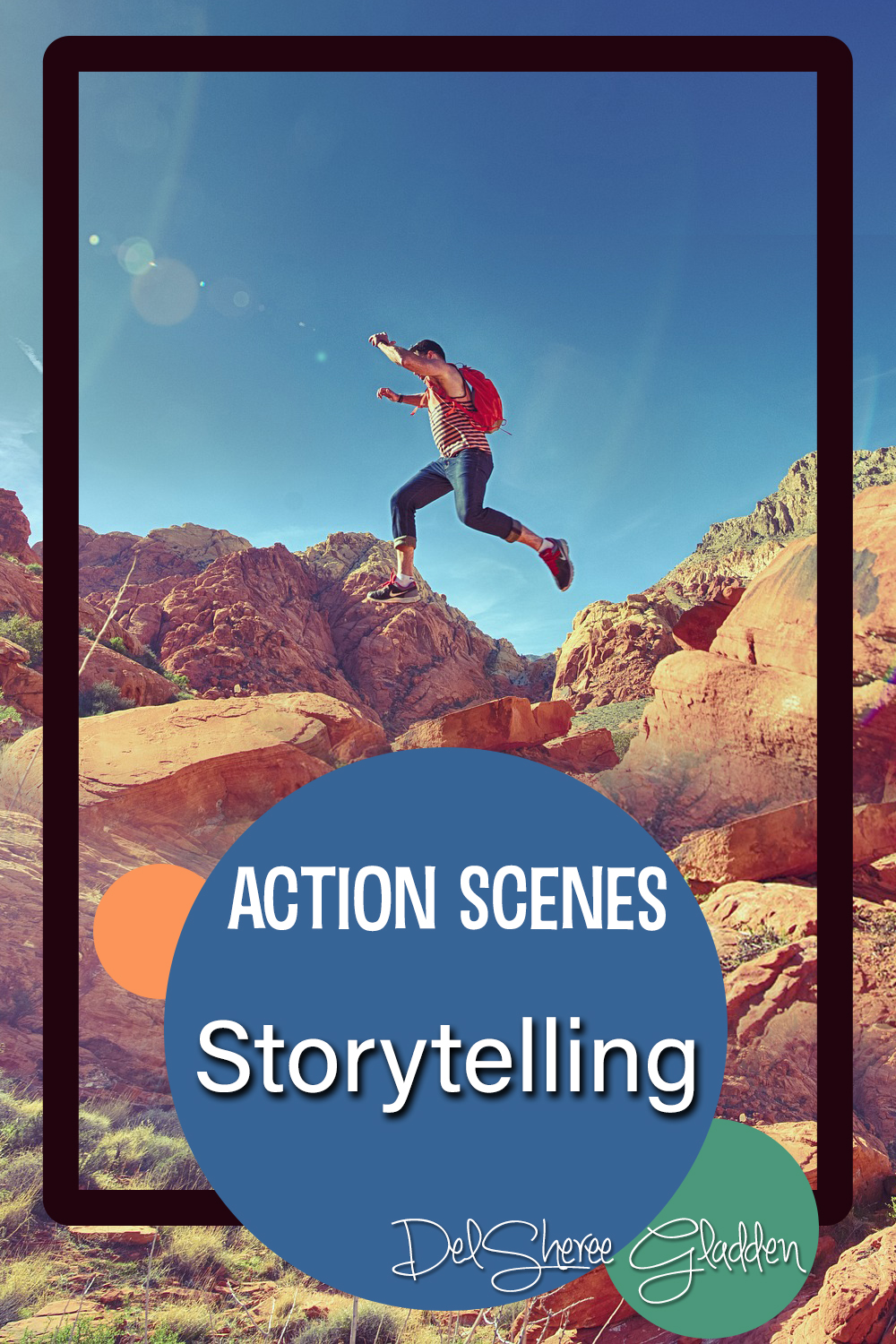
Action Scenes: Storytelling

Action scenes may seem like islands within the bigger storyline at times, but it is important to match the action to the overall story and to write it in a way that shows the reader what’s happening rather than telling them it happened.

Matching Action and Story

An action scene needs to fit the story’s overall tone and pacing. It will seem out of place if the majority of the story’s style is light and silly and the action scenes are dark and gritty. If the story is written in a direct and confrontational tone, it will likely work well in action scenes and may not need many adjustments. A conversational tone may require more adjustments, but action can still be described in a semi-causal style that will work well with the overall style.

Action is naturally faster paced than exposition, but should still be similar to how the rest of the scenes are written so the style of writing doesn’t feel completely new. Pacing can be adjusted by using different lengths of sentences and words that convey intensity while still maintaining the overall style.

Stick with vocabulary and syntax that is similar to the rest of the story in action scenes. It may be necessary to include terms specific to the fight scene, but don’t overload the reader with jargon. Keep your reader in mind when determining how much to change the vocabulary in a fight scene. Use terms you have already explained when possible to avoid inundating the reader with new information.

If the majority of the prose is simple sentences, don’t suddenly switch to mostly complex, multi-clause sentences, or vice versa. Again, consider that your reader has gotten used to a certain style while reading and does not want to be asked to get used to a new style for a short scene.

Character tone should stay consistent as well. A generally arrogant character may go through a fight scene with confidence and calm while a more flighty character may dart around frantically. Consider each character’s traits and what he or she would be most likely to do or think in a stressful or frightening situation. It’s also important to consider how you normally write a character’s movements, actions, or thoughts in a non-action scene and only make those changes that are necessary to make it clear to the reader that the situation has changed.

Keep the general writing style consistent as well by avoiding major changes in the balance between exposition, description, and internal dialogue. Adjust each element to fit the pacing and situation only as much as is required by the action taking place.

Show vs. Tell

Don’t talk to the reader about a fight or chase scene, show it to the reader as it is happening. Showing instead of telling allows the reader to better experience the fight rather than just being told about it.

Focus on what the character is experiencing more than each individual punch or crash. Use all five senses to describe the action when possible. Not every scene requires all five sense, but use as many as possible to set the scene well enough that the reader can picture the scene and what is happening.

Describing sensory experiences helps the character connect with and react to the devastation going on around him or her. If the character connects with the scenes, the reader is more likely to connect with it as well.

Have the character interact with the scene (using available resources, feeling textures, struggling to move around because of a lack of light, etc.). The fight or other action is not happening in a vacuum. Even if the main action is a heated argument, there are still sensory elements that can be noticed or interacted with, such as scents (smell of burnt dinner or roses brought by an unwanted suitor), textures (rough fabrics on a chair the character is unable to get up from), etc.

In expansive action scenes, use different perspectives to show what is happening in all areas. Each character involved will see, feel, and hear the scene differently. If you are working with an omniscient POV or multiple POVs, make use of that to more fully build the scene in the reader’s mind.

Avoid tell-y words like “felt” and show how it feels instead. For example, “He felt pain course through his arm” is less engaging than “Pain raced through his arm, stealing his breath.” Evaluate each sentence in an action scene for its effectiveness at communicating with the reader. If it is simply telling the reader that something happened, rework it to help the reader experience what the character did in that moment.

The same idea applies to character thoughts. Use internal dialogue for introspection or description of emotion instead of telling the reader how a character feels or thinks about what is happening. For example, “She was confused by his yelling,” simply tells the reader how she reacted while “His arguments bombarded her, loud and sharp, too many at once to make any sense to her” gives the impression of confusion and being overwhelmed more fully.

Taking the time to assess every sentence for its suitability in the overall story and its effectiveness at conveying important information to the reader will take a scene from basic to immersive.

Action Scenes: Consistency and Realism

As with any writing project, it is important for the writing style to remain consistent throughout the project and for each scene to keep a foot in the realistic world, no matter the actual level of realism in the world and story.

Consistency in Style

When writing an action scene, there will be some changes in style depending on the scene elements involved, but the scene should not feel like someone else wrote it because of drastic alterations to the writing style. Maintain the style used throughout the story with small changes to increase the dramatic tension (more high emotion descriptors), change the pacing (shorter, more urgent sentences), remove any comprehension barriers to move the reader through the scene smoothly (avoid using complex or unfamiliar words that might trip the reader up), and so on.

Actions scenes will necessarily have slightly different language and structure than exposition, but it should still mesh with the rest of the story. Sudden, drastic changes pull the reader out of the story. If you tend to include detailed description in other scenes, be more sparing with such language during action scenes, but don’t necessarily cut it all out completely. If movement and technique are important to the fighting style and have been included in less action-based scenes, include some of that in an action scene, but don’t overload the readers or sacrifice the flow of the scene in order to include it.

The characters should sound the same when it comes to spoken dialogue or thoughts, as well. Characters involved in an action scene should not suddenly sound like anime characters, not should they start spouting Shakespearean-style soliloquies. Internal dialogue should not vary widely from the character’s norm. If the character is highly internal and previous scenes have included a significant amount of internal thought, include some in action scenes where appropriate but keep in mind the pacing of the scene. Slight shifts to mimic panic or desperation work well, but complete changes make the character feel like a different person.

Writing style should stay consistent. Don’t suddenly change stylistic elements like syntax, tone, mood, exposition, or narration. The scene will feel out of place and confuse the reader.

Maintaining Realism

Action scenes aren’t technically realistic in many cases. Characters don’t take as much damage as they should or are able to maintain stamina way longer than is reasonable, or have skills outside the normal human range. Even so, actions scenes should maintain an air of realism to keep the scenes grounded, even when set in a completely fantastical world.

Action scenes must be real enough to convince readers to suspend their disbelief. The action taking place should make sense for the world and the characters. There may be surprises, of course, but a piece of action should not make the reader stop and question the reality of what happened. This halts the scene and can frustrate the reader.

Avoid impossible abilities to keep characters from coming off as indestructible. Whether a completely realistic world or a non-realistic one, there are still rules the character must comply with and work within. An ability or action that breaks rules with no explanation not only stops reading progress, it risks alienating the reader.

Use realistic (for the world) healing times and make injuries impact future events. Broken bones take weeks, if not months, to heal without magical or advanced scientific methods. Injuries can be great barriers to a character reaching a goal if used properly. If you don’t want a character out of commission for a long period of time, choose a more appropriate injury for what you have planned.

Research weapons and how they work, including the sound, feel, power, weight, construction, impact, etc. Different types of guns feel very different to fire, and metal swords are much heavier than what is typically portrayed, with the exception of fencing and dueling types of blades. You want to be able to accurately describe the action using all five senses.

Watch videos when possible to better describe movements and reactions of people engaging in the type of action you’re attempting to describe. Ask people who participate in the activities involved when possible to learn more about the feel of the movement and the difficulty of responding when in a high-intensity situation. This will help you to be more consistent in writing how characters fight, as well. Learn the proper terminology and work in enough to sound realistic without overwhelming the reader. Experts are usually very willing to help with this.

Taking a little extra time to learn about the realistic elements of various types of action can make the scene come alive for the reader.

Action Scenes: Describing and Pacing Action

Writing effective and interesting action scenes requires appropriate description and careful pacing.

Describing Action

Use simple language when describing action. Technical terms or jargon will get lost and can easily confuse readers in a fast-paced scene. If certain terms are important to the story or scene, be sure they are explained in an earlier scene so readers are familiar with them and don’t have to stop to look up or wonder at their meaning. This slows the pace and breaks the reader’s focus.

Action scenes aren’t the place for similes and metaphors, either. Large-scale metaphors may be communicated by the overall scene, but avoid using metaphors and similes in fights scene because they slow the pace and can be distracting.

Use shorter sentences that match the pace of the action taking place. Long-drawn out sentences slow the reading speed and ask the reader to more carefully consider the meaning of the sentence. Shorter sentences keep the pace moving in time with whatever action or movement is taking place.

Be specific when describing what is happening in the scene. Vague descriptions slow the pace and can confuse the reader unnecessarily. Clarity is crucial during action scenes or readers will miss important information. Be clear about who is involved, where it happens, weapons or powers used, risks involved, and consequences of the action or overall scene.

Avoid the passive voice. Action should always be described using an active voice. This makes the action feel more immediate and draws the reader into what is happening rather than making them feel like they are being told about what happened after the fact. For example, “Mark slapped Adam” is more active and compelling than “Adam was slapped by Mark.” Draw the reader in with active description. Remember, the characters are involved in the fight scenes, it’s not happening to them as passive bystanders.

Pacing and Action Scene

Appropriate pacing keeps an action scene from dragging on and boring readers. It also helps to keep the scene from seeming too short and inconsequential. Pacing of the scene should match the action taking place in it as well as the overall importance of the scene.

In order to appropriately pace a scene, vary sentence length to match what is happening in that moment. When you need a break in the action, use longer or more complex sentences. This gives the action a break as well as gives the reader a moment to take in everything that has happened.

Mix dialogue with action to give the reader a mental break to process the action and learn something important about what is happening in the scene. Limit internal thoughts and dialogue to avoid slowing the pace too much. Use these when a pause is intentionally written into the scene.

Don’t drag the scene out unnecessarily. An important part of pacing an action scene is determining how long it reasonably needs to be in order to communicate what is happening and why. Fight scenes and chase scenes, especially, only need to be long enough to accomplish their purpose. These types of scenes can quickly get boring for readers when they are not concise.

Keep action scenes focused and clear in order to effectively communicate what is intended to the reader in an engaging and exciting manner.

Action Scenes: Using Action in a Story

Action in a story always serves a purpose when done well. To make sure action scenes are effective, consider what they ask of the reader and how they advance the plot.

The Nature of Action Scenes

When it comes to the nature of action scenes, it is important to recognize that a big difference between movie action scenes and written action scenes is what they ask of the reader.

Action scenes in movies require no audience participation, but in written form they require a lot of reader participation, particularly with fight scenes. It takes effort to understand what is happening in a fast-paced action scene. Action, in general, is often chaotic. To readers, action scenes can easily become confusing for the reader to follow what’s going on if it is not written clearly and interwoven with other components. Action works best when balanced with description, exposition, internal dialogue, and emotional reflection.

Why something is happening is just as important, or more important in some cases, than what is happening in the scene. Makes sure the why is clear during an action scene in order to prevent the reader from getting bored or lost in an endless description of movements.

Asses an action scene to make sure what you are asking of the reader provides an equal payoff, by having a purpose that is understandable and clear.

Using Action to Advance the Plot

Action must matter to the story itself, or it won’t matter to the reader. When considering what is the point of an action scene, ask what you are hoping to accomplish with the action scene.

Purposes behind action scenes might include revealing information, providing character development, affecting the rest of the story in some way, making the reader ask important questions, showing or revealing a character’s skill or talent, providing a transition, etc. Once you pin down the purpose of the scene in relation to the overall story, make sure that is also apparent to the reader.

If you cannot define the purpose, or the scene seems to be accomplishing nothing, cut it or rework it to fulfill a clear purpose. Then evaluate the scene again. Does the action scene actually accomplish its purpose? Critically assess it to make sure the scene adequately addresses the purpose in a clear way. Beta readers can be a wonderful resource in assessing single chapters to determine its purpose. A reader should finish the scene having learned something important about the character or story.

When scenes have a strong and clear purpose, and work to advance the reader’s understanding of the characters and story, readers will engage more fully with the story and feel that their effort in reading and following the action was worth the investment.

Action Scenes: The Basics

Action is often at the center of important story points and should grab the reader’s attention with realistic description and exciting actions.

The Purpose of Action

An action scene isn’t really about the action. It’s about how the character’s experience the action and how they are affected by it. Focusing on the sensory and emotional information of the action taking place can help you avoid tedious recounting of every movement.

An action scene should move the story forward. Action for action’s sake get old very quickly. It begins to fill like filler very quickly and can bore the reader. Always consider what the action is or needs to accomplish when writing an action scene.

Whether the hero wins of loses, he/she should learn something important from the experience. This may be actual information, understanding something out his or her self or the antagonist, or a skill or talent revealed (particularly in non-realistic storylines).

Action scenes should improve characterization. Consider why the characters are engaging in this action and what their feelings are about the encounter. Did they enter willingly, reluctantly, under duress, etc. What are their reactions during the experience and how will it affect them once the action is over, including long term?

The reader should learn something important about one or more of the characters during or as a result of the action. What does the character’s motivation to be involved in the action say about him or her? Similar questions help the reader become more personally invested in the story through their connection with the character.

Action scenes should help fulfill the purpose of the book. This relates to action needing to move the story forward, but it goes deeper. It asks that action scenes relate to the overall purpose of the book. Is that purpose to fulfill a quest, reveal hidden abilities, understand the self, etc.? Action can easily become an easy way to provide momentary excitement in an otherwise slow section, however, it will lack depth if that is its only purpose.

Action Basics

Action is often movement, though not in every situation. When writing action scenes such as chases, fights, combat, etc., it is important to balance describing movement with story needs. Avoid writing an entire action scene as blow-by-blow description. This quickly becomes tedious for the reader, and if the reader is not familiar with specific terminology it may be skimmed and important information might be missed. It also slows the pace of the story progression. Intersperse movement description with other story elements to keep the focus on the overall story as well as the immediate action.

When writing action scenes, strive for clarity. If the reader can’t understand what’s going on because it’s too chaotic, they will likely miss the point of the scene. Be specific on what is happening, but don’t overdo it with technical terms or pack in too many movements with little or no explanation on what is actually happening.

Focus on the experience, not the individual actions. Give the reader periodic breaks from the action with glimpses of what the characters are experiencing. These may be thoughts, emotions, observations, sensory input, etc.

We’ll cover show vs. tell later in this series, but keep in mind what the purpose of the scene is and write in a way that fulfills the purpose.

Happy New Year!

I’m a few days late in posting my best wishes for 2023, and a lot late on updating the blog.

I took some time off from blogging to deal with some family stuff the last 6 weeks or so. Things are, hopefully, calming back down and getting to a place where I can focus on writing again.

Writing and everything book related has been on the back burner for more than just the last few months for me. I had some major changes in my life take place over the last two years that made writing damn near impossible because not only was my head not in the right place, there was simply too much going on in my life to have time or room for writing.

My major goal for 2023 is to get back to writing. I don’t know what exactly, as I have half a dozen starts and half-finished projects tucked away on my computer somewhere, but I am determined to get back into the habit of writing something. Hopefully that will mean a new book eventually, but I’m not at a point where I can make any definitive plans.

Life certainly brings the unexpected, but that’s just inspiration for more stories, right?

I hope all my readers are having a great start to the new year and I send all the positivity I can to everyone with hopes that whatever goals you set for yourself this year will come to fruition and you’ll be happy and healthy on the journey.

Book Blurbs: Crafting the Blurb

While the hook is critical to a great blurb, the body of the blurb deserves equal attention. Consider it’s effectiveness as a whole as well as it’s individual parts.

Word Choice Matters

Choosing the right words can make all the different in a blurb. Be certain to make sure your word choice communicates the tone of the story by using words that fit the genre and situation. A dark thriller will use more intense wording while a rom-com will use light, fun words.

Word choice should also match the time period and regional setting. If you’re writing historical fiction that should be apparent within a few sentences through carefully selected words and phrases. Maintain regional accuracy without overloading the blurb with slang or colloquialisms.

It’s also all right to use hyperbole when appropriate, such as “unimaginable” for a shocking crime or “intoxicating” for a sudden and passionate romance, but don’t overdo it. Stuffing the blurb with hyperbole will exhaust the reader.

Avoid clichés, superfluous words, description, unnecessary adverbs, and “chatter” as much as possible. The blurb should be too the point and directly communicate the basics of the story to the reader.

Be Concise

Blurbs should run 100-150 words in most cases. Blurbs placed on the back cover of a book may be longer depending on space available during formatting. Blurbs for online retailers should be on the shorter end of the range since people browsing often skim.

Don’t try to tell the reader everything you think might interest them in a blurb. Stick to the important highlights and leave backstory, secondary characters, subplots, and similar information to be discovered when reading the full book.

It may be helpful to start writing a blurb with bullet points to sift out what should and shouldn’t be mentioned. Expand on the bullet points with 1-2 sentences about each point.

Utilizing Cliffhangers

This isn’t a must in a hook, but for many stories a cliffhanger ending in a blurb will be a good nudge for readers toward purchasing.

Cliffhangers can also help you avoid giving away too much in a blurb. Cliffhangers focus on the main conflict the characters face but only hint at a possible resolution. It’s important to present the problem and leave readers wondering how the character will overcome it.

The answer to how the story will resolve shouldn’t be too obvious.

Even with books that are more formulaic, it’s important to make the reader curious about how this particular story will unfold. While most romances end in a happily-ever-after scenario, they don’t (or shouldn’t) all reach it the same way. Hint at the uniqueness and leave it at that.

Formatting the Blurb

Once you’ve finished crafting the blurb, the work isn’t quite done. It’s important to format blurbs according to genre conventions. Each main genre has it’s own nuances when it comes to formatting. Fore example:

Contemporary romance tends to use short, 1-2 sentence paragraphs that highlight main points of the storyline.

Historical romance tends to use longer paragraphs with a more in-depth summary of each point of interest.

Study blurbs on Amazon in your genre to make sure you’re formatting correctly. Of course, sometimes you need to break out of conventions to highlight a unique aspect of your story, but make sure there’s a reason for using a unique format and that it conveys the tone or action of the story.

Effective blurbs intrigue readers. Highlight the most interesting aspects of the book that will hook readers and make the need to find out more great enough to click the buy button.

Book Blurbs: Irresistible Hooks

The first few lines of a blurb should contain the hook, the attention-grabbing snippet of information about the book that will entice readers to wonder what will happen next and hopefully get them to buy the book.

Crafting the Hook

A great hook catches readers’ attention, but there are different ways to accomplish that. Consider these examples from published novels:

Write something that startles the reader: “Shaye Archer’s life effectively began the night police found her in an alley, beaten and abused and with no memory of the previous fifteen years, not even her name.” Malevolent by Jana DeLeon

Open with the inciting incident: “When Willow is born with severe osteogenesis imperfecta, her parents are devastated—she will suffer hundreds of broken bones as she grows, a lifetime of pain.” Handle with Care by Jodi Picoult

Create intrigue: “Inspired by a terrifying true story from the author’s hometown, a heart-pounding novel of suspense about a small Minnesota community where nothing is as quiet—or as safe—as it seems.” Unspeakable Things by Jeffrey Eugenides

Introduce something ominous: “A bloodthirsty sheriff is terrorizing a small Texas town where justice has been buried with his victims.” In the Heart of the Fire by Dean Koontz

Make the characters sympathetic and relatable: “What happens when the most beautiful girl in the world marries the handsomest prince of all time and he turns out to be…well…a lot less than the man of her dreams?” The Princess Bride by William Goldman

Capture the reader’s heart : “Every so often a love story so captures our hearts that it becomes more than a story—it becomes an experience to remember forever.” The Notebook by Nicholas Sparks

Focus on the Main Characters

Introduce the main characters and leave the side characters for the reader to discover once they start reading. Trying to include side characters in a hook will make it too wordy and confusing for the reader. If a reader has to reread a hook to understand it, you’ve already lost them.

It’s important to get readers interested in the characters right away. That means focusing on the basics, the most intriguing aspects. Give his or her name, a few important traits that make the characters unique or interesting, explain what the situation is, and what dilemma or conflict the characters are going to face.

Staying focused on engaging and capturing the reader’s interest with a hook will help you pair down unnecessary details and highlight the strengths and uniqueness of your book.

Book Blurbs: Formulas and Pitches

I’m generally a big fan of carving your own path and ditching conventions that don’t work for you, but when it comes to blurbs, that may make you lose your mind. Blurbs are so challenging for most writers there’s no point reinventing the wheel and doubling the work. Start with what is time tested and reliable, then adjust and adapt to make it suit your work.

A Formula That Works

Below is a general formula that will get you started with writing a well-structured blurb. Once you have the basic elements, change it up in whatever way best portrays your novel and compels a reader’s interest.

The first 1-2 sentences should state the purpose or central theme of the story or character journey. These few words should also briefly introduce the characters and initial situation. It is critical that the reader finds the characters interesting and likable, or they will not want to spend hours with them reading the book. Lastly, the first few lines should introduce the main problem or source of conflict.

The first paragraph should indicate the twist without giving too much away. Don’t spoil the ending in the blurb or give away important details that will take away from the story’s suspense when reading. Limit yourself to establishing the stakes of failure or of the relationship not working out.

The last paragraph should wrap up the story introduction and entice readers to find out more. The desire to know more relies heavily on a connection with the characters. If the reader doesn’t care about the character, he or she will not care about what happens to the character, either. End the blurb with a question or with a sentence that sets the overall mood of the story. Again, do NOT give away the ending!

A blurb is not a synopsis. It’s a tease meant to make the reader need to buy the book in order to know how the characters’ story will end.

Crafting a Sales Pitch

Convincing the reader they need to know the ending starts with developing a connect between the story and/or characters and the reader, but it’s also important to realize the blurb is a sales pitch and needs to be written like one.

The first sentence must grab the reader’s attention. Readers have very short attention spans and tend to skim when browsing online. You have minimal time to hook them and make them ask what will happen next?

Think of this first sentence (two at the most) as an elevator pitch. It should capture the most interesting part of the story. That may be the conflict, mystery, romance, etc. When writing this sentence, consider what element of the story will have the biggest draw for readers and focus on that aspect.

Whatever will most make readers want to check out your book, mention it in the first line. This first sentence often sits by itself on retailer sites before the bulk of the blurb, giving it a better chance to catch the reader’s attention.

The preview on most ebook retailer sites barely gives you more than a sentence or two before readers have to click “read more,” so make that first sentence count!

Even though blurbs are sales pitches, don’t make promises the book can’t keep. Punching up certain elements to make a story seem more appealing will backfire when disappointed readers leave negative reviews.

Book Blurbs: What and Why?

Condensing a full story into a few paragraphs takes concise wording, understanding the purpose of the story, and developing a great hook. This blog series will dive into defining and book summary/blurb and the techniques of effective book blurb writing.

What is a blurb?

A book summary, or blurb, is a short description of a book used for promotional purposes, including the book description listed on retailer websites and the book’s back cover. The term blurb is often used in place of book summary, and I’ll use it throughout this series because it’s a common term and easier to type.

Blurbs give the reader a brief idea of the book’s content. They are NOT a full synopsis of the book and should not contain any spoilers of major plot points, including the resolution. Blurbs are NOT a summary of the first chapter, which is an all too common trap authors fall into when writing blurbs. Focus on the bigger picture.

A blurb highlights the genre/subgenre, purpose, situation, conflict, and characters of the story. It should give the reader a clear idea of what kind of book they are looking at and set expectations for what the book will deliver.

A blurbs style and formatting varies slightly depending on genre, and can change over time depending on industry trends. It’s important to occasionally review and adjust blurbs to fit current reader interests and expectations.

Blurb Writing Challenges

It’s always a challenge to boil down an entire story into a few hundred words. You’ve put endless hours into writing and editing a story, only to be asked to summarize it in a few sentences. The task often seems impossible, but there are ways to survive such torture.

Most writers hate this part of publishing. After developing so many details and intricacies to craft a well-written story, it’s a incredibly difficult to take all of those nuances and wonderful subplots back out of the story and convince readers to buy a book on only the highlights.

Boiling a full story down to a few paragraphs requires concise word choice, pinpointing the purpose of the story, and developing a great hook.

How to Write a Blurb

Traditionally, blurbs are written in third person present tense. This may feel odd at first, since few books are written this way, but it is one of those longstanding industry standards that remains despite so many other changes in publishing.

One of the few exceptions to this is contemporary, modern romance. For reasons that I’m not sure anyone really knows fully, contemporary romance blurbs are commonly (though not always) written in first person present tense. The most likely reason for this shift has to do with the recent popularity of writing in first person in popular fiction and the fact that many contemporary romance writers are independently published and have control over how their books are listed and portrayed on retailer sites.

Do you have to write your blurb in a particular tense or style? Not really. Consider what style matches the novel’s style and what format, tense, or styles will prepare readers for that point of view. It’s a good idea to study the top 100 blurbs in a genre or subgenre to decide which is best for a particular novel.

The Purpose of a Blurb

When considering how to craft your blurb, think about the book’s purpose. Readers want to know the main point or purpose of the book when reading a blurb. They want to know if a particular book is what they’re looking for and if it will fulfill their expectations.

When writing the blurb, focus on the main point or purpose of the story, first and foremost, the consider what need the book will fulfill for the reader. Readers often search for new books with search terms that describe what they are in the mood to read right in that moment. A blurb should tell a prospective reader if a book truly fits that need, such as escapism, sweet romance, excitement, suspense, etc.

Make the purpose of the book clear early in the blurb. This should be contained in the first one to two sentences. It should also be accurate and not misleading. Readers get very upset when they spend money on a book only to realize it was inaccurately portrayed.

An example of a clear and accurate blurb opener, consider White Rose, Black Forest by Eoin Dempsey: “In the shadows of World War II, trust becomes the greatest risk of all for two strangers.” The riskiness of trust during war times is the clear purpose of this story and is pointed out in the first line of this blurb.

Although condensing a story down to a few paragraphs is never easy, understanding what a blurb is and why you are writing one will help you craft a purpose-driven blurb that will entice readers.