Blog

Writing a well-crafted ending readers will love

One of the worst endings to a TV series, for me, is still “Lost,” but it provides some good lessons in what not to do when crafting the ending of a story or series.

rope-1469244_1920

Every subplot has to be relevant and tied up at the end. Readers hate being left with unanswered questions. When dealing with a series, of course some subplots span multiple books, but they still need to be resolved by the end of the series. Don’t introduce a subplot simply because you feel a chapter is lacking and you need to add something interesting. First, make sure it’s relevant to the main storyline and then follow the subplot to its conclusion to see if it is worth incorporating. Every subplot should have its own complete arc.

chaos-485493_1920

Keep your subplots manageable. Every story has subplots to provide characters with a fuller life and help them grow and move toward their ultimate goal in stages. However, this can easily get out of hand if you try to develop subplots for every little aspect of the story. How many subplots is too many often depends on the length of the story. Novellas or short stories really can’t handle more than one. An average length book of 60-80k words can usually handle 2-3 subplots. 80k and up can handle 4-5 when the story is complex. Anything more than that runs the risk of leaving unanswered questions and upset readers, unless you’re Robert Jordan.

geometry-1023846_1920

Don’t forget what your characters wanted or needed to learn at the beginning. No matter what the story is about, it’s really about the characters. A plotline can’t exist independent of the characters. Maybe the MC needs to solve a mystery, and it’s a plot-driven story, but readers still have to get invested in the character moving through that story, which means the character’s arc has to be tied up as neatly as the story arc. Look back at who the character was at the beginning. Have they changed? Have their achieved their goals? Have they learned something important? If the answer is no to any of these questions, the character hasn’t arrived at the ending along with the plot.

question-mark-1872665_1920

The ending has to make sense! This doesn’t just apply to avoiding Dues Ex Machina endings where something completely outside the story swoops in and fixes everything at the last second. It also applies to endings that don’t match the characters’ stories or personalities, defy logic, or seem completely unreasonable. Sometimes, you start out with an ending in mind, but the characters and plot elements change while writing. The ending needs to adapt to those changes as well.

Understanding and choosing the right point of view

When we talk about point of view, what we’re really discussing is the narrative point of view, or how and by whom the story is being told. Let’s review the basics before diving deeper.

storytelling-4203628_1920

First Person POV has two variations:

First person protagonist where the character narrates his or her own story.

First person observer where a secondary character tells the main character’s story (i.e. Watson narrating Sherlock’s Holmes cases.)

Third Person POV is not told by a character but by an invisible author and has four variations:

Third person omniscient is where an all-knowing narrator tells the story.

Third person dramatic/objective is where the narrator only tells the reader things which could be recorded by a camera or microphone (i.e. no thoughts).

Third person limited is where a narrator tells the story from the perspective of a single character at a time.

Third person deep is where the story is told in the hero’s voice, rather than the author’s voice.

Second person POV is written in present tense and addresses the reader directly:

Second person POV makes the reader the protagonist. The narrator often uses detailed description, shares psychological insights, and tries to anticipate reader reactions.

This in uncommon in teen or adult fiction and is mainly used for young children’s literature.

It’s important to understand why some POVs work better for certain genres or storylines and make changes when something isn’t working. Let’s review points to consider when choosing POV.

one-way-street-1317586_1920

First Person

There are several advantages of writing in first person. It feels natural to many writers, because it’s how we speak about our world and experiences. Dealing with only one narrator’s mind can be easier than writing multiple narrators. It’s an opportunity to create a unique and distinctive internal voice. Because you’re only in one character’s mind at a time, it’s easier to “stay in character.” Readers also get to experience the story vicariously through the character more easily. There is also an opportunity to create an unreliable narrator. First person is also much more intimate than other POVs and can fully immerse a reader in a story.

There are disadvantages as well. You are limited to writing only about what the character can see, know, or hear. The narrator must be in every scene, observing and participating in the story. Minds of other characters are off limits, as is their knowledge about the story unless directly shared with the narrator in some way.

 Second Person

Advantages of this POV are limited. You can create a different feel to a story, and can speak to the reader directly.

The disadvantages are more prevalent, partly because this “uniqueness” often doesn’t sit well with readers and feels too personal. It often gives a juvenile feel to a story.

 Third Person Omniscient

Advantages of this POV include being able write the story as an onlooker watching the full story unfold. You can also add contrasting viewpoints with other characters (NO head hopping, though!). This can give a reprieve to the reader and allow them to see another side of the story. You can expand the scope of the story by moving between settings and viewpoints. You aren’t limited to characters in the story when choosing a narrator, which can provide a unique perspective. This POV also allows the narrator to share his or her own views, but should NEVER slip into second person to do so.

Disadvantages center around the confusion this POV can create when not done with attention to detail. If narrators don’t have a distinct voice, readers may be confused on who is narrating. Switching to other characters can diffuse the tension or excitement when not planned well. It’s also easy to write as the author instead of the narrator. This POV can be more difficult to forge a connection with readers if it comes off as too distant or impersonal.

Third Person Limited

This POV attempts to combine the best of first and third person omniscient. The limited POV allows you to more deeply explore the narrator and forge a stronger connection with the reader without asking them to live out a story with the narrator.

For disadvantages, this POV does limit you to choosing a character as a narrator and limits you to the narrator’s thoughts and experiences.

The distance third person creates between the story and the reader can be an advantage or disadvantage, depending on the story. Some stories may be too raw or personal and distance is needed to allow the reader to remain at a certain comfort level. However, if in order to fully understand or experience a story, the reader needs to be enveloped in it, the distance of third person may prevent that.

 Third Person Deep

The biggest advantage of the deep perspective is that is attempts to remove distance between narrator and reader. The reader can experience more fully what the narrator is thinking and feeling. It feels more like third person to a reader, but uses third person pronouns, which can be important in following genre conventions.

The main disadvantage is that this is a challenging POV to write and is still gaining traction in some genres.

Consider the last book you read and how it would have changed if written from a different POV.

storytelling-4229843_1920

The importance of setting in fiction

It’s always good to review the basics before diving deeper, so let’s talk setting. Setting has three major components: social environment, place, and time.

DeathtoStock_CreativeSpace8 11.45.06 AM

Social environment will impact the thoughts, actions, and decisions of the characters. A child growing up in an extremely conservative/liberal home will see things differently than someone who was raised more moderately. Place will impact the story by how the characters interact with it and how it shapes their worldview, as well as physical limitations (i.e. an island vs. and mountain town.) Time factors into not only technology, but in self-perception and social rules. A 1950s woman would be much different than a teen in modern time.

There are also two main types of setting: backdrop and integral.

A backdrop setting is not terribly important to the story. The scene could take place anywhere, but happens to be taking place in that spot. This may be a hallway, sidewalk, nondescript café, etc. These settings need minimal description and attention.

An integral setting is one where the time and place influences the theme, character, and action of a story in some way. Animal Farm wouldn’t have been quite the same if it were set in a shoe store. These settings need more in-depth description and development and may even act as an antagonist, such as in survival stories.

cross in fog at the cemetary

Setting also helps set the mood and atmosphere of a story. The description and the way characters perceive it and interact with it should help develop that tone. The covered bridge in Sleepy Hollow has a very different feel than the Love Lock Bridge in Paris.

When describing setting, Show Don’t Tell becomes very important. Please, please, please don’t spend paragraph after paragraph describing the setting to your reader. Let the reader explore the setting with your character in a way that reveals insights about the character or story.

For example, you can say something about family dynamic by having a teen look through the half-empty kitchen cupboards for cereal that’s on the verge of going stale. It’s a simple detail, but it says a lot about how this teen is living. A character looking in her closet and staring a the only two dresses she owns while getting ready for a job interview informs the reader about her financial situation without having a long discussion about it.

Use setting to help tell readers a story rather than telling the readers where the story is happening.

Things to consider when writing intimate scenes

Writing intimate scenes, whether they involve a first kiss or sex, should be natural and progress with both the character’s nature and the overall storyline. These types of scenes should impact the characters in some way. If it doesn’t change anything, it either needs to be rewritten, moved, or gotten rid of entirely.

Romantic couple in a hotel room

The intensity of intimate scenes should not detract from the storyline. Take care to lead the reader into the scene with a building intensity, then guide them back down to the main focus of the storyline. If readers only care about the intimate scenes and skim the bulk of the story, either the story is too weak or the intimate scenes are too overpowering.

When describing what takes place during intimate scenes, especially in sex scenes, sometimes less is more and it’s best to let the reader fill in the details. That doesn’t mean you should skimp on the details, particularly sensory details, but give the reader room to craft an intimate scene to their own preferences by not being overly descriptive of every second.

Many writers find it challenge to find new ways or words to use when writing intimate scenes. It is key that these scenes not feel like they were copied and pasted from an earlier scene. Ways to accomplish this is often more about the details surrounding the scene than the actual act. Choose different settings so the description and sensory information is more varied. Change how a couple progresses toward an intimate scene. A kiss or sex after a romantic dinner is going to be much different than right after a soul-bearing admission or a fight. This gives new opportunities for internal dialogue and emotion.

death_to_stock_photography_vibrant-9-of-10-scaled-2560.jpg

When it comes to word choice, don’t be afraid to use standard terminology. Getting too creative with euphemisms can be distracting for readers. Instead, focus on motions and actions involved, and the characters’ responses. Describing where an arm or leg is isn’t what gets most readers attention. The response to where that kiss or finger is placed is what readers pay attention to and want more of. The reader wants to feel what the characters feel much more than they want a diagram of what went where.

Incorporate agency into these scenes to avoid objectifying either sex or treating characters as passive bystanders. In most cases, both characters should be responding to the other’s needs and actions rather than expressing themselves “at” the other person. There should be a give and take in both physical action and mental/emotional responses.

Structure an intimate scene just a you would any other story or scene: foreplay, action, climax, wind down. Whether the characters move through this arc quickly or slowly depends on the circumstances. Regardless, it’s important to hit all points of the arc. Lead into the moment as slowly as is fitting to buildup the reader’s anticipation. Begin the action and capture the characters’ thoughts and reactions to each action. Hit the climax on multiple levels, not just physical. Slowly bring the reader back to the storyline as the scenes concludes with a hint or lead-in to what’s coming next or the repercussions of what just happened.

Keep the focus of intimate scenes on what they mean to the characters and how it impacts them more so than just description of what went where.

Sensual attractive couple

Writing compelling conflict in romance

Conflict is what keeps readers reading…until it doesn’t. When readers get bored, they get a new book. Developing deep, rich conflict will keep readers engaged and interested. Let’s break down conflict in romance and discuss how we can craft conflict readers won’t be able to turn away from.
duality-1003292_1920

Internal and external conflict

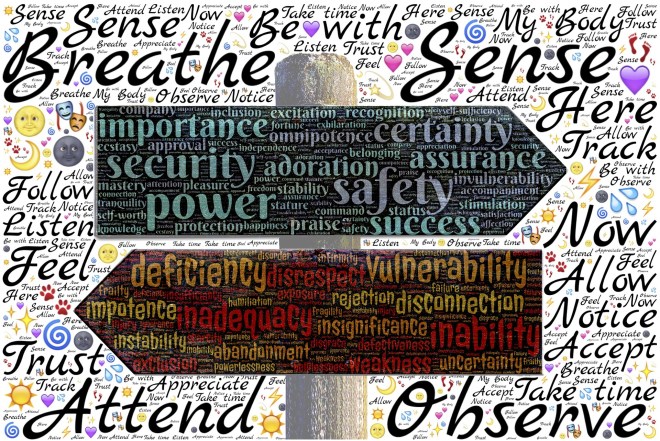
Identify what the characters want. These should be internal and external desires or goals. Internal goals may be feeling loved or having a stable life, and those impact external goals like getting a promotion and ensuring financial security or taking a risk on a relationship.

Once you’ve done this for both characters, note where their goals/desires come into conflict. These are opportunities to develop stumbling blocks in the relationship. If one MC feels driven to excel at work because he or she craves financial stability due to growing up destitute, while the other MC is working toward moving to a small town where life is simpler, this will stress the relationship.

I always think of “You’ve Got Mail” when looking at conflicting desires. One character is trying to save her independent bookstore while the other is trying to crush it in favor of his mega-book store. Neither goal is inherently bad, but there’s no way they can both win. This destroys their chance at a relationship, at least in person.

metaphor-1209691_1920

Risk of failure

Don’t look at this as just the risk of the relationship failing, but explore all types of failure that could impact the relationship. This risk MUST matter and be big enough that the reader feels anxiety over the fact that it could all fall apart.

Failure to finish a degree or accept a job in order to relocate for a relationship can build resentment. Failure to confront something in the past can push a character to run from a current relationship. Failure to prioritize a relationship over work/money/ambition will result in missed opportunities and damage a relationship.

An interesting example of this is the movie “Run Fatboy Run” where the MC signs up for a marathon after his ex-girlfriend (who he ran away from on their wedding day) and the mother of their child’s new fiancé brags about running it. Whether or not the MC actually finishes the race doesn’t really matter to anyone but him. He needs to fulfill an internal goal of proving he can finish something difficult and not run away. There’s no external risk of him failing to finish the race, but the internal risk is quite high.

steps-388914_1920

Realistic steps/progression

Developing realistic steps and reactions is hugely important in developing realistic conflict. Characters have to be able to connect with and understand the characters’ choices, even if they don’t agree with or like them.

Love at first sight doesn’t mean smooth sailing into the sunset. A fast and intense beginning to a relationship often leads to belated problems because the couple makes decisions before they’re prepared to make them or before they know each other well enough.

Friends to lovers romances are great opportunities for conflict, because there is always bound to be fallout with other friends, families, and the problems that come with knowing each other too well, such as knowing all their past relationship details and indiscretions.

If the conflict is largely internal, a character must take logical steps to address it. This may include therapy, opening up to another character, confronting someone who hurt them, etc. A promise of love from the MC doesn’t heal decades of trauma or abuse. Nobody overcomes deep issues in one day, and no one else can “fix” them.

External conflict, such as two coworkers going for the same job and being unable to keep work and their relationship separated, takes delving deep into emotions and actions. The conflict progression may look something like the characters not talking about it, to slipping in disparaging comments at work, to taking specific actions to derail their work or respectability, and so on. As the risk that they might not get the job over the other intensifies, so will the emotions involved and the willingness to take action.

Think about the movie “What Women Want” and the progression they go through as coworkers basically vying for dominance in the company and the progressive actions Mel Gibson takes as he becomes more desperate to win.

sunset-691995_1920

Resolution

If the main source of conflict can be resolved in a paragraph or two, it’s most likely much too simple and not believable. If the resolution is not believable, the reader will walk away unsatisfied and likely lose interest in the writer.

It’s important to resolve the internal sources of conflict leading up to the external source, since that is often where the real conflict begins. Internal change allows the characters’ underlying goals to become similar as the story progresses. Once their underlying goals are better aligned, it’s easier for them to see how to resolve the bigger conflict pushing them apart.

It is imperative that the resolution satisfy the reader. Reread the first chapter and ask yourself how you want the story to end. Then ask yourself, what are you willing to see each character give up in order to achieve that ending? The female MC giving up everything to fulfill the man’s goals is bound to get more than a few eye rolls from readers.

Lastly, ask yourself what steps make sense for each character to take to get from page one to the satisfying end you’re imagining. If those steps aren’t there or fleshed out enough, even the best ending will fall flat.

Consider the Disney version of Cinderella in comparison to Drew Barrymore’s version “Ever After.” Which has a more satisfying ending and why? 

Using non-chronological story structure elements effectively

Focused on story structure, I was recently discussing tactics other than the usual chronological structure with some other writers. It was an interesting discussion of not only how to use these, but some general thoughts on these devices.

desk-2906792

Past prologue:

This is a device detailing an important event that happened in the past and has effected the current situation.

This is one of the most common non-chronological devices used in fiction, and the first one that comes to mind for me is the first chapter of “Harry Potter and the Sorcerer’s Stone.” It’s not listed as a prologue, but it happens ten years prior to the next chapter, so it’s really a prologue.

This gives the reader enough information about the situation to get them interested, but it doesn’t infodump everything the reader needs to know to dive into chapter two. It only gives enough background to let the reader know something strange and interesting, and quite dangerous, is about to happen.

Past prologues can be overused and can end up being very tell-y and not show-y enough. Use them with caution and with purpose!

Future prologue:

This device details a tension-filled or dramatic future event meant to capture readers’ attention.

One of the writers in the discussion mentioned that she doesn’t like future prologues because she finds them very jarring as a reader. She felt a prologue should naturally be something that happens before the main story. Another writer mentioned these have been very popular lately and are beginning to feel overused and a bit annoying.

Laini Taylor’s “Strange the Dreamer” was mentioned as a good example of a future prologue because it reads, at first, as if it’s a past prologue. As the reader continues on, they realize that isn’t the case and this realization causes more worry and tension for the reader.

Alternating timelines:

When using this device, past/present or present/future timelines alternate between different characters or the same character in different time periods.

“As Long As Love Lasts” by Jea Hawkins was mentioned as a good example of alternating timelines. The story shows a relationship on the edge of collapse then alternates to the story of an aunt and how a relationship ended for her. The house connects the two storylines, and the aunt’s story helps to inform the reader about the couple’s failing marriage.

Flashbacks:

Flashbacks break from the current story to tell of an event that happened in the past as a complete scene.

Slaughter’s “The Good Daughter” was mentioned as a good example of flashbacks. The timeline flashes back to an event from the two sisters’ childhoods, then later flashes back to the same scene and telling it from the other sister’s perspective. This allowed for more detail and seeing the event from multiple perspectives.

Parallel timelines:

This type of timeline device tells two stories chronologically in different time periods. Both move forward together and inform the other.

I recently read Amy Harmon’s “What the Wind Knows” and loved how she handled the timeline changes. It wasn’t a traditional parallel timeline, but at the same time it was. Without giving away too much, I really enjoyed how multiple timelines were in play simultaneously and they all came together at the end really beautifully without any confusion or lingering questions.

Time jumping:

This is when a character moves through different time periods. Scenes are connected in some way and inform the other scenes.

“The Kept Woman” by Karin Slaughter was mentioned as a good example of a time-jumping story line. The first half of the book investigates a crime, and just when the reader thinks they’re beginning to put all the pieces together, the timeline jumps to before the crime and progresses forward through the events from a different perspective.

Improving work-life balance

work-1627703_1920Writers work in a variety of situations: work from home full time, work outside the home and work from home part home, work full time outside the home and fit in writing on lunch breaks and down time, and on and on. Achieving a work-life balance that works is often a challenge.


When talking about work-life balance, there are four “life quadrants” to consider: work, family, friends, and self. Work-life balance doesn’t mean all four of these are in equal balance. Work-life balance also isn’t static, but should be fluid over time to accommodate changing situations. Everyone’s personal work-life balance will be different.

Below are some tips and resources for achieving better work-life balance. Please share any additional tips that have helped you!

sunblock-1461397_1920

SELF

  1. Take care of yourself! If you aren’t caring for yourself, every other area of your life is impacted negatively.
  2. Schedule one activity per week that is just for you, whether it’s doing something on your own or going out with friends.
  3. Make others aware of your plans or schedule so they expect it and can adjust accordingly.
  4. Know when to stop or say no. This includes work commitments and family/friends activities. Simplify your life by prioritizing which activities are important and which are beyond your current capabilities.
  5. Exercise and/or meditate. Both are stress reducers and don’t have to take up hours of your day to provide health benefits. Both work to reduce stress by activating your parasympathetic nervous system, which calms everything down in the moment and long term as you develop a consistent routine.
  6. Develop strong time-management skills.
    1. Plan your entire week ahead of time.
    2. Set time limits for chores, writing etc.
    3. Keep an activity log for a few days, tracking every 15-30 minutes. Review at the end of the day and cut out whatever is unnecessary or time wasting.
    4. Reevaluate your goals so they are realistic.
    5. Utilize auto-ship/delivery/pickup services when possible.
    6. Choose easy-to-make meals and have kids or partners help prepare them when possible.
  7. Limit time-wasting activities and people. Rank daily activities based on priorities. Trim what wastes time.
  8. Participate in community engagement activities such a group discussions and book clubs at HGW and local activities and events in your area.
  9. Create a designated quiet space. This space should be a space where you can take a mental break. Make it uncluttered and free of work materials or reminders. Find a space with lots of light, one that is comfortable, has plants possibly, and is calming.
  10. Take short breaks throughout the day to get in some steps, go outside, or do something that allows you to clear your head.
  11. Change your life structure to matches your time to your responsibilities. Delegate or split tasks when possible, enlist help from services or friends, or cut out activities or responsibilities that are not necessary.
  12. Redistribute responsibilities, focus on what you specialize in, what time commitments make sense, and what you value most.

typewriter-407695_1920

WORK

  1. Let go of perfectionism, especially on a first draft. Let yourself work free of critique so you can work faster. Save the editing and re-writes for later.
  2. Limit distractions while working. Turn off your phone, internet, etc. and focus only on your work for a specific amount of time. Then take a break and clear you mind.
  3. Take pleasure in your work. Keep a list near your computer reminding you why you enjoy writing.
  4. Overlap instead of multi-tasking. Accept that some family activities do not require your full attention and can double as work time, such as waiting in the lobby for a child’s dance class to end.
  5. Set boundaries and stick to them. Know how much time you have to devote to different areas and makes others aware of your commitments so they don’t feel ignored and can help you accomplish your goals.
  6. Have a physical schedule of deadlines and projects that is posted where you and family members can see. It serves as a reminder to you and to family members of why you are busy or can’t spend as much time in other pursuits at the moment.

family-2810999_1920

FAMILY

  1. Unplug and take time for your family. Tell others about your goal to stay unplugged for a specific amount of time so they can help remind you.
  2. Choose specific family activities that need you to be fully present for – such as a child’s sporting event or school program, and leave work behind.
  3. Schedule dedicated time with family each day or week. Don’t allow other distractions. Bonding time makes you more productive and relaxed at work.
  4. Make time for sit-down breakfast to start the day on a positive note.
  5. Family dinners are good for kids because they help them have better relationships with parents, which reduces parental stress.
  6. Get kids involved with necessary chores and have fun doing them together. Turn on some music or make a game of it.
  7. Involve the kids/family in exercise time or meditation. Children need quiet time or time to work out excess energy just as much as adults do!
  8. Check in with your kids/family every so often to see how you’re doing and express your needs to them. Work-life balance is often a group effort and works much better when the whole family is invested in improvement.
  9. Develop rituals to start/stop work and mentally and emotionally prepare yourself to be present in other activities. Set aside 20 minutes before wrapping up work to tie up all loose ends and clear your mind for family time.

people-2557396_1920

FRIENDS

  1. Make time to spend with friends, but set realistic goals based on your current commitments.
  2. Write out an “ideal” time with friends, such as dinner or a movie, and write out an alternative plan for busy weeks, such as 30 minutes for coffee. Adjust on a weekly basis for what fits best for that week, but don’t skip seeing friends regularly.
  3. Involve friends in exercise activities, such as walk or fitness class.
  4. Include friends in work related activities, such as a reading club or trip to the bookstore for a reading or author event.
  5. Take short breaks during the day to text or chat with friends.

An important thing to remember when working to improve work-life balance is that we all go through different seasons where some things simply must take priority while others are pushed aside. It doesn’t mean you’re failing at one aspect or another. It means you are aware of your limitations and are taking action to manage your responsibilities.

Meeting reader expectations

read-515531_1920I’ve been working for a ghostwriting company on the side, doing writer engagement and training, and recently we discussed genre conventions and what readers expect from particular genres. It was a good experience to research the genres we work with, and I wanted to share what I found.


Below are some basic expectations, but I’d love readers to add to this list and/or discuss why these are important to meet when writing.

Religious/Spiritual

  • Focus on an inspirational theme
  • Underlying religious lessons or ethics
  • Encourage spiritual growth
  • Convey lessons about home/family, relationship, faith
  • References to God/God’s plan – few references to Jesus Christ
  • Lack of explicit sexuality – focus on emotion/relationship
  • Moral values, traditional roles
  • More defined framing of gender/gender and femininity/masculinity
  • Character(s) have strong religious convictions, or do by the end
  • Very light or no sexual content

Paranormal/Fantasy

  • Fully developed, realistic-ish world
  • Well-develop creatures that either follow mythology/folklore or are completely new
  • Well-develop system or magic/abilities that either follow mythology/folklore or are completely new
  • An epic journey – actual or self-discovery
  • Unexpected hero/villain dynamic
  • Use of archetypes
  • Romantic relationship with non-human/supernatural beings common

New/Young Adult

  • Unique voice/narration – often goes along with first person perspective
  • Character is in the correct age group (12-18 YA; 18-25 NA)
  • More simplistic prose
  • “Firsts” subject matter/Coming of Age
  • Tough subjects
  • Happy For Now (HFN) endings more common
  • Emotional development themes
  • Focus on the personal rather than the outside world
  • Parents are often absent, MC relies on friends for support

Hands Holding Hearts

Contemporary romance

  • Love is central to the plot, but lust can be the spark
  • Characters overcome problems, HEA ending
  • Full relationship arc – emotional develop is central
  • Modern setting and language
  • Realistic scenarios and outcomes
  • Developed romantic backgrounds
  • Realistic conflict
  • Secondary storylines used
  • Use of “sounding board” characters

Clean romance

  • Sexuality/romance is PG-rated or less
  • Focus is on emotional develop in relationship
  • Little to no sexual overtly thoughts
  • Little to no swearing/cursing
  • Usually no non-realistic elements
  • Usually limited to heterosexual relationships
  • Off-camera sexual encounters debatable
  • Focus on love not lust

Historical romance

  • Details are accurate to the time period
  • Time period is integral to the story
  • Gender roles very important
  • Focus on societal ideals/mores of the time on how it impacts the story
  • Theme is interpreted through the lens of the time period
  • Plot/conflict makes sense for the time period
  • Romantic interactions follow the time period social rules, for the most part

Erotica

  • Sex is central to the plot
  • Romance/relationship development is still important
  • Dynamic characters are a must
  • Typically told from the female’s POV, but not always
  • Graphic descriptions
  • Multiple (more than 2) sex scenes
  • Use of foreplay – descriptive
  • Tension runs throughout the full story
  • Unique tropes not typically covered in other subgenres (menage, BDSM, alphas, etc.)
  • There’s still a line not to cross – rape, incest, abuse, etc.
  • HFN or HEA ending

Romantic suspense

  • Suspense is secondary or equal to romance
  • Source of suspense is resolved by the end
  • Fast-paced plot, high action
  • Source of suspense jeopardizes the romance
  • Realistic details in a modern setting
  • Suspense/danger draws characters together
  • Characters are equally matched, or close to
  • Characters have a believable motivation to be involved in the suspense

Feel free to share any additional genre expectations!

a9d9a-handscarryingbooks1

Creating character chemistry

Creating chemistry in romance is important because this is what makes the reader root for the characters to find their happily-ever-after.

How do you create great chemistry?

Portrait of beautiful and fashion model womanCreate strong characters

Strong, interesting characters are key to creating chemistry in romance. If the reader doesn’t like your characters all that much, they won’t care if they end up happy.

This often means getting away from stereotypes and adding more depth to characters. Characters need flaws. Nobody likes the perfect, better-than-everyone-else character. Perfect characters don’t have enough conflict to be interesting. A strong character has strengths and weakness that will play a role in the story and their character development arc.

Create realistic attraction

This doesn’t mean no insta-love ever, especially if that’s going to be a source of conflict later when the character realize love at first sight doesn’t mean no problems, but the reason for their attraction should be believable.

Good looks aren’t enough. Being hot doesn’t prevent a person from being an asshole. Draw from personality, compatibility, intrigue, uniqueness…something that will last and create conflict later in the story.

Depressed woman portrait

Build realistic tension

Tension can come in a variety of ways, including miscommunication, lies, secrets, arguments, moving too fast/slow, etc. The key is for these to be realistic and fit with the overall story.

One rumor that’s never fact-checked or confronted and causes the MC to run away without looking back and fall into utter despair isn’t realistic and tends to frustrate readers. Especially if the MC is an otherwise strong and intelligent person.

If a point of tension can be fixed in less than a paragraph, it probably isn’t complex enough to be believable.

Create high stakes

There should always be something that can completely ruin a relationship, whether it’s developed from page one or a surprise two-thirds of the way through. The risk that everything could fall apart, and both or one of the characters knows this, will affect everything they do and act as a constant reminder to the reader that they shouldn’t assume everything will turn out all right.

8c182-coupleholdinghandsDevelop intimacy

Intimacy doesn’t mean sex, although there’s nothing wrong with sex being part of intimacy. A look or a touch, a meaningful word can build intimacy between characters just as much as physical intimacy. Every time characters are together, give them a moment that notches up their connection in some way.

When characters are not with each other, use internal dialogue, conversations with others, or small reminders/tokens (a piece of clothing or memento left behind) to develop intimacy. Building intimacy should remind the reader of what the characters could be together.

Ride the roller coaster

Chemistry shouldn’t be a straight shot to HEA. Nobody likes another person all the time. Having moments where they dislike a trait or action is realistic and lets the chemistry ebb naturally. A thoughtful or sweet act will bring it back up, maybe even stronger. The give-and-take keeps readers interested and engaged.

Keep the roller coaster ride to a reasonable level that won’t throw readers off the rails. Ups and downs are natural and important in story building. The swings shouldn’t be so drastic you give readers whiplash, though. Keep the chemistry moving in a steady, upward direction toward the climax, with believable bumps and dips along the way.

Character relationships should model reality while still working with in the overall plot to allow character growth and development.

Writing a blurb that catches reader’s attention

8858f-bookpages

It’s always a challenge to boil down and entire story into a few hundred words when writing a blurb. Most writers hate this part of publishing. We took all this time developing details and intricacies and now we have to take all of that back out and convince someone to buy it in two paragraphs or less.

How do you do that well?

Here’s a few things I’ve learned over the years.

A blurb is a sales pitch

The first sentence must grab the reader’s attention. Think of this sentence as an elevator pitch. It should capture the most interesting part of the story. That may be the conflict, mystery, romance, etc. Whatever it is that will most make readers want to check out your book, mention it in the first line.

This first sentence often sits by itself before the bulk of the blurb, giving it a better chance to catch the reader’s attention. The preview on most ebook retailers barely gives you more than a sentence or two before readers have to click “read more,” so make that first sentence count.

Format the blurb according to genre conventions

Contemporary romance tends to use short, 1-2 sentence paragraphs that highlight main points of the storyline. Historical romance tends to use longer paragraph with a more in-depth summary of each point of interest. Study blurbs on Amazon in your genre to make sure you’re formatting correctly.

Of course, sometimes you need to break out of conventions and do your own thing. Just make sure there’s a reason for using a unique format and that it conveys the tone or action of your story.

Typewriter illustrationStart with a formula that works

First, introduce the situation, then tell readers about the main problem or source of conflict, and indicate the twist without giving too much away. Effective blurbs often end with a question or with a sentence that sets the overall mood of the story.

Don’t give away the ending. This isn’t a synopsis. It’s a tease.

Leave the side characters out of it

Introduce the main characters and leave the side characters for the reader to discover once they start reading. It’s important to get readers interested in the characters right away. Give their name, a few important traits that make them unique or interesting, what their situation is, and what dilemma or conflict they’re going to face.

Don’t try to introduce side characters in the blurb. It only clutters the pitch and may make readers lose interest.

Use a cliffhanger

This isn’t a must, but for many stories a cliffhanger ending in a blurb will be a good nudge toward purchasing. Avoid giving away too much in a blurb. Present the problem and leave readers wondering how the character will overcome it.

This answer shouldn’t be too obvious, though. Even with books that are more formulaic, it’s important to make the reader curious about how this particular story will unfold. Most romances end in a happily-ever-after scenario, but they don’t all reach it the same way.

Open Blue BookChoose your words carefully

Communicate the tone of the story with words that fit the genre and situation. A dark thriller will use more intense wording while a rom-com will use light, fun words. Word choice should also match the time period and regional setting. It’s also all right to use hyperbole when appropriate, such as “unimaginable” for a shocking crime or “intoxicating” for a sudden and passionate romance, but don’t overdo it.

Keep it short and to the point

Blurbs should run 100-150 words in most cases. Don’t try to tell the reader everything you think might interest them. Stick to the important highlights.

It may be helpful to start writing a blurb with bullet points to sift out what should and shouldn’t be mentioned.

There’s no one correct way to right a blurb that will help sell a book, but starting with proven tactics and expanding from there can help you craft an enticing blurb.