Indie Author Basics: Organizing Events

Organizing your own event can be intimidating, but knowing what to expect and how to prepare can make it a little easier.

Book signings are often the first type of author event that comes to mind, but don’t limit yourself to only one mode of celebrating your work. Consider setting up a reading, author talk, educational presentation, workshop, release party, themed or holiday event, or join a local arts event.

Bookstores

If you intend to approach a bookstore for your event, there are a few important factors to consider.

Many bigger, chain bookstores will only schedule events with agented authors whose books have buyback options (most POD printers do not offer this). It can be challenging for indie authors to set up book signing or author talks at these stores, but it is always worth speaking to someone in person to see if they alternate arrangements.

Smaller or independent bookstores have more flexibility to work with authors. Many will take books for a signing on consignment and offer the author a profit split for those that are sold during the event. Some may even agree to stock consigned books for a specific amount of time.

When contacting book stores, you often need to reach out to the buyer for your genre. If they aren’t listed on a website, call the store and ask to speak with the books/fiction manager about setting up an event. Do this 1-2 months in advance.

Be sure to ask: whether they will order the books or if you will nee to provide them and when they will need them by, what the profit split is for consigned books, if will they stock leftover books, what equipment they will provide and what do you need to provide, where in the store the event will be held, where you can hang posters to advertise the event, and if they have any other rules or restrictions you should be aware of.

Other Venues

Don’t limit yourself to bookstores for you events. Coffee shops and restaurants are great alternatives for release parties, readings, or speaking events. You may need to rent the space or purchase a certain amount of food/drinks. Each business will handle this differently, and it may take some negotiating and shopping around to find something that works with your budget. Hotel conference rooms tend to be more pricey, but can host larger crowds.

If your book has a specific theme or character’s job central to the storyline, you may consider approaching a related organization or business. One author posted about hosting a signing at a fire station because her main character was a firefighter. It was a great success, because kids were able to see the trucks while the adults chatted about books, making it a fun family event.

Other Events

Pay attention to what community events are available in your area. Craft fairs and makers markets are often open to a wide variety of artists, including authors. Many of these events require paying either a booth fee or a share of sales. Consider not only your potential sales, but your chance for exposure at these events.

It’s often a good idea to sell books for a rounded price to make it easier for people to pay cash and not have to worry about providing change. Also, consider having a way to take credit card payments on a device such as Square.

Art walks, festivals, Comic Cons, and holiday events are also great options for authors to sell books. Look for separate booth fee pricing for artists. Not all events will offer this, but if the option is available, the booth fee is usually significantly cheaper than those for businesses. Be ready with a tall banner sign and business cards or postcards for people to take to remember you and your books later.

Final Tips

Set up or sign up for events as early as possible. Events like this often sell out quickly and venues have a variety of events all year that you will need to schedule around.

Bring you own bags (personalized if possible) to events not at bookstores. Books are awkward to carry around all day without a bag.

Have smaller, cheaper items available for sale. Book themed bags, pens, bookmarks, jewelry, etc. make great small gifts for book lovers even if visitors aren’t particularly interested in your books.

Have a short pitch ready to tell people what your book is about and don’t be afraid to sing it’s praises!

Indie Author Basics: Contacting Book Stores and the Media

Reaching out to media and bookstores can be intimidating for many authors. Initiating those contacts can be an important part of your marketing plan.

Newspapers

The first thing many authors might think of when considering contacting a newspaper is getting their book reviewed. Fewer and fewer newspapers provide book reviews anymore, but there are other opportunities available.

There are always paid ads with newspapers, but many papers also offer free briefs/PSA spots for announcements and events. Each paper will have their own guidelines, but in general: submit at least 2 weeks in advance of an event, write the in third person and don’t use passive language (Say “will host” instead of “will be hosting”), write in an informational rather than sales-y style, and provide all the relevant info (date, time, location, contact info).

You can also submit events like books signings or readings to newspapers’ community calendars, A&E section, calendars or event listings, or suggest a story idea to the Arts and Entertainment editor or reporter (especially if it’s a local paper and your book has local ties.)

If you do want to submit your book for a review, keep in mind that most papers will only accept paperback copies, not ebooks. You will also want to have a media kit ready with JPEG files of the cover and an author photo, as well as a description of the book, availability, ISBN, etc.

Radio

Radio interviews can be challenging to arrange. Most private radio stations will charge you a fee to be interviewed. It’s basically like buying airtime. Public radio stations will usually do interviews for free, but there may be fewer opportunities. Check out what types of interviews local radio stations typically do, and where you might fit best.

Podcasts

One of these days I’m going to get back to my Author Life podcast, so feel free to hit me up if you want to be interviewed!

If you’re not familiar with podcasts, they’re basically downloadable radio programs. They’re great because listeners can access them any time they want, and easily listen to older episodes.

Another great thing is that there are tons of writing-related podcasts out there, many of which accept guest hosts or interview authors. Check out The Author Hangout, Kobo Writing Life Podcast, The Self Publishing Show, and many others!

How do you get onto a podcast? Take the initiative and reach out to the host via their contact information published along with the show (Apple Podcasts) or on the podcast’s website. Follow the guidelines and pitch a topic, interesting writing-related story, or area of expertise.

It also a good idea to keep an eye out for posts on author groups. Many podcast hosts will post calls for participants in these groups.

Blogs

Ignore people who say blogging is dead or irrelevant. Lots of writers are still blogging and lots of industry professionals are too. It’s a great way to share content and spread the word about events and announcements, especially for people who don’t want to read long posts on social media.

Blog opportunities for writers include interviews, guest posts, promotional posts, and character interviews. Promotional posts or guest posts are sometimes paid opportunities, depending on the blog.

To get featured on a blog, pitch yourself! Check out the blog’s pitch guidelines, then make a case for why you have an interesting story, a book worth featuring, or a great topic to blog about. If it’s a smaller blog that doesn’t have guidelines posted, use their contact form instead.

Bookstores/Businesses

Bookstores love writers, but setting up a book signing or author event can be a little tricky, depending on the store.

Independent stores are more likely to work with independent authors. Traditionally published authors will often have an easier time getting in with big, chain stores than indie authors will.

The main reason for that is because big stores usually won’t take books on consignment, and if an indie author’s books don’t have a buy back option (most POD printers don’t allow this) then the store won’t order the book. Independent stores are more flexible.

When contacting a book store or business to set up an event, do so one to two months in advance. They may have other events planned or need to make sure they have staff on hand. Bookstores usually have a specific person in charge of setting up events. If that person isn’t listed online, call the store and ask who to speak to.

Be ready with specific details about you and your book, and have multiple dates to suggest. Ask if they charge a fee, if they will order the books or take them on consignment from you, what the profit split is (60/40 is common), and what equipment they will provide.

If you want to give an author talk or do a reading, ask specific questions about audio/visual equipment, location in the store/seating, and time frame.

Approaching a business requires most of the same rules, but you may also want to address why you want to have it there and what their fee is for renting the space. Coffee shops, libraries, conference rooms, restaurants, and business specific to the topic or theme of a book can be great alternatives to a bookstore.

Networking with Authors

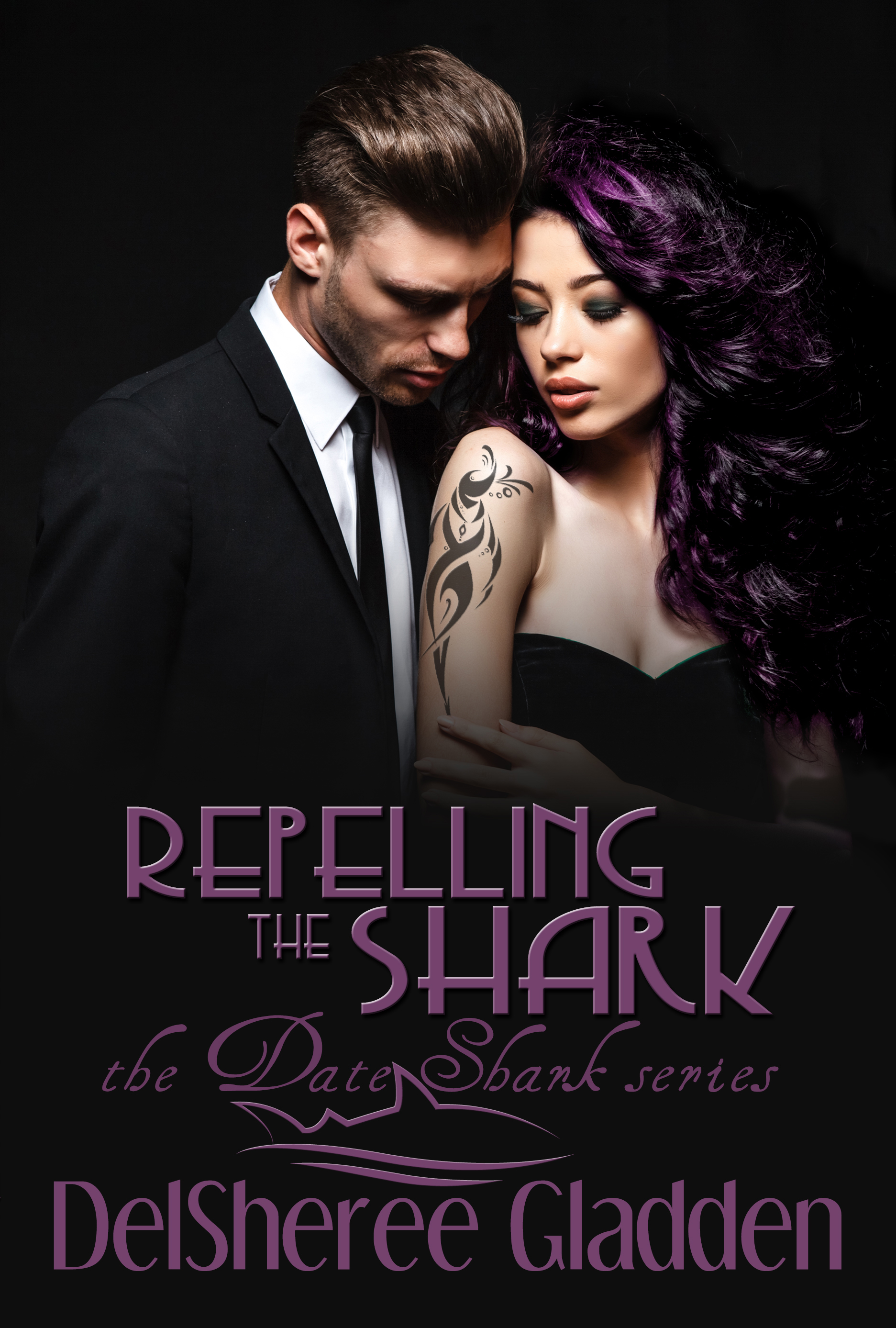
The Final Date Shark Book has arrived!

Ending a series is always a tough thing for me, but I’m so excited to wrap up The Date Shark Series with Leo Bailey’s story in “Repelling the Shark!”

Repelling the Shark

the Date Shark series, book 5

Repelling the Shark

Simple and easy falls apart when secrets revealed require making promises and opening up to the possibilities of hurt and hope.

Leo Bailey has so far escaped the curse of the date shark business. He fills in when needed, but has held onto his casual relationships and family emergency-free existence. hover

Marriage and family are a vague idea for the future, but he’s not ready to give up the freedom of being single and answering only to himself.

When Piper Moretti witnesses the demise of yet another of Leo’s friends-with-benefits relationship, she doesn’t think much of it. She has a long list of more pressing responsibilities and headaches to occupy her mind.

Friends, and the strings that go with them, are at the bottom of her priority list.

When a date shark client who tops the list of bizarre behavior Leo has seen, his half-joking request for rescue drags Piper into the chaos and into Leo’s life.

Neither one wants more than a simple, no-stress friendship. Secrets and surprises force them to admit neither one is nearly as in control of their futures as they think they are.

Helping each other means getting involved, making promises, and opening themselves up to the hurt and hope they’re both terrified to face.

Indie Author Basics: Production Costs

What does it cost to be an indie author? It’s question many new writers want to know. When you take on the production cost of a book, you need to know where those costs will fit into your budget.

***Quick note to say I will be moving my weekly posts to Tuesdays***

Editing

The cost of editing depends on what type of editing you need for your project.

Developmental editing is the most involved and the most expensive. A developmental editor will help you work out problems with the story/characters and help improve the flow and style . It will cost you about $0.08/word or $20/page.

Copyediting is less involved and doesn’t dig into story or character problems. It mainly deals with improving sentence structure and readability, as well as generally tightening up the writing. It will cost you about $0.02/word or $5/page.

Proofreading in the least involved and least expensive, but requires the writer (or a previous round of editing) to have cleaned up the manuscript as much as possible. Proofreading aims to catch typos and punctuation errors, not fix major issues. It will cost you about $0.01/word, $3/page.

Cover Design

The cost depends on whether you want an ebook cover only, a full wrap cover for a paperback, or both, as well as whether you want a customer cover (with stock or exclusive photos) or a premade cover.

Premade covers are the least expensive option, but offer the least ability to customize. Most quality premades are in the $30-$50 range. Most premades are only ebook covers, but many designers offer an add on option to turn it into a full wrap if you need it.

Stock photos in a custom cover will be less expensive than using exclusive photos. Custom covers are usually in the $50-$150 range for ebook covers and you can plan to add another $30-$50 to add a full wrap to the package. The range has to do with how many photos are need for the cover. More photos means more cost.

Exclusive images guarantee no one else will have your same cover, but you’ll pay for that privilege. Plan on $500 and up for a custom photo shoot.

Formatting

Formatting for ebooks and paperbacks can be learned by those with knowledge of Word or the willingness to learn software like Jutoh, Kindle Create, or Calibre. InDesign is a professional level software that has a steep learning curve, but is doable if you’re on a tight budget and willing to put the time in.

If you want to hire out formatting, the cost will depend on the type and difficulty. Images will up the difficulty in any project, as will graphics like charts, table, multiple frames, etc.

For fiction ebook formatting, plan on $150-$250. For print formatting, plan on $200-$300. Most formatters will offer package pricing to do both at once.

Setup and Extra Help

Most authors with basic computer skills will be able to create their accounts and upload their documents without help. Those who run into problems or have limited computer skills or access, having someone tackle this part of the publishing process is available. An average cost is around $20/hour.

Production on a Tight Budget

If you are working with a small budget and want to do as much yourself as possible, be honest with yourself about your skill level in each category.

Learning to format in Word is a great way to cut costs. Designing your own book cover when you have no design experience is not. Start with a premade cover and upgrade when your budget isn’t as tight.

Editing your own book is extremely difficult. If you can’t afford a professional editor yet, trade with another author or see if a local teacher could help out for a lower fee.

The goal is putting out a professional product. Save money where you can, but not at the cost of putting out a subpar book.

Indie Author Basics: Responsibilities of an Indie Author

Without a traditional publisher, what do indie authors need to handle on their own?

The list may be long, but it doesn’t have to be overwhelming. Breaking everything down can help you decide which tasks to learn to do yourself and which to hire out.

I’ll break these down in the coming weeks, but here’s a broad list of what indie authors devote their time to when not writing:

Production costs

These costs include editing (developmental, copy editing, proofreading), cover design, formatting, setup, distribution fees. Next week, I’ll break down costs for each of these as well as options for reducing the overall cost of book production.

Marketing

Marketing includes building a plan and carrying it out, learning about paid advertising and booking ads, setting up and managing social media accounts, participating in online and in-person events, writing and sending out press releases, and much more.

Networking

When it comes to networking, it’s important to engage with the author community, join groups and lists, make friends for support, find beta readers or critique partners, and learn from others in the industry.

Collaborate

Collaborations that are popular right now include box sets, worlds, promo groups, etc. These collaborations help authors expand their audience and reach, as well as learn more about marketing and promotion.

Reaching Out

Reaching out to media, stores, businesses, etc. is part of marketing, but for many people it’s a different skill than interacting on social media or booking ads. Different types of stores have different requirements for booking an author signing, and bookstores aren’t the only option for signings. Learning how to approach a business, radio station, newspaper, etc. the right way can make a difference in being accepted.

Events

Without an agent or publisher, indie authors are often responsible for organizing their own signings, publicity events, participation in books fairs, speaking engagements, conferences, etc. Learning about what types of events are worth while, how to get involved, or what type of classes to submit to a conference can help you make solid plan.

Over the next few weeks I’ll be discussing each of these topics in more detail. Follow the blog to make sure you don’t miss a topic!

Indie Author Basics: What is an indie author and is it right for you?

What is an indie author?

An indie author is a writer who self-publishes to sell their work, who approaches publishing as a business, who retains all or most rights to their work, and who retains creative control over their work.

Authors today have many more publishing options than they have in the past. The three most common are traditional, indie, and hybrid. What are the differences between being a traditional, hybrid, and independent author?

Traditional: Contract with a publisher to have a book published. Sign over some or all rights to the work for a specific period of time. Most production decisions are made by the publisher. Publishers bear the cost of production and some marketing. Royalties are shared between the publisher, agent (if there is one), and the author.

Indie: Self-publishes all their books. Retains all rights to their work. Earns higher royalties. Author bears productions costs and marketing costs. Retains full creative control. Approaches writing as a business/career.

Hybrid: Publishes through a publisher and self-publishing. At least one book is self-published. Has a non-exclusive contract with a publisher, or self-publishes books that have been passed on/release by the publisher using a right of first refusal clause. Indie titles may be backlist books released from contracts.

When considering which option is right for you, consider some of the following questions:

What aspects of publishing can you learn to do yourself?

What aspects will you need help with?

How much of your royalties are you willing to give up in exchange for help?

How much time to do you have to commit to publishing?

How much creative/production control do you want?

What rights are you willing to give up and for how long?

There is no one-size-fits-all answer to publishing and deciding on a publishing route should be well thought out.

Next week, we’ll talk about some of the responsibilities indie author take on to build their career.

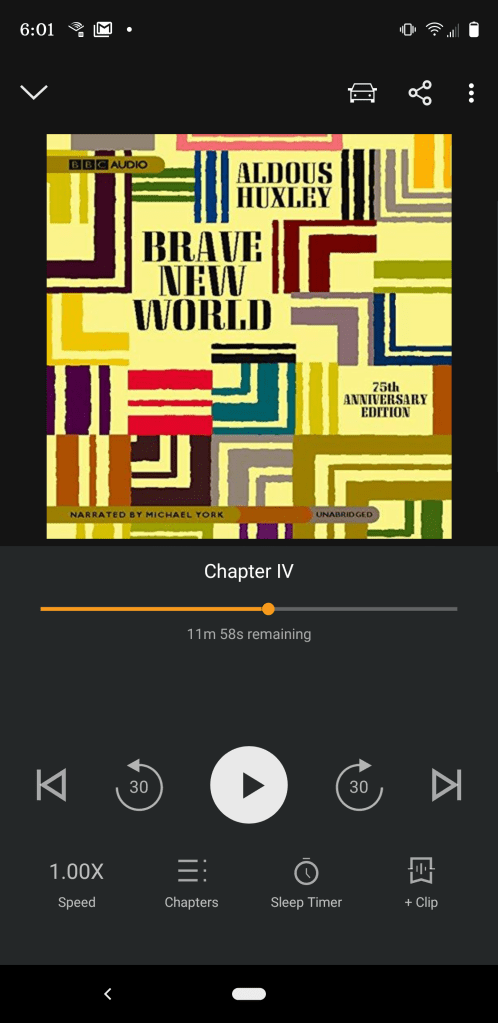
Lessons Learned: Brave New World

I just finished listening to Brave New World by Aldus Huxley and there were three main lessons I took away from the book.

Those who aren’t familiar with the novel should know a few things. It was published in 1932 and is a dystopian fiction novel set in largely London and, for a brief period, in a Native American reservation in New Mexico. The story explores themes of society vs. the individual, passion vs. stability, and the price of happiness.

Lesson 1: Use unique structure purposefully

In the early chapters, Huxley has a section where the Controller is explaining the dystopian world to the reader through a tour he’s giving to research students visiting a fertilization factory.

During this explanation, there are insertions of other character’s points of view, sometimes breaking in after only a few lines or mid-sentence. At first, the style was very distracting, especially since I was listening to the book and didn’t have visual cues of the shifts. The patched together structure was interesting, though, because as the Controller is explaining the process of creating humans ideal for their society, the reader is given examples of how these methods control the behavior of individuals.

If you choose to use a unique structure in your writing, make sure there is a good reason for it, or it may only serve to confuse or distract readers.

Lesson 2: Don’t preach to readers to get a point across

I have a personal dislike for preachy books, probably because I grew up in a very religious household and had more than enough of that growing up.

If you have a particular point or philosophy you want to share with readers, do so through the characters and story and NOT by directly telling them what the right way or answer is. Let them discover the idea or answer by experiencing the story.

Huxley does this very well in this book. The Controllers and other characters do, at times, directly state the theories and philosophies of the society, however there is always a skeptical character to give the reader another point of view or at least make them question the legitimacy of the concept.

Each of the four main characters have viewpoints that differ from the main society in different ways as well, so the reader isn’t inundated with only one character’s arguments or ideas. Each character is also given a strong reason for seeing things differently, so their struggle with society feels genuine and unforced.

As the reader, there were times it was hard to decide which idea or concept was “right” or “better” because Huxley did such a good job of showing both sides of an argument. Instead of telling the reader how to think, the story asks reader to thoughtfully consider the philosophies presented and decide for themselves.

Lesson 3: An unsatisfying ending can work when the story calls for it

Just as there were times while reading that I couldn’t fully commit to one side or another of an argument or philosophy, I couldn’t really think of a way the story could end in a satisfying way because the issues were too big to be wrapped up simply and easily.

Maybe Huxley felt the same, or maybe his purpose wasn’t to provide answers (which I think is very likely), because the book doesn’t have a satisfying end in the sense that any of the issues are solved. A few of the characters find relatively acceptable ends but, for the most part, story aspects are left either unhappy or up to the reader to puzzle out.

It didn’t bother me to have the book end like this, though, because a neatly wrapped up ending where everything was solved would have felt manufactured and trite. The purpose of the novel seemed to be to get readers to think more deeply about how individuals and society have to reach a balance, what it means to be happy, whether passion and stability can coexist, and who or what should set moral and ethical boundaries.

A story doesn’t need a satisfying ending if the purpose is to leave readers unsatisfied enough to keep thinking about the problem and the possible solutions.

Why worldbuilding is important in all genres

Fictional settings, whether modern in the real world, sci-fi, fantasy, or paranormal, require some level of worldbuilding.

The world your character lives in should have an impact on the story

Setting should transport the reader to that location and not feel like it could have taken place anywhere. Worldbuilding is creating a fictional world that still feels realistic.

Details make all the difference in worldbuilding, and keep a setting from feeling generic. Highlight unique and quirky elements and integrate them into the storyline and character profiles.

When worldbuilding, consider which of these will be relevant to the story:

Layout and geography, what lies beyond the immediate setting, politics, laws, and governing systems, culture and traditions, weather, local plants and animals, jobs, economy, imports/exports, history, enemies, and allies, folklore and urban legends, details only locals would know, and the hero’s feelings and opinions about the place.

All of these will affect the character’s views, way of thinking, actions, choices, and lifestyle.

Details make the difference in worldbuilding, whether high fantasy or the corner coffee shop. However, the level of detail depends on the genre.

Unless the color of every mug in a coffee shop is relevant to the story, leave it out. Developing an intricate system of magical spell-creation requires a higher level of detail so the reader can understand the process.

Details MUST be relevant, no matter the genre.

What characters eat can indicate location (coleslaw on pulled pork sandwiches in the south), income (another Ramen noodle dinner!), personality quirks (all food must be yellow), and more. Irrelevant details confuse readers and cause them to look for hints or twists where there aren’t any. Remember the advice that if you mention a gun in scene 1, it better be fired by someone by the end of the story!

Once you have the foundation and are starting to add details, do so in logical layers.

Real world example:

Choose the city relevant to the story line -> choose a professional that makes sense for the location and character -> choose a neighborhood with access to or amenities that will help progress the story -> choose frequently visited locations that provide opportunities for conversations, action, or conflict -> develop hobbies that allow for character growth, etc.

Paranormal example:

Choose a mythology base -> tweak the base to suit major plot points -> develop main powers/beasts that provide conflict between two or more groups -> develop rules for powers/beasts that keep winning from being too easy -> develop goals for each opposing group -> develop individuals goals that clash with others/the group -> develop individual power/beast uniqueness that needs to develop, etc.

In every genre there is a logical progression to worldbuilding and every element added should impact the characters and story in a meaningful way.

Incorporate details like region, weather, local plants and animals, etc. into a story to make it feel more real to the reader.

Going beyond familiar story structures

Most of us are familiar with the 3-act structure, the hero’s journey, and the classic structure. They work well for many stories, but occasionally another structure is better suited.

When choosing the structure of your story, don’t immediately go to the ones you’re familiar with

Classic: Consists of 4 main sections.

1) Begin with conflict, or throw the character into a bad situation as soon as possible. This might include a life or death situation, the protagonist meeting two love interests back to back, discovering dangerous secret powers, etc.

2) Nearly all actions or choices make matters worse. Don’t give your character a break through this section. Pile on complications and conflict.

3) The hopeless, dark moment. Convince the reader the story might not end well with deep, emotional conflict that doesn’t have an easy solution.

4) Let the hero succeed. Once you’ve put your character through the ringer, give him the spark of inspiration or light at the end of the tunnel that leads them toward a satisfying ending.

In Media Res: Start in the middle of something.

It doesn’t have to be a gun fight, but it does have to have conflict and grab the reader’s attention. The HOOK is extremely important in this structure. It then follows a pattern of rising action, explanation/backstory, climax, falling action, and resolution.

The Hero’s Journey: Begins with a call to adventure/action.

The MC then meets a threshold where their transformation begins. The MC then faces challenges and tribulations, meeting a mentor and one or more helpers along the way. The MC then faces an abyss/dark moment that symbolizes death and rebirth. They should have some kind of revelation at this point that spurs real transformation and leads to atonement. The character then returns to regular life.

Seven-Point: The seven-point structure is similar to the 3-Act structure

It has added structural elements the writers is expected to follow more closely. It consists of: The hook, plot turn 1 (and introduction of conflict), pinch point 1 (apply pressure to protagonist via antagonist usually), midpoint (MC responds to conflict with action), pinch point 2 (more pressure that makes achieving the goal less likely or harder), plot turn 2 (story turns toward resolution), and the resolution (the climax).

Snowflake: Start with one central idea and add to it.

Once you have your central idea, keep adding more ideas until you have a full plot arc. This structure is based on expansion of a central theme or idea. It starts very generally and becomes more specific as the details are developed. This can be very structured (start with one sentence, expand to a paragraph, summarize each character, etc.) or be approached more fluidly.

Three-Act: Based on Greek storytelling/theater.

Specific plot elements happen in each act. Act 1: Introduce characters and setting, present the inciting incident. Act 2: Introduce a problem that grows more complex as the story progresses. Act 3: Raise the stakes, characters face challenges and growth, protagonist finds a solution.

Disturbance/Doorway: Something disturbs the character’s regular life early in the story.

Doorway 1 pushes the MC further into the story. There is no turning back once it happens. Doorway 2 brings the MC to the final battle. Again, there it no return, and it often leads to disaster before a resolution is reached.

Five Milestones: Focuses on five main plot points and leaves the detail to be more flexible.

1) The setup introduces characters and the world.

2) The inciting incident introduces the main plot concept.

3) The 1st Slap sets the stakes and introduces the larger plot. The conflict is usually external at this point.

4) The 2nd Slap makes everything worse by adding more layers of conflict and barrier to the MC reaching their goal.

5) The climax should be tied to the inciting incident and wrap up the plot arc in an exciting and memorable way. It should then naturally flow into a resolution.

Narrative: Focuses mainly on story and plot.

It is less restrictive on when and where story/plot elements occur. It also uses the Fitchean Curve of crises driving the rising action to the climax, then falling action leading to the resolution. Exposition is limited and the story focuses more on the action and crises.

For some film examples of unorthodox story structures, check out this list!

The problems with second person narration and directly addressing the reader

I’ve been reviewing a lot of writing samples lately for the ghostwriting company I train writers for, and I’ve noticed a trend of using sections of second person narration and directly addressing the reader quite frequently.

While second person narration can be used effectively, it’s generally not ideal for commercial adult fiction. Directly addressing the reader can be used sparingly, but it is often jarring and pulls the reader out of the story by reminding them that they’re reading a book.

Second person narration is when the story is told in the voice of an onlooker (the reader). “You are not the kind of guy who would be at a place like this at this time of the morning. But here you are, and you cannot say that the terrain is entirely unfamiliar, although the details are fuzzy.” Jay McInerney’s Bright Lights, Big City

Directly addressing the reader is when the narrator “breaks the fourth wall” and speaks to the reader directly using YOU. “Good. Now I know I can trust you. You’re curious. You’re brave. And you’re not afraid to lead a life of crime.” Pseudonymous Bosch’s The Name of this Book Is Secret

Why these are rarely used in fiction:

Directly addressing the reader is NOT a replacement for an omniscient POV. This is often used to remind the reader of something (Now, I told you this wouldn’t have a happy ending) or tell the reader what will happen next (If only she had known the cable was lose, she wouldn’t have climbed out onto it.) If a story is not being written from an omniscient POV, this is incorrectly breaking out of the POV and is jarring to the reader. Choose a POV and stick to it.

They break suspension of disbelief. It’s very difficult for a reader to suspend disbelief and feel they are immersed in the story when they are being asked questions, told direct information, or reminded that they are being told a story.

Both are extremely difficult to use correctly. To make these techniques work, they have to be done consistently throughout the story, to avoid startling the reader every time they are addressed. Few stories are suited to constant commentary from the narrator and can frustrate and tire the reader.

The use of YOU reminds readers of children’s fiction, blog posts, and self-help books. The Tale of Despereaux has a wonderful narrator voice that explains difficult words and concepts to young readers and helps them understand the story. When adult readers are directly addressed, many feel they are being condescended to or instructed on how to read or enjoy the story. Both can be major turnoffs for readers.

It is difficult to develop characters and a story that suits second person narration. The narrator is limiting to watching from a distance with second person narration. Even when omniscient, the reader never truly gets inside the characters’ heads and feels less involved in the story.

Second person narration is difficult to maintain in pieces longer than a few pages. Second person narration is tiring for readers to read. It feels like they are being asked to answer questions or be actively involved in a story rather than enjoying it as an observer.

For a list of more things readers don’t like, check out the link below!