Writing compelling conflict in romance

Conflict is what keeps readers reading…until it doesn’t. When readers get bored, they get a new book. Developing deep, rich conflict will keep readers engaged and interested. Let’s break down conflict in romance and discuss how we can craft conflict readers won’t be able to turn away from.
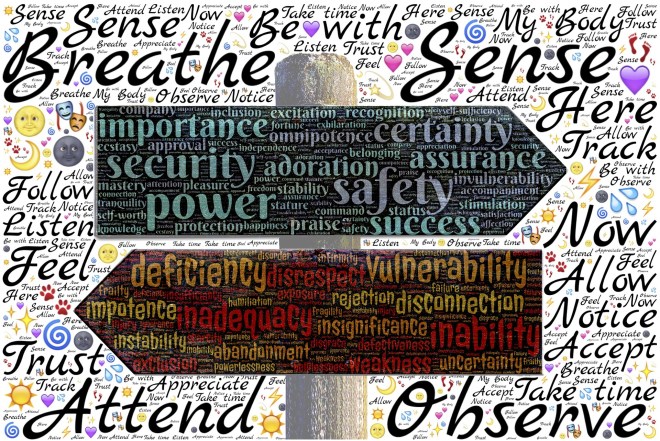
duality-1003292_1920

Internal and external conflict

Identify what the characters want. These should be internal and external desires or goals. Internal goals may be feeling loved or having a stable life, and those impact external goals like getting a promotion and ensuring financial security or taking a risk on a relationship.

Once you’ve done this for both characters, note where their goals/desires come into conflict. These are opportunities to develop stumbling blocks in the relationship. If one MC feels driven to excel at work because he or she craves financial stability due to growing up destitute, while the other MC is working toward moving to a small town where life is simpler, this will stress the relationship.

I always think of “You’ve Got Mail” when looking at conflicting desires. One character is trying to save her independent bookstore while the other is trying to crush it in favor of his mega-book store. Neither goal is inherently bad, but there’s no way they can both win. This destroys their chance at a relationship, at least in person.

metaphor-1209691_1920

Risk of failure

Don’t look at this as just the risk of the relationship failing, but explore all types of failure that could impact the relationship. This risk MUST matter and be big enough that the reader feels anxiety over the fact that it could all fall apart.

Failure to finish a degree or accept a job in order to relocate for a relationship can build resentment. Failure to confront something in the past can push a character to run from a current relationship. Failure to prioritize a relationship over work/money/ambition will result in missed opportunities and damage a relationship.

An interesting example of this is the movie “Run Fatboy Run” where the MC signs up for a marathon after his ex-girlfriend (who he ran away from on their wedding day) and the mother of their child’s new fiancé brags about running it. Whether or not the MC actually finishes the race doesn’t really matter to anyone but him. He needs to fulfill an internal goal of proving he can finish something difficult and not run away. There’s no external risk of him failing to finish the race, but the internal risk is quite high.

steps-388914_1920

Realistic steps/progression

Developing realistic steps and reactions is hugely important in developing realistic conflict. Characters have to be able to connect with and understand the characters’ choices, even if they don’t agree with or like them.

Love at first sight doesn’t mean smooth sailing into the sunset. A fast and intense beginning to a relationship often leads to belated problems because the couple makes decisions before they’re prepared to make them or before they know each other well enough.

Friends to lovers romances are great opportunities for conflict, because there is always bound to be fallout with other friends, families, and the problems that come with knowing each other too well, such as knowing all their past relationship details and indiscretions.

If the conflict is largely internal, a character must take logical steps to address it. This may include therapy, opening up to another character, confronting someone who hurt them, etc. A promise of love from the MC doesn’t heal decades of trauma or abuse. Nobody overcomes deep issues in one day, and no one else can “fix” them.

External conflict, such as two coworkers going for the same job and being unable to keep work and their relationship separated, takes delving deep into emotions and actions. The conflict progression may look something like the characters not talking about it, to slipping in disparaging comments at work, to taking specific actions to derail their work or respectability, and so on. As the risk that they might not get the job over the other intensifies, so will the emotions involved and the willingness to take action.

Think about the movie “What Women Want” and the progression they go through as coworkers basically vying for dominance in the company and the progressive actions Mel Gibson takes as he becomes more desperate to win.

sunset-691995_1920

Resolution

If the main source of conflict can be resolved in a paragraph or two, it’s most likely much too simple and not believable. If the resolution is not believable, the reader will walk away unsatisfied and likely lose interest in the writer.

It’s important to resolve the internal sources of conflict leading up to the external source, since that is often where the real conflict begins. Internal change allows the characters’ underlying goals to become similar as the story progresses. Once their underlying goals are better aligned, it’s easier for them to see how to resolve the bigger conflict pushing them apart.

It is imperative that the resolution satisfy the reader. Reread the first chapter and ask yourself how you want the story to end. Then ask yourself, what are you willing to see each character give up in order to achieve that ending? The female MC giving up everything to fulfill the man’s goals is bound to get more than a few eye rolls from readers.

Lastly, ask yourself what steps make sense for each character to take to get from page one to the satisfying end you’re imagining. If those steps aren’t there or fleshed out enough, even the best ending will fall flat.


Consider the Disney version of Cinderella in comparison to Drew Barrymore’s version “Ever After.” Which has a more satisfying ending and why? 

Using non-chronological story structure elements effectively

Focused on story structure, I was recently discussing tactics other than the usual chronological structure with some other writers. It was an interesting discussion of not only how to use these, but some general thoughts on these devices.

desk-2906792

Past prologue:

This is a device detailing an important event that happened in the past and has effected the current situation.

This is one of the most common non-chronological devices used in fiction, and the first one that comes to mind for me is the first chapter of “Harry Potter and the Sorcerer’s Stone.” It’s not listed as a prologue, but it happens ten years prior to the next chapter, so it’s really a prologue.

This gives the reader enough information about the situation to get them interested, but it doesn’t infodump everything the reader needs to know to dive into chapter two. It only gives enough background to let the reader know something strange and interesting, and quite dangerous, is about to happen.

Past prologues can be overused and can end up being very tell-y and not show-y enough. Use them with caution and with purpose!

Future prologue:

This device details a tension-filled or dramatic future event meant to capture readers’ attention.

One of the writers in the discussion mentioned that she doesn’t like future prologues because she finds them very jarring as a reader. She felt a prologue should naturally be something that happens before the main story. Another writer mentioned these have been very popular lately and are beginning to feel overused and a bit annoying.

Laini Taylor’s “Strange the Dreamer” was mentioned as a good example of a future prologue because it reads, at first, as if it’s a past prologue. As the reader continues on, they realize that isn’t the case and this realization causes more worry and tension for the reader.

Alternating timelines:

When using this device, past/present or present/future timelines alternate between different characters or the same character in different time periods.

“As Long As Love Lasts” by Jea Hawkins was mentioned as a good example of alternating timelines. The story shows a relationship on the edge of collapse then alternates to the story of an aunt and how a relationship ended for her. The house connects the two storylines, and the aunt’s story helps to inform the reader about the couple’s failing marriage.

Flashbacks:

Flashbacks break from the current story to tell of an event that happened in the past as a complete scene.

Slaughter’s “The Good Daughter” was mentioned as a good example of flashbacks. The timeline flashes back to an event from the two sisters’ childhoods, then later flashes back to the same scene and telling it from the other sister’s perspective. This allowed for more detail and seeing the event from multiple perspectives.

Parallel timelines:

This type of timeline device tells two stories chronologically in different time periods. Both move forward together and inform the other.

I recently read Amy Harmon’s “What the Wind Knows” and loved how she handled the timeline changes. It wasn’t a traditional parallel timeline, but at the same time it was. Without giving away too much, I really enjoyed how multiple timelines were in play simultaneously and they all came together at the end really beautifully without any confusion or lingering questions.

Time jumping:

This is when a character moves through different time periods. Scenes are connected in some way and inform the other scenes.

“The Kept Woman” by Karin Slaughter was mentioned as a good example of a time-jumping story line. The first half of the book investigates a crime, and just when the reader thinks they’re beginning to put all the pieces together, the timeline jumps to before the crime and progresses forward through the events from a different perspective.

Creating character chemistry

Creating chemistry in romance is important because this is what makes the reader root for the characters to find their happily-ever-after.

How do you create great chemistry?

Portrait of beautiful and fashion model womanCreate strong characters

Strong, interesting characters are key to creating chemistry in romance. If the reader doesn’t like your characters all that much, they won’t care if they end up happy.

This often means getting away from stereotypes and adding more depth to characters. Characters need flaws. Nobody likes the perfect, better-than-everyone-else character. Perfect characters don’t have enough conflict to be interesting. A strong character has strengths and weakness that will play a role in the story and their character development arc.

Create realistic attraction

This doesn’t mean no insta-love ever, especially if that’s going to be a source of conflict later when the character realize love at first sight doesn’t mean no problems, but the reason for their attraction should be believable.

Good looks aren’t enough. Being hot doesn’t prevent a person from being an asshole. Draw from personality, compatibility, intrigue, uniqueness…something that will last and create conflict later in the story.

Depressed woman portrait

Build realistic tension

Tension can come in a variety of ways, including miscommunication, lies, secrets, arguments, moving too fast/slow, etc. The key is for these to be realistic and fit with the overall story.

One rumor that’s never fact-checked or confronted and causes the MC to run away without looking back and fall into utter despair isn’t realistic and tends to frustrate readers. Especially if the MC is an otherwise strong and intelligent person.

If a point of tension can be fixed in less than a paragraph, it probably isn’t complex enough to be believable.

Create high stakes

There should always be something that can completely ruin a relationship, whether it’s developed from page one or a surprise two-thirds of the way through. The risk that everything could fall apart, and both or one of the characters knows this, will affect everything they do and act as a constant reminder to the reader that they shouldn’t assume everything will turn out all right.

8c182-coupleholdinghandsDevelop intimacy

Intimacy doesn’t mean sex, although there’s nothing wrong with sex being part of intimacy. A look or a touch, a meaningful word can build intimacy between characters just as much as physical intimacy. Every time characters are together, give them a moment that notches up their connection in some way.

When characters are not with each other, use internal dialogue, conversations with others, or small reminders/tokens (a piece of clothing or memento left behind) to develop intimacy. Building intimacy should remind the reader of what the characters could be together.

Ride the roller coaster

Chemistry shouldn’t be a straight shot to HEA. Nobody likes another person all the time. Having moments where they dislike a trait or action is realistic and lets the chemistry ebb naturally. A thoughtful or sweet act will bring it back up, maybe even stronger. The give-and-take keeps readers interested and engaged.

Keep the roller coaster ride to a reasonable level that won’t throw readers off the rails. Ups and downs are natural and important in story building. The swings shouldn’t be so drastic you give readers whiplash, though. Keep the chemistry moving in a steady, upward direction toward the climax, with believable bumps and dips along the way.

Character relationships should model reality while still working with in the overall plot to allow character growth and development.

Writing a blurb that catches reader’s attention

8858f-bookpages

It’s always a challenge to boil down and entire story into a few hundred words when writing a blurb. Most writers hate this part of publishing. We took all this time developing details and intricacies and now we have to take all of that back out and convince someone to buy it in two paragraphs or less.

How do you do that well?

Here’s a few things I’ve learned over the years.

A blurb is a sales pitch

The first sentence must grab the reader’s attention. Think of this sentence as an elevator pitch. It should capture the most interesting part of the story. That may be the conflict, mystery, romance, etc. Whatever it is that will most make readers want to check out your book, mention it in the first line.

This first sentence often sits by itself before the bulk of the blurb, giving it a better chance to catch the reader’s attention. The preview on most ebook retailers barely gives you more than a sentence or two before readers have to click “read more,” so make that first sentence count.

Format the blurb according to genre conventions

Contemporary romance tends to use short, 1-2 sentence paragraphs that highlight main points of the storyline. Historical romance tends to use longer paragraph with a more in-depth summary of each point of interest. Study blurbs on Amazon in your genre to make sure you’re formatting correctly.

Of course, sometimes you need to break out of conventions and do your own thing. Just make sure there’s a reason for using a unique format and that it conveys the tone or action of your story.

Typewriter illustrationStart with a formula that works

First, introduce the situation, then tell readers about the main problem or source of conflict, and indicate the twist without giving too much away. Effective blurbs often end with a question or with a sentence that sets the overall mood of the story.

Don’t give away the ending. This isn’t a synopsis. It’s a tease.

Leave the side characters out of it

Introduce the main characters and leave the side characters for the reader to discover once they start reading. It’s important to get readers interested in the characters right away. Give their name, a few important traits that make them unique or interesting, what their situation is, and what dilemma or conflict they’re going to face.

Don’t try to introduce side characters in the blurb. It only clutters the pitch and may make readers lose interest.

Use a cliffhanger

This isn’t a must, but for many stories a cliffhanger ending in a blurb will be a good nudge toward purchasing. Avoid giving away too much in a blurb. Present the problem and leave readers wondering how the character will overcome it.

This answer shouldn’t be too obvious, though. Even with books that are more formulaic, it’s important to make the reader curious about how this particular story will unfold. Most romances end in a happily-ever-after scenario, but they don’t all reach it the same way.

Open Blue BookChoose your words carefully

Communicate the tone of the story with words that fit the genre and situation. A dark thriller will use more intense wording while a rom-com will use light, fun words. Word choice should also match the time period and regional setting. It’s also all right to use hyperbole when appropriate, such as “unimaginable” for a shocking crime or “intoxicating” for a sudden and passionate romance, but don’t overdo it.

Keep it short and to the point

Blurbs should run 100-150 words in most cases. Don’t try to tell the reader everything you think might interest them. Stick to the important highlights.

It may be helpful to start writing a blurb with bullet points to sift out what should and shouldn’t be mentioned.

There’s no one correct way to right a blurb that will help sell a book, but starting with proven tactics and expanding from there can help you craft an enticing blurb.

Worldbuilding

As writers, we all know how important worldbuilding is when writing fantasy, science fiction, or dystopian.

What about when you’re writing contemporary realistic fiction?

You may not need to create detailed maps or a new social structure when writing about the real world, but that doesn’t mean you’re off the hook when it comes to worldbuilding.

What aspects of worldbuilding apply to contemporary realistic fiction?

Creating your own town

Small European TownCreating a fictional town is definitely the most involved type of worldbuilding in contemporary realistic fiction. You’ll draw from real places with the goal of developing something new and interesting. A huge benefit of making up a location is that you aren’t bound by anything. Another benefit is that you won’t spend hours researching a real place and worry about whether you’ve portrayed it correctly. A fictional location allows you to build the exact setting you need to develop your plot and characters.

What should you consider when creating your own town or setting?

What type of location does the storyline call for? Is your character on his own in a big city for the first time? Is she pulled from city life to figure out small-town living? Does the story require seclusion or crowds? How plugged in is your main character? Are they a foodie who loves trying new eateries or someone who loves the familiar?

How do you develop realistic details?

Desert RoadStart off based in reality. For those who’ve watched Twin Peaks and paid attention to the opening credits, the welcome sign claims the town has 51k people, yet everyone knows each other and there seems to be only one restaurant. Take the time to research town sizes and amenities in order to make sure everything lines up.

Check into weather and seasonal changes as well. Summer comes to Phoenix a lot quicker than Montana, BUT if you’ve been living with single digits for six months in Colorado Springs, 35 degrees feels pretty nice and you might see a few pairs of capris or flipflops.

Investigate the demographics, foods, culture, and dialect of your fictional town’s region or state. Just because your town is made up doesn’t mean you can go wild with random details. Ask people around the county how they refer to a carbonated beverage or what toppings they put on a pulled pork sandwich. If you spell chile (the vegetable) with an “I” in the Southwest, you’ll get more than a few eye rolls.

Building a neighborhood

Death_to_Stock_Photography_NYC_Skyline_7Whether you’re creating a fictional town or using a real town, you still need to develop the small-scale details of the neighborhood or apartment building your characters inhabit.

Who else lives here and how do they interact with the main character(s)? What is the overall feel of the area? This is a great place to start developing secondary characters and conflicts. Think about where the neighbors or residents tend to hang out or stop off for a quick conversation or gossip exchange. Is it in the laundry room or by the mailboxes? Does everyone walk to their destinations or is driving necessary? Does the MC want to stay or are they anxious to get out of dodge?

Consider the type of building or homes. Older homes have different problems then newer ones. What are the main issues and best aspects of the area and how do they impact the story? A dirty, trash-ridden street will create a different feeling than an old dirt road with cattle fence separating the properties.

Places to go and things to do

Death_to_stock_communicate_hands_4Thinks Friends when you’re creating your characters’ daily habits and local haunts. Who’s apartment/house does everyone tend to hang out at and why? What features make it desirable? When they’re out and about, where do they often stop for coffee or to catch up, and how does that environment help the story? If characters need a quiet place to trade secrets or go over plans, a busy, noisy coffee shop might not work as well as a used bookstore.

Something to remember here is that locations should have a point and progress the story. Just because your characters likes kittens doesn’t mean readers need scenes of him or her at a local shelter if it in no way relates to the overall story. Every place or activity needs to be relevant or readers will start to think it’s filler and skim over it.

Work/office worldbuilding

iStock_000023280434LargeSimilar to building a neighborhood, it’s important to develop the work or office life of a character. How much it needs to be developed depends on how important it is to the story. If a character has social anxiety, a busy and fast-paced office will provide conflict. If a teen character is itching for excitement but works at an outdated video rental store only a few old people visit every week, that also provides conflict. If work is only mentioned in passing to acknowledge that the character does indeed have a job, minimal development is needed beyond the fact that it eats up a large portion of their time and provides an income.

Other sources of conflict and potential to move a story forward include relationships with co-workers, possibility of moving on to something better, fear of being fired, how other people in the office view the MC, and on and on. Again, any detail you insert should have a point, even if it’s only providing a coworker for the MC to sound off to or bounce ideas off.

Relationship to the world at large

DeathtoStock_CreativeSpace8 11.45.06 AMA very important, overarching detail to develop is how your MC relates to the world. This is most often going to develop from backstory. Some writers develop the backstory first while others let it come to light as they write. The important thing about backstory is that it forms a starting point for your character and helps determine an end point.


How does your character see the world around them? What problems or benefits does this viewpoint create? How will they overcome related problems? How will they change by the end of the book?

A character living in an overpriced, cramped apartment in New York will view it differently depending on where he or she was before that. Someone escaping a small town they hated may see it much more positively than someone who has been cut off and forced to make their own way. The character’s view of their world will alter how they will describe a scene, interact with others, make choices, and move within that world.

youth group vacation travel city

Even if your characters are living in the same world we are, don’t skimp on developing a realistic and full setting. The more readers can recognize and relate to where your characters exist, the more they will connect to the overall story. We may all live in the same world, but we each experience it very differently, and so should your characters.

Categorizing young adult fiction

read-515531_1920I’ve been editing a young adult project I wrote a few years back and never got back to, and it reminded me of a comment I saw on social media a while back about whether YA is an age group or a genre.
Traditionally, YA has been categorized based on audience age and the age and experiences of the protagonist. Youth ages 12-18 are the  target audience. Themes focus on new experiences and challenges as characters approach adulthood.

As the genres have shifted over the past decade, there’s been some debate about whether YA is still categorized based on character age and audience age, or if it should even be considered a genre at all. It’s more complicated than simply saying it’s one or the other, or should or shouldn’t be.

It’s not uncommon for a teenage character to face challenges and themes that may not be suitable for a twelve-year-old reader. Is it still YA? The fact that half of YA readers are adults shows that plenty of grownups enjoy reading about the young adult experience. Is it still YA if adults are the largest reader group of a particular book? The wide variety of subgenres, topics covered, heat levels, amount of profanity, and character age ranges in YA shows how difficult it is to pinpoint what is and isn’t YA.

I didn’t read Lord of the Flies until I was in high school, yet the characters are pre-adolescent. The content, however, would make it a difficult read for middle grade readers.

To Kill a Mockingbird’s main character, Scout, is only six years old when the book begins, but deals with difficult concepts and themes which apply to a wide variety of readers of all ages.

Fahrenheit 451 is often listed as both YA and adult fiction, and is frequently on high school reading lists. However, almost all of the main characters are all adults and the story deals with complex themes and difficult scenes.

So what makes a book YA, and is it a genre or age range of target readers?

I tend to agree that YA as a genre attempts to pigeon-hole a huge variety of fiction into one category. It says more about the age range of readers someone out there thinks will enjoy the story more than what type of book it is. TO me, that’s not a terrible helpful category. You have to move on to subgenre to figure out what a book is going to be about.

Classifying a book has more to do with the point and purpose of the story than the age of the reader or characters. Does the story speak to the experiences of a young adult? The teenage years are often a time of self-discovery and trying to figure out where you belong in the world. Young adults face a lot of “firsts” that are often complicated to manage and can have a huge impact on the way they see themselves and the world, good or bad.

YA fiction tends to focus on the specific challenges and crises that go along with entering a new world (adulthood, moving towns or schools, first relationships and jobs, etc.), social and emotional growth and development, exploring boundaries (relationships, drugs and alcohol, sex, etc.), and self-discovery.

Of course, many adults face similar issues, which is why the lines get blurred so often between genres, however, teens tend to experience these things differently than most adults. This shifts the focus or perspective of YA fiction. A relationship at 16 is very different than one at 40. The same goes for jobs, school, sex, and much more. The thing is, though, that those experiences are interesting to more than just the teens out there living it because it’s about the human experience.

Despite what genre gets listed on Kindle or Apple Books, YA is more complicated than simply saying it’s a defined genre or an age group. An author may have a specific audience or purpose as they write, but readers take what they will from each book they read and catalog it in a way that makes sense to them. The exact definition matters a lot less than whether or not the story speaks to readers in a meaningful way.

The in-between times are weird

desk-2906792It’s been a long time since I haven’t had a project that I was in the middle of and felt pressured to finish.

Don’t get me wrong, I have multiple half-finished books, podcast audio files to edit and upload, marketing stuff I keep meaning to do, and new ideas bouncing around in my head. I just don’t have to do any of them right this second.

For months it’s been one deadline after another, learning a new job, trying and often failing to keep up with things at home and learning to ask for help, and feeling like I’m constantly behind.

It feels good to have wrapped up all my freelance projects and pressing personal projects and feel like I’m getting a handle on my job. What feels weird is not having anyone bombarding me at the moment. I don’t know what to work on next. Part of me wants to just enjoy not having to do anything right this second, even though I know I have a long to-do list waiting for me.

I have ideas for a fifth and final Date Shark book, the next Escaping Fate book, “Oracle Lost,” is outlined and ready to be written, I have a concept for the next Ghost Host book, I have a few chapters written for “Child of Hope” (sequel to the still unpublished “Child of Destruction”), the next Arcane Wielders book is about a 1/4 written,  scenes for the next Eliza Carlisle book are bouncing around in my head, and I have a couple of brand new ideas I think readers will like. What I don’t have is a plan to get through all of that.

This strange in-between feeling is almost overwhelming. To get back into an open series, I need to reread the previous books. To start something new means putting off half-finished projects. To focus on marketing means I’m not writing. It has me at a standstill in some ways.

What next?

If any of my readers have a suggestion on what book they most want to see next, shout it out!

Re-releasing the Date Shark series

This slideshow requires JavaScript.

Earlier this year, I got the rights back to my Date Shark series, and I knew it wasn’t going to be as simple as simply republishing them for several reasons.

The editing on the first book had been horrible, and I realized when I started re-editing that the edits I had sent back to the publisher five years ago had been ignored. I’d received multiple complaints about the editing from readers when it first published, but it was out of my hands at that point.

The editing did improve over time as the publisher I was working with upgraded their editing staff, but there were still enough errors remaining that I knew the entire series needed to be re-edited. That process took me almost five months because I didn’t have a lot of spare time after starting a new job at the newspaper and taking on a few too many freelance projects.

I also needed new cover art before I could republish the series. I was happy to redo the first book’s cover, but I had chosen the model art for books two through four, so at least I didn’t have to start completely from scratch. My main challenge was not being able to use the cool shark fin A in the original cover art and trying to find something comparable. My husband helped me choose a new font and rightly steered me away from trying to include any water-like effects and just go with the sketched shark logo instead.

My next challenge was when to re-release each book. I asked other authors and got advice on scheduling, but in the end, it took me so long to format each book that they ended up spacing themselves out well enough, for the most part. Books two and three released within days of each other because, honestly, I was sick of working on them and just wanted to be done.

Going back through these books was actually a fun experience overall. I hadn’t chatted with these characters in almost three years and had forgotten how much I loved them! Sabine and Michael’s story is still my favorite of the series, and rereading the books reminded me that poor Leo never got to have his own story.

I had planned to give Leo a voice as the final book in the series, but because of issues with the publisher and limited writing time back then, I stored the idea away for later. I do have some other projects that need attention, but I want to eventually come back to Leo’s story and finish off the series by giving him his own happy ending.

For now, the series is back up on all the major retailers and ready to meet new readers!

You can find all the links here.

The Date Shark series is back!

The Date Shark Series is available again is independent books, complete with new covers and editing!

The first book in the series was so much fun to write. It was a challenge not to rely on anything supernatural to keep the story going, but it made me work harder and I was really pleased with the results. The idea for this book came from an experience I had when I submitted a query letter to “The Query Shark,” which she promptly ripped to shreds (deservedly) and set me on the right path. I couldn’t help but wonder what it would be like if there was a similar “shark” for women who needed a dating overhaul.

Date Shark, book 1

Date Shark FRONTLife as the marketing director for a popular fashion boutique is overwhelming for Leila Sparrow, to say the least.

She’s not sure what ever possessed her to add revamping her dating life to her already hectic schedule. Calling in renowned Date Shark, Eli Walsh seemed like a good idea until she actually met with him…

Date Shark was only meant to be a side-enterprise to his thriving couple’s therapy practice, but Eli Walsh knows it’s become more of an obsession.

At least, it was until he agreed to take on Leila. Somehow she has stolen his entire focus. He wants to admit his fascination with her and growing romantic interest, but he knows coming on too strong will scare her away.

His plan to convince her that she is worth any man’s interest by first being her friend is challenged when his tips start to pay off and Leila begins dating Luke.

Will his friendship with Leila mean the end to any romantic pursuit?

Available Now!

Amazon ButtoniBooks ButtonSmashwords ButtonKobo ButtonBarnes Noble Bttn


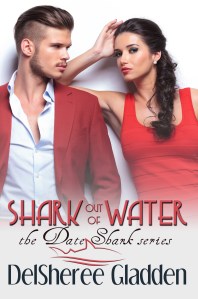
Shark Out Of Water, book 2

Shark Out Of Water FRONTGuy Saint Laurent is too busy cursing his sister for roping him into taking over Eli’s Date Shark business to prepare himself for the slew of bizarre women he’s about to get involved with. This is the last venture he intended to take on, but somehow he’s just become Chicago’s newest, most reluctant Date Shark.
On top of dealing with bug-toting, mothering, obsessive women, Guy faces personal tragedy that changes his outlook on life, whether he wants it to or not. He’s not sure what it is about Charlotte Brooks that draws him in, but getting her off his mind after a brief encounter proves impossible.

As Charlotte tries to help Guy deal with his loss, he begins to get the impression she’s hiding something from him. He knows he could simply walk away, continue as he always has, but he suspects whatever she’s hiding, she won’t be able to face it alone.

Charlotte is the one woman who can capture his attention, but she may also be the one woman capable of breaking him.

Available Now!

Amazon ButtoniBooks ButtonSmashwords ButtonKobo ButtonBarnes Noble Bttn


The Only Shark In The Sea, book 3

The Only Shark In The Sea FRONTVance Sullivan has always been the rock everyone turns to for help…
His work with patients recovering from traumatic events makes him the perfect person to help his friend, Guy Saint Laurent, with one of his Date Shark appointments. When Vance meets hesitant, frightened Natalie Price, he suspects she’s hiding the truth behind her fears, and he’s drawn in by a need to help her.

Haunted by a terrible event from her past, Natalie can’t even endure being touched without suffering a crippling panic attack…

She doesn’t know why, but Natalie feels Vance might be the only one who can help her put the pieces of her life back together. Despite the tension their arrangement causes with his girlfriend, their bi-weekly sessions seem to be helping…as long as he keeps his promise not to push her to reveal more than she’s ready to share.

Suddenly the tables have turned…

When Vance suffers his own unspeakable tragedy, asking for help is the last thing he wants to do. Drowning in grief and guilt, crushed by betrayal and lies, Vance needs a lifeline.

Natalie has no idea why anyone thinks she can help him, given her own deep-rooted fears—but she knows she has to try. A twisted notion of justice makes the danger all too real, and Vance and Natalie realize it might take one broken soul to mend another…

Available Now!

Amazon ButtoniBooks ButtonSmashwords ButtonKobo ButtonBarnes Noble Bttn


Shark In Troubled Waters, book 4

Shark In Troubled Waters FRONTSabine Saint Laurent is known as the Princess of Paris. Polite, beautiful, charming, polished…perfect.
Everything is always under control, and when it isn’t, she handles it. It’s been an eventful few years with friends getting married, having babies, getting kidnapped, and almost dying, but she’s made it through each upheaval with poise. Just as she’s looking forward to things calming down, her entire life is upended by a startling piece of news.

Aside from her agent managing her day-to-day affairs, Sabine does not ask for help. Not even from her close knit group of friends and family. So when she finds herself struggling to cope with major changes in her life, she’s determined to power through on her own. It should be easy enough. Everything is always easy for Sabine: modeling, men, money, languages, art, cooking. Finding out she’s pregnant shouldn’t be any different, right?

Except it’s not easy. Nothing about navigating pregnancy, custody, complications, and a man she despises trying to seduce her is simple. Michael Moniteau’s intentions are questionable, but she desperately needs help and he’s the only one who understands enough to give it. It could be the beginning of something wonderful, or it could break the heart she’s kept carefully shielded for so long.

Available Now!

Amazon ButtoniBooks ButtonSmashwords ButtonKobo ButtonBarnes Noble Bttn


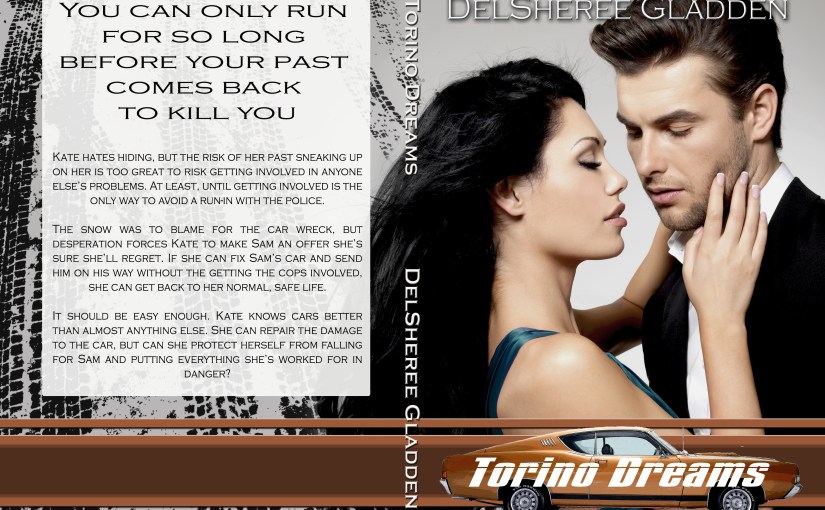
Torino Dreams is Available Now! #newrelease #romance

Kate can fix the damage to Sam’s car after their accident, but can she protect herself from falling for him and putting all their lives in danger?

Torino Dreams

Torino Dreams Front Cover Final Kate hates hiding, but the risk of her past sneaking up on her is too great to risk getting involved in anyone else’s problems. At least, until getting involved is the only way to avoid a run-in with the police.

The snow was to blame for the car wreck, but desperation forces Kate to make Sam an offer she’s sure she’ll regret. If she can fix Sam’s car and send him on his way without the getting the cops involved, she can get back to her normal, safe life.

It should be easy enough. Kate knows cars better than almost anything else. She can repair the damage to the car, but can she protect herself from falling for Sam and putting everything she’s worked for in danger?

This is a standalone book, so no waiting for part 2!

Amazon ButtonSmashwords ButtoniBooks ButtonBarnes Noble BttnKobo Button