 I’ve been working for a ghostwriting company on the side, doing writer engagement and training, and recently we discussed genre conventions and what readers expect from particular genres. It was a good experience to research the genres we work with, and I wanted to share what I found.
Below are some basic expectations, but I’d love readers to add to this list and/or discuss why these are important to meet when writing.
Religious/Spiritual
- Focus on an inspirational theme
- Underlying religious lessons or ethics
- Encourage spiritual growth
- Convey lessons about home/family, relationship, faith
- References to God/God’s plan – few references to Jesus Christ
- Lack of explicit sexuality – focus on emotion/relationship
- Moral values, traditional roles
- More defined framing of gender/gender and femininity/masculinity
- Character(s) have strong religious convictions, or do by the end
- Very light or no sexual content
Paranormal/Fantasy
- Fully developed, realistic-ish world
- Well-develop creatures that either follow mythology/folklore or are completely new
- Well-develop system or magic/abilities that either follow mythology/folklore or are completely new
- An epic journey – actual or self-discovery
- Unexpected hero/villain dynamic
- Use of archetypes
- Romantic relationship with non-human/supernatural beings common
New/Young Adult
- Unique voice/narration – often goes along with first person perspective
- Character is in the correct age group (12-18 YA; 18-25 NA)
- More simplistic prose
- “Firsts” subject matter/Coming of Age
- Tough subjects
- Happy For Now (HFN) endings more common
- Emotional development themes
- Focus on the personal rather than the outside world
- Parents are often absent, MC relies on friends for support

Contemporary romance
- Love is central to the plot, but lust can be the spark
- Characters overcome problems, HEA ending
- Full relationship arc – emotional develop is central
- Modern setting and language
- Realistic scenarios and outcomes
- Developed romantic backgrounds
- Realistic conflict
- Secondary storylines used
- Use of “sounding board” characters
Clean romance
- Sexuality/romance is PG-rated or less
- Focus is on emotional develop in relationship
- Little to no sexual overtly thoughts
- Little to no swearing/cursing
- Usually no non-realistic elements
- Usually limited to heterosexual relationships
- Off-camera sexual encounters debatable
- Focus on love not lust
Historical romance
- Details are accurate to the time period
- Time period is integral to the story
- Gender roles very important
- Focus on societal ideals/mores of the time on how it impacts the story
- Theme is interpreted through the lens of the time period
- Plot/conflict makes sense for the time period
- Romantic interactions follow the time period social rules, for the most part
Erotica
- Sex is central to the plot
- Romance/relationship development is still important
- Dynamic characters are a must
- Typically told from the female’s POV, but not always
- Graphic descriptions
- Multiple (more than 2) sex scenes
- Use of foreplay – descriptive
- Tension runs throughout the full story
- Unique tropes not typically covered in other subgenres (menage, BDSM, alphas, etc.)
- There’s still a line not to cross – rape, incest, abuse, etc.
- HFN or HEA ending
Romantic suspense
- Suspense is secondary or equal to romance
- Source of suspense is resolved by the end
- Fast-paced plot, high action
- Source of suspense jeopardizes the romance
- Realistic details in a modern setting
- Suspense/danger draws characters together
- Characters are equally matched, or close to
- Characters have a believable motivation to be involved in the suspense
Feel free to share any additional genre expectations!

 Create strong characters
 Develop intimacy
 Start with a formula that works
 Choose your words carefully
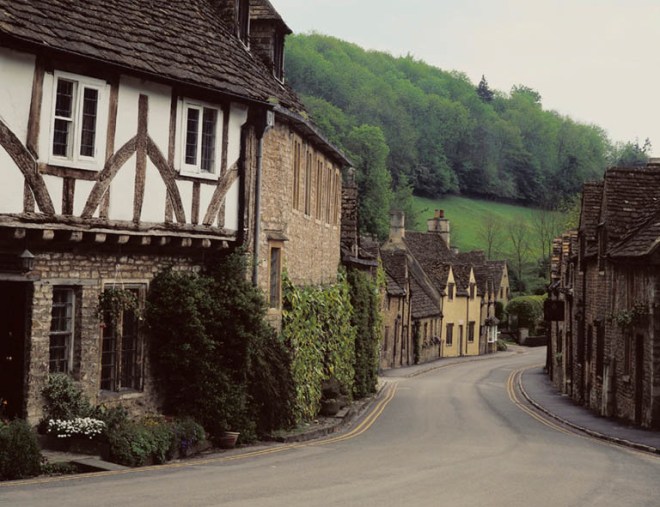 Creating a fictional town is definitely the most involved type of worldbuilding in contemporary realistic fiction. You’ll draw from real places with the goal of developing something new and interesting. A huge benefit of making up a location is that you aren’t bound by anything. Another benefit is that you won’t spend hours researching a real place and worry about whether you’ve portrayed it correctly. A fictional location allows you to build the exact setting you need to develop your plot and characters.
 Start off based in reality. For those who’ve watched Twin Peaks and paid attention to the opening credits, the welcome sign claims the town has 51k people, yet everyone knows each other and there seems to be only one restaurant. Take the time to research town sizes and amenities in order to make sure everything lines up.
 Whether you’re creating a fictional town or using a real town, you still need to develop the small-scale details of the neighborhood or apartment building your characters inhabit.
 Thinks Friends when you’re creating your characters’ daily habits and local haunts. Who’s apartment/house does everyone tend to hang out at and why? What features make it desirable? When they’re out and about, where do they often stop for coffee or to catch up, and how does that environment help the story? If characters need a quiet place to trade secrets or go over plans, a busy, noisy coffee shop might not work as well as a used bookstore.
 Similar to building a neighborhood, it’s important to develop the work or office life of a character. How much it needs to be developed depends on how important it is to the story. If a character has social anxiety, a busy and fast-paced office will provide conflict. If a teen character is itching for excitement but works at an outdated video rental store only a few old people visit every week, that also provides conflict. If work is only mentioned in passing to acknowledge that the character does indeed have a job, minimal development is needed beyond the fact that it eats up a large portion of their time and provides an income.
 A very important, overarching detail to develop is how your MC relates to the world. This is most often going to develop from backstory. Some writers develop the backstory first while others let it come to light as they write. The important thing about backstory is that it forms a starting point for your character and helps determine an end point.
 It’s been a long time since I haven’t had a project that I was in the middle of and felt pressured to finish.
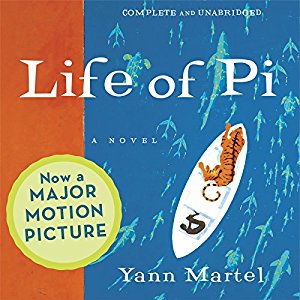 For those who haven’t read or seen Life of Pi, it’s about a young man who survives his ship sinking in the middle of the sea during a journey from India to Canada. He makes it to a life boat, but finds himself in the company of several of the zoo animals his family was transporting…including a Bengal tiger named Richard Parker.
 Infodumping is often a struggle for writers who do in-depth research for a book. You found out all these awesome things about whatever and now you HAVE TO SHARE THEM ALL! Unless you are writing a non-fiction book about your topic that is meant to give a detailed history of whatever, please, please, please for the love of all things bookish DO NOT vomit up every seemingly fascinating tidbit of research you uncovered while preparing to write your book.
 I also struggled to listen at length to the religious discussions, which I usually enjoy quite a bit. I think religion is a fascinating topic and enjoy learning about many different religions. What I didn’t enjoy was, again, too much straight information that took me away from the story, and the sometimes condescending way the information was presented. I don’t hold with any particular religion, but I was still bothered by the sense I got that if a reader didn’t agree with the author’s opinions on eating meat, practicing multiple religions at once, or who or what God or gods might be they were simply wrong or not as smart as the author. I enjoy learning about how others view God, religion, the Universe, etc., but in a way that invites thoughtfulness rather than looking down on others’ beliefs or viewpoints.
 Several years ago on a car ride my family and I started listening to “Unbroken” by Laura Hillenbrand. I downloaded it from Audible after only a cursory glance at the summary and checking the reviews. So, it wasn’t until several hours into the book that my husband and I both turned to look at each other and asked, “Is this book a true story?”
 Be mean to your characters all you want. Kill your darlings, right? However, if the end to every situation is a predictable close call or last second escape, readers will not only be annoyed they’ll lose interest. Have you ever watched Tim Allen in “Galaxy Quest”? They parodied this concept beautifully when the alien ship built to model the TV series spaceship is designed to stop its self-destruct sequence at 1 second because “that’s what always happened on the show.” It’s funny because we all now how irritating that “last second” save becomes after a while. While there are rare stories, like Zamperini’s, where people really do beat all the odds and survive the worst situations, most people fail and miss chances and get hurt.
 Louis Zamperini survived an incredible amount of danger and horribleness in his life, BUT there were deep scars left behind because of what he suffered. The last third of the book that deals with the aftermath of being tortured in a Japanese prison camp is very, very hard to listen to because the lasting damage is so real. I’ve read to many novels (especially YA) where the main character has some tragic past or experiences something truly awful…and bounces back like it was nothing. This is not one of those areas where reality needs to be downplayed. Let your characters be as broken as they need to be. Emotional scars are something we all understand. Characters need that element of reality to ring true with readers.
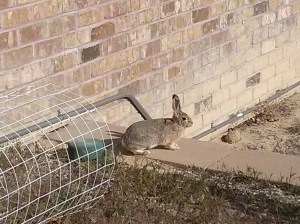 Just to clear up any confusion right off the bat, bunnies are the worst! Sure they may look cute, hopping around with their cotton tails and twitchy noses, but it’s all a trick. They will destroy your grass by eating it down to the roots and by peeing and pooping on it like mad-which also kills the grass. They will also gnaw off the bark of your fruit trees, which is not good for them at all, and those freaky jackrabbits’ giant creepy teeth, I’m pretty sure, could chew through your ankle if it got the chance.
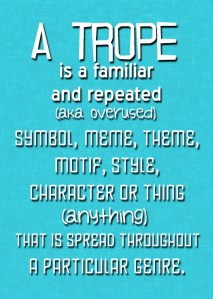 A trope is a familiar and repeated (aka overused) symbol, meme, theme, motif, style, character or thing (anything) that is spread throughout a particular genre.
 Of course not. The key is to use them in their barest form. Strip them down to the essence of what makes readers connect with the trope to begin with, and add from there.
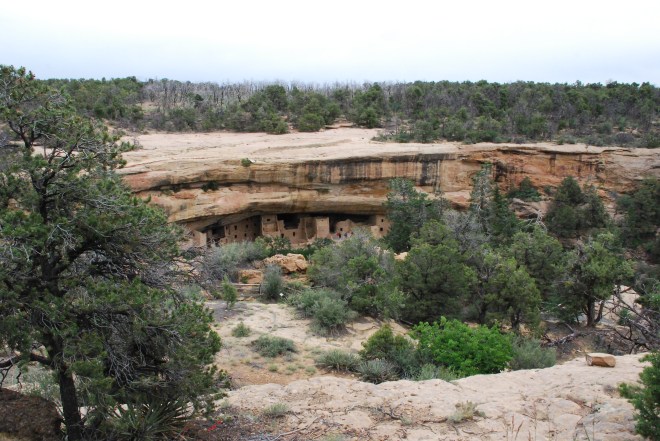
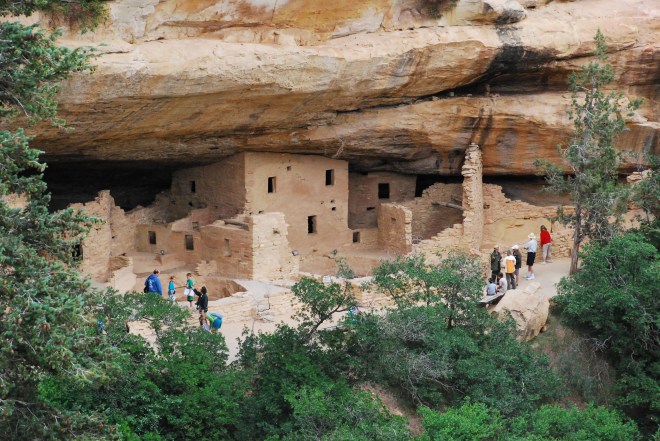 If you’re planning at trip to Mesa Verde National Park and hoping to explore the Spruce Tree House cliff dwelling, one of the largest and most popular cliff dwelling sites at the park, you’ll be limited to viewing it from a distance. Why? While we want all our visitors to experience the cliff dwellings, keeping guests safe is our top priority. Recent rock falls at the Spruce Tree House site prompted the decision to close it to the public for the first time in 50 years.
  That covering worked for two decades, but in 1960, a 10-ton rock fell from the south end of the cliff overhang, hitting the nearby public trail and part of the Spruce Tree House site. Trained climbers pulled down a loose, five-ton rock in danger of falling to prevent it from doing more damage, and cleanup began. The previous covering put over the crack was removed and replaced with an anchoring system that would hopefully prevent the cracks from widening. These 42 anchors, up to 16 feet long, were drilled into the cliff face to anchor the arches in place, then the crack was filled with gravel and cement. This system held for many years, until recently.