I watched the movie first, and really enjoyed it, so I figured I would read the book, since there’s always so much left out of the movie version of any book. This is one of those very rare times where I actually preferred the trimmed down movie version.
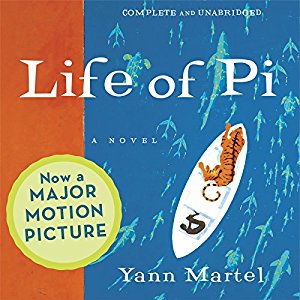 For those who haven’t read or seen Life of Pi, it’s about a young man who survives his ship sinking in the middle of the sea during a journey from India to Canada. He makes it to a life boat, but finds himself in the company of several of the zoo animals his family was transporting…including a Bengal tiger named Richard Parker.
What I loved about this story was the use of extended metaphor to tell Pi’s story of survival at sea with Richard Parker (I won’t give away what that’s a metaphor for in case you haven’t seen/read it). It’s not a commonly used tactic in modern fiction, and if you’d like an great example of it, read this book. Or watch the movie.
How to write an extended metaphor is not the lesson learned from this book, however.
Not overloading your reader or being condescending to them is the lesson learned.
 Infodumping is often a struggle for writers who do in-depth research for a book. You found out all these awesome things about whatever and now you HAVE TO SHARE THEM ALL! Unless you are writing a non-fiction book about your topic that is meant to give a detailed history of whatever, please, please, please for the love of all things bookish DO NOT vomit up every seemingly fascinating tidbit of research you uncovered while preparing to write your book.
Listening to an audiobook, you can’t really skim, which makes endless amounts of information you’re not particularly interested in even harder to get through. I listened to Life of Pi and simply had to take a break when chapters went on and on about various animals, their habits and traits, mating rituals, etc. I started listening to the book to find out more about Pi’s journey, not to hear a dissertation on animal husbandry.
Focus on what your reader wants out of your story, not just on what you want to tell them.
 I also struggled to listen at length to the religious discussions, which I usually enjoy quite a bit. I think religion is a fascinating topic and enjoy learning about many different religions. What I didn’t enjoy was, again, too much straight information that took me away from the story, and the sometimes condescending way the information was presented. I don’t hold with any particular religion, but I was still bothered by the sense I got that if a reader didn’t agree with the author’s opinions on eating meat, practicing multiple religions at once, or who or what God or gods might be they were simply wrong or not as smart as the author. I enjoy learning about how others view God, religion, the Universe, etc., but in a way that invites thoughtfulness rather than looking down on others’ beliefs or viewpoints.
Don’t talk down to your reader.
While I enjoyed the story overall, I definitely prefer the movie version, which focused the point of Pi’s journey as a struggle to understand faith and the meaning of life when faced with tragedy. If something you want to put into your book doesn’t add to the story or unnecessarily turns readers off, there’s a good chance it doesn’t need to be there.
 Several years ago on a car ride my family and I started listening to “Unbroken” by Laura Hillenbrand. I downloaded it from Audible after only a cursory glance at the summary and checking the reviews. So, it wasn’t until several hours into the book that my husband and I both turned to look at each other and asked, “Is this book a true story?”
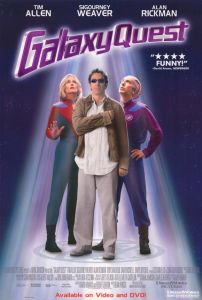 Be mean to your characters all you want. Kill your darlings, right? However, if the end to every situation is a predictable close call or last second escape, readers will not only be annoyed they’ll lose interest. Have you ever watched Tim Allen in “Galaxy Quest”? They parodied this concept beautifully when the alien ship built to model the TV series spaceship is designed to stop its self-destruct sequence at 1 second because “that’s what always happened on the show.” It’s funny because we all now how irritating that “last second” save becomes after a while. While there are rare stories, like Zamperini’s, where people really do beat all the odds and survive the worst situations, most people fail and miss chances and get hurt.
 Louis Zamperini survived an incredible amount of danger and horribleness in his life, BUT there were deep scars left behind because of what he suffered. The last third of the book that deals with the aftermath of being tortured in a Japanese prison camp is very, very hard to listen to because the lasting damage is so real. I’ve read to many novels (especially YA) where the main character has some tragic past or experiences something truly awful…and bounces back like it was nothing. This is not one of those areas where reality needs to be downplayed. Let your characters be as broken as they need to be. Emotional scars are something we all understand. Characters need that element of reality to ring true with readers.
 Just to clear up any confusion right off the bat, bunnies are the worst! Sure they may look cute, hopping around with their cotton tails and twitchy noses, but it’s all a trick. They will destroy your grass by eating it down to the roots and by peeing and pooping on it like mad-which also kills the grass. They will also gnaw off the bark of your fruit trees, which is not good for them at all, and those freaky jackrabbits’ giant creepy teeth, I’m pretty sure, could chew through your ankle if it got the chance.
 A trope is a familiar and repeated (aka overused) symbol, meme, theme, motif, style, character or thing (anything) that is spread throughout a particular genre.
 Of course not. The key is to use them in their barest form. Strip them down to the essence of what makes readers connect with the trope to begin with, and add from there.
 You’re not the only one who makes mistakes. We all do. While I was on a panel at Denver Comic Con last year, we were all asked what was the biggest mistake we ever made in a book. Jim Butcher was on that panel as well (which was seriously the highlight of that entire weekend!) and he said when writing the early Dresden Files books, he didn’t have the income to visit Chicago, where the books are set, and wrote a scene with characters meeting in the parking lot of the baseball stadium. Problem was, that stadium was built before the majority of people had cars. Hence: it has no parking lot.
 Maybe this only happens in my house, but unlike the picture above with nicely closed cabinet doors, I can walk into a room and, no kidding, there is almost always at least one drawer, cupboard door, or package of something or other left open. Usually, more than one. There have been times when I’ve walked into the kitchen and literally every cupboard door is standing open because someone was looking for something and, after finding it, walked away.
 Just like when my kids (my daughter specifically) stomps away, annoyed I haven’t purchased sufficient snack-worthy foods, your readers will walk away when they finish a book unsatisfied because of questions you never answered if your book leaves them with option #1.
 2: Fill in where you neglected to follow through. Any questions you posed that pertain to that particular book (notice I’m not talking series-length questions) make sure you have an answer, or make it apparent that question will be answered in a subsequent book, if you’re working on a series.
 Mini-Synopsis
 Publishing Credits/Awards
 What NOT to Mention