When we talk about point of view, what we’re really discussing is the narrative point of view, or how and by whom the story is being told. Let’s review the basics before diving deeper.

First Person POV has two variations:
First person protagonist where the character narrates his or her own story.
First person observer where a secondary character tells the main character’s story (i.e. Watson narrating Sherlock’s Holmes cases.)
Third Person POV is not told by a character but by an invisible author and has four variations:
Third person omniscient is where an all-knowing narrator tells the story.
Third person dramatic/objective is where the narrator only tells the reader things which could be recorded by a camera or microphone (i.e. no thoughts).
Third person limited is where a narrator tells the story from the perspective of a single character at a time.
Third person deep is where the story is told in the hero’s voice, rather than the author’s voice.
Second person POV is written in present tense and addresses the reader directly:
Second person POV makes the reader the protagonist. The narrator often uses detailed description, shares psychological insights, and tries to anticipate reader reactions.
This in uncommon in teen or adult fiction and is mainly used for young children’s literature.
It’s important to understand why some POVs work better for certain genres or storylines and make changes when something isn’t working. Let’s review points to consider when choosing POV.
First Person
There are several advantages of writing in first person. It feels natural to many writers, because it’s how we speak about our world and experiences. Dealing with only one narrator’s mind can be easier than writing multiple narrators. It’s an opportunity to create a unique and distinctive internal voice. Because you’re only in one character’s mind at a time, it’s easier to “stay in character.” Readers also get to experience the story vicariously through the character more easily. There is also an opportunity to create an unreliable narrator. First person is also much more intimate than other POVs and can fully immerse a reader in a story.
There are disadvantages as well. You are limited to writing only about what the character can see, know, or hear. The narrator must be in every scene, observing and participating in the story. Minds of other characters are off limits, as is their knowledge about the story unless directly shared with the narrator in some way.
Second Person
Advantages of this POV are limited. You can create a different feel to a story, and can speak to the reader directly.
The disadvantages are more prevalent, partly because this “uniqueness” often doesn’t sit well with readers and feels too personal. It often gives a juvenile feel to a story.
Third Person Omniscient
Advantages of this POV include being able write the story as an onlooker watching the full story unfold. You can also add contrasting viewpoints with other characters (NO head hopping, though!). This can give a reprieve to the reader and allow them to see another side of the story. You can expand the scope of the story by moving between settings and viewpoints. You aren’t limited to characters in the story when choosing a narrator, which can provide a unique perspective. This POV also allows the narrator to share his or her own views, but should NEVER slip into second person to do so.
Disadvantages center around the confusion this POV can create when not done with attention to detail. If narrators don’t have a distinct voice, readers may be confused on who is narrating. Switching to other characters can diffuse the tension or excitement when not planned well. It’s also easy to write as the author instead of the narrator. This POV can be more difficult to forge a connection with readers if it comes off as too distant or impersonal.
Third Person Limited
This POV attempts to combine the best of first and third person omniscient. The limited POV allows you to more deeply explore the narrator and forge a stronger connection with the reader without asking them to live out a story with the narrator.
For disadvantages, this POV does limit you to choosing a character as a narrator and limits you to the narrator’s thoughts and experiences.
The distance third person creates between the story and the reader can be an advantage or disadvantage, depending on the story. Some stories may be too raw or personal and distance is needed to allow the reader to remain at a certain comfort level. However, if in order to fully understand or experience a story, the reader needs to be enveloped in it, the distance of third person may prevent that.
Third Person Deep
The biggest advantage of the deep perspective is that is attempts to remove distance between narrator and reader. The reader can experience more fully what the narrator is thinking and feeling. It feels more like third person to a reader, but uses third person pronouns, which can be important in following genre conventions.
The main disadvantage is that this is a challenging POV to write and is still gaining traction in some genres.
Consider the last book you read and how it would have changed if written from a different POV.










 I’ve been working for a ghostwriting company on the side, doing writer engagement and training, and recently we discussed genre conventions and what readers expect from particular genres. It was a good experience to research the genres we work with, and I wanted to share what I found.

 Create strong characters
 Develop intimacy
 Start with a formula that works
 Choose your words carefully
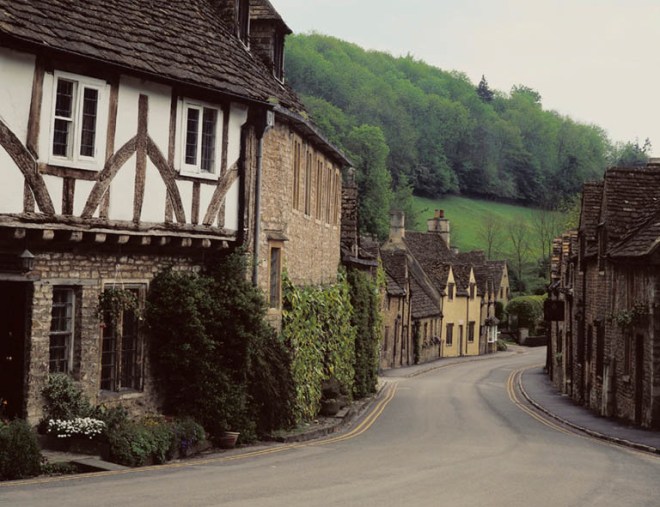 Creating a fictional town is definitely the most involved type of worldbuilding in contemporary realistic fiction. You’ll draw from real places with the goal of developing something new and interesting. A huge benefit of making up a location is that you aren’t bound by anything. Another benefit is that you won’t spend hours researching a real place and worry about whether you’ve portrayed it correctly. A fictional location allows you to build the exact setting you need to develop your plot and characters.
 Start off based in reality. For those who’ve watched Twin Peaks and paid attention to the opening credits, the welcome sign claims the town has 51k people, yet everyone knows each other and there seems to be only one restaurant. Take the time to research town sizes and amenities in order to make sure everything lines up.
 Whether you’re creating a fictional town or using a real town, you still need to develop the small-scale details of the neighborhood or apartment building your characters inhabit.
 Thinks Friends when you’re creating your characters’ daily habits and local haunts. Who’s apartment/house does everyone tend to hang out at and why? What features make it desirable? When they’re out and about, where do they often stop for coffee or to catch up, and how does that environment help the story? If characters need a quiet place to trade secrets or go over plans, a busy, noisy coffee shop might not work as well as a used bookstore.
 Similar to building a neighborhood, it’s important to develop the work or office life of a character. How much it needs to be developed depends on how important it is to the story. If a character has social anxiety, a busy and fast-paced office will provide conflict. If a teen character is itching for excitement but works at an outdated video rental store only a few old people visit every week, that also provides conflict. If work is only mentioned in passing to acknowledge that the character does indeed have a job, minimal development is needed beyond the fact that it eats up a large portion of their time and provides an income.
 A very important, overarching detail to develop is how your MC relates to the world. This is most often going to develop from backstory. Some writers develop the backstory first while others let it come to light as they write. The important thing about backstory is that it forms a starting point for your character and helps determine an end point.