
Who’s ready for 2017?

2017-fireworks

It seems like everyone is happy to say goodbye to 2016. It was a weird year, to be sure. I know for myself, going back to college made things a little crazy, as did a few too many writing deadlines.

A hectic year has pushed me to reevaluate a few things, get organized, and set more realistic goals and deadlines.

So…you’ll see a few changes this year, and yes I’ll explain why.

1This first big change is that I’ll no longer be offering free ebooks on retailer sites like Amazon and iBooks. I’m already in the process of changing free, first-in-the-series books back to their normal prices. Amazon will be the slowest to change, so if you want free books, go get them now.

Why no more freebies? Basically, because it no longer works as a marketing tactic. There are too many free books to have good discoverability any more. It will be more effective for me to offer short term deals on books than to keep them perma-free, so that’s what I’ll be experimenting with this year.

If you want free books once all the price changes go into effect, the only way to do that will be through my newsletter. The plan is that each monthly newsletter I send out will have a coupon code for a free book. If you’re not already signed up, sign up now. All you need is an email address.

Sign up here: http://eepurl.com/C35Q5
2The next big change is that I will be pulling my books from the Kindle Unlimited program. I’m doing this for 2 reasons.

  1. I’ve struggled to ever find success with KU in the various times I’ve tried it out. I just can’t figure out how to really market for KU well, and I have a strong enough reader base on other platforms that it makes more sense to distribute my books wide.
  2. From the beginning, I’ve had my doubts about the fairness of the KU program in how it rewards and pays authors. Recent changes have only increased my dislike of the ethics of the program. While it’s a great deal for readers, it devalues books, and authors often get paid less than half the listed price for a book that is read 100%. I’m just not doing it anymore.

So, most of my books will be out of KU by early spring. The Oblivious Girl’s Handbook will stay in a bit longer because of contractual obligations with a box set it’s part of, but after that I’m out of KU for good.

3The last major change is that I’m scaling back. What does that mean? I can’t say exactly, except that means I’m going to stop overloading myself by saying yes to too many things and setting unrealistic goals. I need to be able to focus on school this year so I can finish my degree in December and start looking for a new day job, while still having time for family and occasionally cleaning my house.

For sure, I’m done with box sets for the time being. The two I’m currently in and the one I’ve committed to for 2017 will be it. They’re a great way to cross-market, but they take a ton of time and effort. As do comic cons, teaching, author events, school visits, etc. As much as I love doing all that stuff, I just don’t have the time right now.

As far as my writing plans, I really can’t say. I tend to write when I’m stressed out, so I may keep on as usual, lol. What I won’t do is push myself into corners where I’m struggling to meet pre-order dates or publishing deadlines. I’ll be writing on my terms and my deadlines. That may mean fewer books or no pre-orders or longer spans between books. I don’t know. I just ask that readers are patient as I finish my last year of undergrad classes. Encouragement is always appreciated, but if you’re waiting longer than usual for a new book just remember that even authors have day jobs, families, laundry, dishes, homework, and those other day-to-day things going on.

I hope everyone’s 2017 is starting off well, and I hope you all have a great year of reading ahead of you 🙂
 

3 Tips for Researching #Paranormal (for your writing) #research #podcast

For Halloween, I decided a paranormal themed podcast was in order! Read the transcript or listen to the podcast for tips on researching paranormal for your writing and incorporating what you learn into your story.

//html5-player.libsyn.com/embed/episode/id/4789834/height/360/width/640/theme/standard/autonext/no/thumbnail/yes/autoplay/no/preload/no/no_addthis/no/direction/backward/no-cache/true/

The blending of fiction genres has led to a variety of paranormal subgenres, from paranormal romance to paranormal military fiction. Readers love paranormal fiction, but they expect it to be either factual or wholly unique. Now, when talking about factual paranormal fiction, what do I mean? I mean researching the common theories, terms, mythos, and culture. Writing paranormal may sound as easy as throwing in a few ghosts or vampires. Writing paranormal that truly draws in readers takes a little more than that. Today I’ll discuss how to research paranormal and incorporate what you learn into a convincing story that will capture reader’s attention.

Research

How do you find reliable information on your chosen paranormal topic? That’s a tough question, because when you type “ghosts” into a search bar, you’ll get anything and everything. There are two important aspects of researching the paranormal for a work of fiction.

First:  You’re not looking for a scientifically proven set of facts. You’re looking for the general consensus among a community of believers. What are the hallmarks of belief in ghosts? What do most accept as standard and what are the outlier theories? What is dismissed outright? Talk to people who actually believe and participate in the culture. It’s important to understand the core beliefs of a paranormal topic in order to ground your story in the basics. Then you can take it where you will.

Second: Learn the culture. Given that I’ve been working of The Ghost Host: Episode 2 lately, I’ve been researching ghosts, ghost hunting, and concepts of the soul and afterlife. Even though Echo doesn’t need as many physical tools as the average ghost hunter who can’t see ghosts, it’s important that she knows what others are using to confirm her talents and explore their own paranormal experiences. I need to know about EMF, EVP, protocol for séances, what herbs are involved in ritual cleansings, and more. Know the terminology, tools, and implements of your topic so your character can convincingly belong to that world.

Applying what you’ve learned

The tough part of research is that you learn thousand things when you only needed to know about one. A mistake writers sometimes make is trying to cram everything they learned into their book. Just because a reader is interested in ghosts doesn’t mean they want a chemical breakdown of why salt disrupts spiritual energy.

When incorporating your research into your stories there are two questions to ask:

Is this integral to the plot? If it is, blend your research into the story as needed. Don’t info dump. Give the reader only what they need to know in each scene in order for them to suspend disbelief and stay involved in the story. Add research as you would leave pieces of a breadcrumb trail: Just enough to follow along.

The next question you want to ask is: Will this help create a believable setting or world? In The Ghost Host, I mention that one of the characters sleeps with a hex bag under his bed. Other than a brief mention of what “might” be included in a hex bag, I don’t go into any more detail. The story itself doesn’t deal with hex bags. I used it only to add to Kyran’s character and illustrate that he comes from a family who believes in the occult and doesn’t think twice about what others would consider odd.

If a bit of research doesn’t enhance the story or help with world building, save it for something else.

Suspend your own disbelief

Writing paranormal fiction, by its very nature, requires authors to write in a way that convinces readers to put aside typical logic and science and accept the unexplainable as fact. You can’t convincingly do that unless you as the writer can do the same thing. Now, just because you write about vampires doesn’t mean you have to believe in them. You do, however, need to believe they could exist in the world you’ve created in order to convince a reader to believe.

This requires the paranormal aspects of your story to hold equal weight with the plot and characters. A brief mention of one character believing in something paranormal during the course of plot and character development doesn’t constitute a complex blending of story and paranormal. If the main resolution of the story hinges on the paranormal, it can’t come as a surprise to the reader. No one likes to get involved in a coming of age story only to have a horde of ghosts jump out at the end to resolve some critical plot point. Trust me, it happens.

Even in “The Sixth Sense” where the twist is that Bruce Willis is in fact a ghost, the entire storyline revolved around the viewer believing that ghosts are real and involve themselves in the world of the living. Had there been absolutely no mention of the paranormal and the story focused only on a young boy receiving counseling for behavior issues, only to have Willis suddenly figure out he’s a ghost with unresolved issues and the boy knew it the whole time, would have been confusing at the least.

Just as when an author researches another culture, specific location, scientific breakthrough, or historical event, due diligence is required in order to fully capture what they are researching. There are many people around the world who believe in the paranormal. If you intend to write an authentic account of someone experiencing paranormal phenomena, treat it the same way you would write about anything else. Your fiction may be someone else’s real beliefs, and they’ll spot lazy or halfhearted work a mile away.

research-paranormal-wpr-long

Perspectives on Crazy

2016-09-05-19-15-25
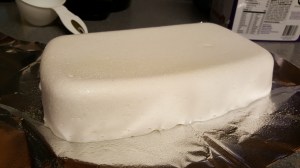
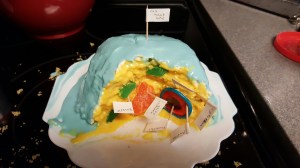
The Edible Animal Cell cake for my daughter’s science class. Cakes are NOT my specialty! Obviously, lol!

I’ll start off by saying this post has nothing to do with writing. Maybe that’s because I haven’t done much writing lately. Either way, this is what I felt compelled to write about.


Last week I had kind of a lousy week at work. Patients weren’t showing or there were already holes in the schedule to start with. I only work 12 hours a week, so every hour missed makes a big difference. Then we got to Thursday (last day of the work week for me) and I actually had a full afternoon of patients I always enjoyed seeing.

When my last patient came in, I immediately recognized that on the verge of crying look a lot of young moms get. The one I still get on a fairly regular basis, especially lately. When I asked her how she was doing, she started off by saying it had been a rough week. It snowballed from there. And let me tell you, I totally sympathized with everything she was saying, from struggles with the kids’ school to toddlers refusing to potty train to feeling like your dental cleaning was the highlight of your week because it was the first alone time you’ve had, because I’ve been there many times.

2016-08-26-06-54-24
The infamous Giant Marshmallow. Thank you for that, YouTube.

So, I started telling her about the 6 college classes I’m taking and the massive amount of homework they require, the crazy things my kids did when they were little and the crazy things they’re still doing, the many projects my kids have done in the last month-for school and because my daughter really loves YouTube craft videos (FYI: avoid the giant marshmallow), the soccer team my husband and I got suckered into coaching and the crazy ref who started harassing me after I complained to the league about him yelling at the girls all game and taking off without telling anyone after enforcing the mercy rule , and how stressed out my husband has been trying to finish a bunch of work so he can transition into his new position.


2016-09-09-13-23-37
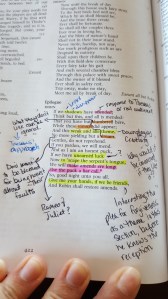
Note taking on A Midsummer Night’s Dream. I don’t get this play…

We spent most of the appointment laughing with each other.


At some point my patient-still laughing-said she was suddenly feeling better about dealing with her toddler. The funny thing was, I was thinking the same thing after telling her about how hectic things were for us. It wasn’t a competition to see whose life was crazier. Toddler years were tough. I’m glad we’re not in that stage anymore. We have new challenges now, a lot of them just as much of a struggle as trying to keep you little one from climbing up on the table and sucking all the chocolate off the toffee you just made (you can imagine the mess I had to clean up after that one, lol!).

My kids are now 10 and 13 and we’re dealing with mean girls at school instead of potty accidents, but chatting with my patient reminded me that all of these things are temporary. I may not be blogging or writing very regularly for a while, but eventually soccer will end and the semester will finish and all the other stuff will level out. More crazy will line up, it always does, but we’ll get through that, too.

2016-09-11-11-31-41
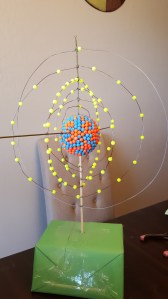
My son’s 2-foot tall model of a platinum atom.

So, if I’m not around much lately, be patient. I’ll be back when the crazy dies down. Thanks for hanging in there with me!

Genre Tropes are like Bunnies

To listen to the Write. Publish. Repeat. podcast version, CLICK HERE.

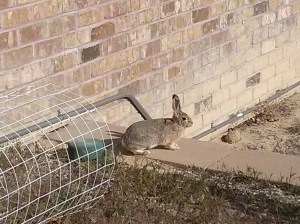
2015-04-21 09.07.18Just to clear up any confusion right off the bat, bunnies are the worst! Sure they may look cute, hopping around with their cotton tails and twitchy noses, but it’s all a trick. They will destroy your grass by eating it down to the roots and by peeing and pooping on it like mad-which also kills the grass. They will also gnaw off the bark of your fruit trees, which is not good for them at all, and those freaky jackrabbits’ giant creepy teeth, I’m pretty sure, could chew through your ankle if it got the chance.
Bunnies are NOT cool.

And, neither are overused genre tropes.

What is a trope?

Trope DefinitionA trope is a familiar and repeated (aka overused) symbol, meme, theme, motif, style, character or thing (anything) that is spread throughout a particular genre.

The problem with tropes is not necessarily that it kills your story, like bunnies will do to your lawn, but they have the potential to kill your readers’ interest in your story.

How?

When a reader picks up a book and sees the same types of characters, the same pattern behind a storyline, the same hints that his 16-year-old nobody is destined to save anything and everything by discovering their deeply buried inner strength/power/importance/etc., they start to see how the story is going to end, because well…they’ve read it before. Maybe the names have changed, or the setting, or the mythology, or whatever, but if the overall concept is something every other genre writer is using, readers are going to pick up on that.

Is that to say you can’t ever write using some of these tropes?

Blonde Upper BodyOf course not. The key is to use them in their barest form. Strip them down to the essence of what makes readers connect with the trope to begin with, and add from there.


Weak, friendless, unimportant teen becomes the hero? Check. We’ve all been there, so we identify with those emotions and frustrations, and especially the hope for something more.

Self-conscious, doesn’t understand her own worth heroine who thinks she’ll never find love. Again, check. Everyone has those moments of thinking they aren’t good enough to find their happily ever after.

The problem with tropes isn’t that they exist and are used. The problem arises when writers stop there, and don’t expand, delve deeper, experiment, make it unique.

If your male lead has commitment issues, give him a REAL reason for his fears or avoidance. Being too awesome to be tied down isn’t going to cut it in most cases.

Your teen hero is going to save the world? Fabulous, but make him or her take a different path to get there than the typical camp/school/mentor/etc.

What new, exciting, difficult, gut-wrenching ways can your characters develop into their final self? It doesn’t have to be so complicated that solving the prime number equation looks easy, but it does need to be unique to your story, character, and plot.

Working with teen writers over the summer, most start out with fan fiction. It’s a great place to start, because a lot of the difficult world and character development is done for them and they can focus on the story and figuring out their style. It’s a great learning experience, and it’s okay that their stories often end up being a mishmash of all their favorite books, because they’re working on their craft.

However, as that writing skill develops, we need to move away from well-worn tropes and begin experimenting with new, fresh concepts that will take a story from something frustratingly familiar to one that stands out from all the others.

So, don’t let the bunnies destroy your grass, and don’t let your story get passed over because it’s just more of the same.

Open Blue Book

Memory’s Edge Pre-Order

ME preorder 99It’s taken me a long, long time to finally get around to cleaning this book up and putting it out there, but Memory’s Edge is finally up for pre-order and will release on Kindle and #KindleUnlimited on August 21st!


Can’t wait to share this one with all my readers!!

Memorys Edge FULL WRAP

Pre-Order now for only $0.99

Amazon Button

#AuthorChat with @TS_Krupa

Last week I was able to try something a little different!

https://blab.im/ts-krupa-authorchat-with-delsheree-gladden” target=”_blank”>TS Krupa, author of “The Ten Year Reunion,” invited me to chat on a new-ish platform called Blab. The neat thing about this is that you get audio and video, split-screen, as you watch the chat session. It was so much fun!

The replay of the chat is stored on the site and available to watch at any time!

https://blab.im/ts-krupa-authorchat-with-delsheree-gladden

author chat

Review Article: Shedd Aquarium

2016-06-20 09.50.21.jpgNow that my kids are getting older, children’s museums offer less and less. Their interest in playing with bubbles or making paperclip helicopters has waned. At almost-ten and thirteen, they want something in between appreciating modern art and crawling through the “pretend you’re a bug” exhibit. They want exciting, yet interesting.
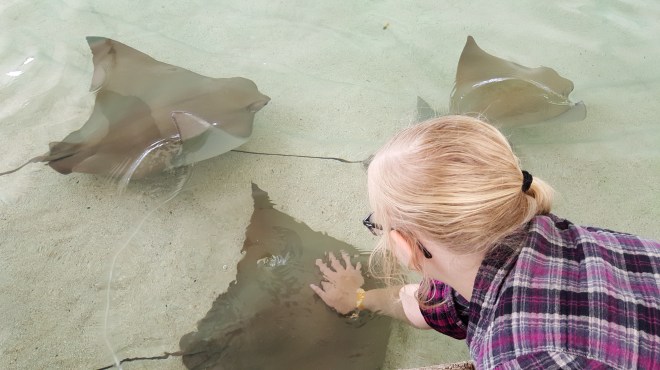

During a recent trip to Chicago, we spent some time exploring Shedd Aquarium, and it was one of my kids’ favorite places. There is a little bit of everything at Shedd Aquarium, which makes it work for a wide variety of ages. The exhibits focus on learning, as well as fun and interaction.

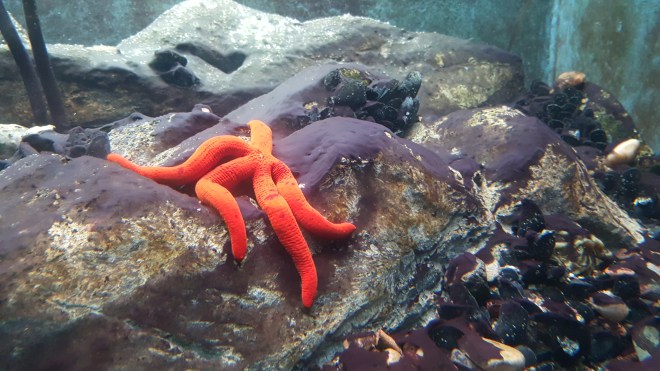
During the summer and early fall, you can visit the outdoor Stingray Touch pool to pet stingrays. The pool contains a good number of stingrays, so everyone has a chance to get up close. After the volunteer explains how to safety touch the stingrays, you’re free to enjoy the experience for as long as you like. My youngest loved this, and also spent time at the indoor touch pool filled with several large species of fish, and the starfish touch pool on the lower level.


2016-06-20 10.36.02

After my daughter petted fish to her heart’s content, we went in to check out the 4-D experience. They had a choice of SpongeBob, Coastal Predators, and Prehistoric Sea Monsters. We bypassed SpongeBob and went with the Coastal Predators movie. While we did get jabbed in the back as one of the special effects, the movie itself was entertaining and educational. Paired with the 3-D visuals, water mists, and wind effects, both myself and the kids enjoyed the show.

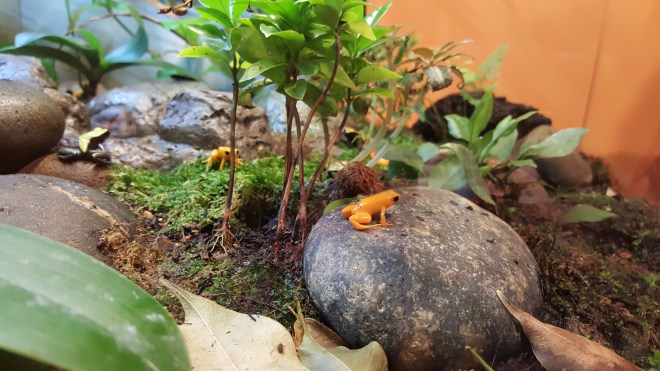
Special experiences done, we moved on to the rest of the aquarium. The amphibian exhibit was listed as a “special exhibit,” but most of the visitors seemed to have tickets which gave access to it, so no one was watching the entrance. For this being a special exhibit, it didn’t seem any better or more exciting than the regular exhibits. Having said that, all the regular exhibits were well put together and interesting, so this one certainly wasn’t disappointing. I had expected something more “special” than an exhibit of frogs, newts, and salamanders I had seen at other zoos or aquariums, though.

The regular exhibits held a variety of fun and interesting options. The main floor exhibit “Waters of the World”, was divided into corridors which held fish from specific regions. If you were interested in something particular, it was easy to find what you wanted. Centered between these corridors was the Amazon Rising exhibit, a coral reef habitat where you could watch divers feed and interact with the fish at scheduled times throughout the day. In the basement, the “Wild Reef,” is home to a large number of sharks, coral, and tropical fish. You get to view the 400,000 gallon tank from a huge viewing window that makes you feel like you’re in the water with them.

2016-06-20 12.31.08.jpg

The “Polar Play Zone” was partially closed when we visited, due to the upper level viewing deck being closed off to allow the recently born baby dolphin and its mother time to bond. However, at the lower level viewing area, you could see both the dolphins and several beluga whales. The last, largest exhibit was “At Home on the Great Lakes,” which featured environments and fish from the area, while teaching visitors about the local ecosystem. This was a full scale experience you walked through, stopping to observe each habitat as you experienced the simulated Great Lakes area.

If you’re interested in visiting Shedd Aquarium, it is part of Museum Campus in Downtown Chicago. It’s within walking distance of many Michigan Avenue hotels. If you’re staying further away, there are CTA bus and trains stops nearby for easy access, and has paid parking available as well. If you want to make a day of museums, it’s also right next door to both the Adler Planetarium and Field Museum.

Ticket prices for the “Total Experience” package range from $40-$55 for adults and $29-$46 for kids ($2 discount for ordering online). This includes access to the regular exhibits, special amphibians exhibit, 4-D movie, and the Stingray touch pool (open seasonally). There are tickets available to only access the regular exhibits in the $20-25 range, as well. If you’re planning to visit multiple top attractions in Chicago, you can get a Chicago CityPASS (tickets for 3-5 local attractions) for $98 and $82 for adults and kids, respectively, which saves you up to 50% when you use all the tickets.

2016-06-20 11.32.47.jpg

If you end up at the aquarium for the whole day, which is definitely possible, they have several dining options onsite. The café on the main floor is a sit-down style restaurant. It’s a more expensive option, and the formal set up appeals to adults more than kids, but anyone is welcome. There’s also a small deli right next to the café, as well as cafeteria-style food options on the lower level.

The aquarium is open daily from 9 a.m. to 5/6 p.m. (depending on the season). If you’re planning to do two attractions in one day, get there first thing in the morning, as crowds pick up considerably in the afternoon. When we arrived a little after 9 a.m., we walked right in, but when we came out of the building around 1 p.m., there was a line all the way down the steps and into the courtyard. Plan your second activity for the afternoon to avoid being stuck in a line.

While Shedd Aquarium is one of the pricier downtown Chicago attractions, its large number of exhibits and wide variety of activities makes it appealing to most ages and well worth the price.

2016-06-20 12.13.08.jpg

Travel Blog 2: What Happened to Spruce Tree House?

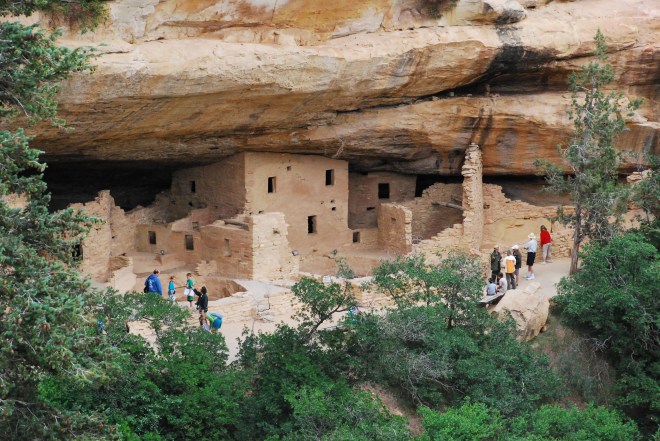
DSC_0019.JPGIf you’re planning at trip to Mesa Verde National Park and hoping to explore the Spruce Tree House cliff dwelling, one of the largest and most popular cliff dwelling sites at the park, you’ll be limited to viewing it from a distance. Why? While we want all our visitors to experience the cliff dwellings, keeping guests safe is our top priority. Recent rock falls at the Spruce Tree House site prompted the decision to close it to the public for the first time in 50 years.

Because the alcoves containing the cliff dwellings were formed by natural processes that are still at work, dwelling sites undergo change over time. Due to erosion, naturally forming cracks exist on the mesa above the Spruce Tree House, and continue to spread. One very large crack spans the entire length of the Spruce Tree House alcove, and has been the source of rock falls before.

In 1940, cracks and instabilities were discovered, and actions were taken to slow the erosion process. Plants and debris wedged in the cracks that were making them wider were removed. To help protect the cliffs even more, a protective covering was built to waterproof the system of cracks and hold off additional erosion.

DSC_0061That covering worked for two decades, but in 1960, a 10-ton rock fell from the south end of the cliff overhang, hitting the nearby public trail and part of the Spruce Tree House site. Trained climbers pulled down a loose, five-ton rock in danger of falling to prevent it from doing more damage, and cleanup began. The previous covering put over the crack was removed and replaced with an anchoring system that would hopefully prevent the cracks from widening. These 42 anchors, up to 16 feet long, were drilled into the cliff face to anchor the arches in place, then the crack was filled with gravel and cement. This system held for many years, until recently.
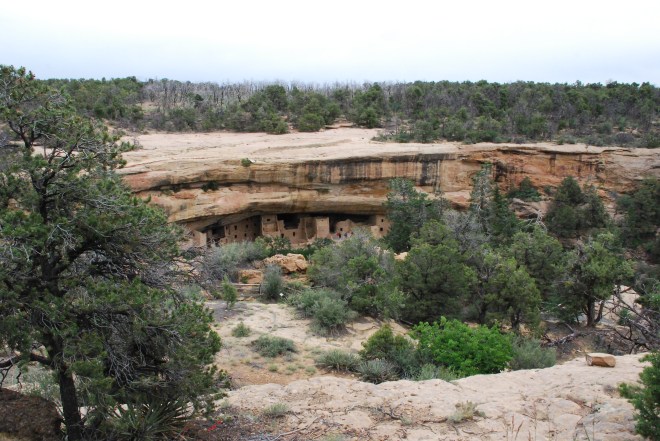
In August of 2015, several small rock falls at the south end Spruce Tree House cliff dwelling caused new safety concerns. Hiking to the site was temporarily closed while park officials evaluated the danger of more rock falls. Unfortunately, their evaluation made it clear the site was too dangerous for visitors. In October of 2015, officials decided the site would remain closed to the public until the safety of the area could be studied in detail.

Wasting no time, the evaluation of the area began the following month, and was completed by a specially trained climbing team made up of members from several National Parks. During this project, the system of cracks above the arch was inspected, and a large amount of loose rocks and debris were removed. The cleanup revealed that the inner areas of the cracks were soft due to water leaching away minerals necessary for keeping the rocks strong, and further damage was possible. The risk of continued cracking and falling rocks made it impossible to reopen the site. A full geotechnical assessment will likely be conducted in the future but, for the time being, Spruce Tree House will remain closed to the public.

Even with the closure, this beautiful monument can still be enjoyed by park visitors from a distance. Overlooks near the Chapin Mesa Archaeological Museum provides views of the Spruce Tree House, and Rangers are available to answer any questions visitors may have.

DSC_0012.JPG

Travel Blog 1: Tour Bus, Streetcar, Streetcar (again), Shuttle…Zoo?

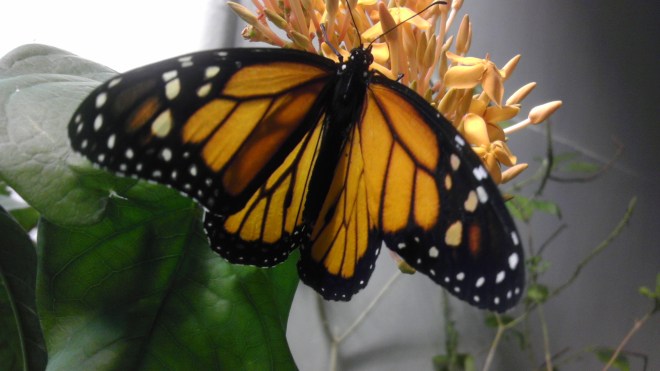
2013-06-17 16.16.23While flying does cut down your travel time, it also leaves you without a car. That’s not so bad when visiting New Orleans and staying at a hotel right in the French Quarter…mostly. While my husband was sitting through an EPA conference, my two kids and I walked all over the French Quarter, seeing the aquarium, kids museum, cemeteries, the double decker tour buses, and the butterfly habitat.
No car? No problem.

Except when we wanted to visit the zoo. I love zoos, probably more than my kids, and NOLA was supposed to have a great zoo. It was definitely not within walking distance, though. My previous experience with the area was driving through the French Quarter on the way to Florida, appreciating the architecture from the confines of our weird smelling RV.

2013-06-18 10.51.22For some reason, rather than just having the nice man at the hotel call us a cab, I thought we could make it to the zoo using NOLA’s public transit system. I had several maps which laid out the route to the zoo through various modes of transportation. It would be an adventure, right?
With two kids (7 and 10), and my only other experience using mass transit being riding back and forth on the Metro from campus to Washington DC during a week-long high school trip for a National History Day competition, we set out.

So, we hopped on the tour bus and rode several miles to a historical neighborhood, where we bravely got off the bus and attempted to find our streetcar stop. We cautiously approached a bud shelter where several older African American women were sitting on the bench, and after failing to find some kind of indication of whether this was a stop for the streetcar, bus, or something else, I asked the ladies if we were in the right spot.

We weren’t.

2013-06-18 15.34.34They nicely pointed out where we should be standing. A platform in the middle of the road. The streetcar lines literally ran down the middle of the street, with cars driving on either side. Beginning to regret this adventure, we trekked safely to the streetcar stop, only to be followed by yelling. I looked around, hoping the shrieking isn’t directed at us, and found the nice lady who’d directed us yelling and waving at us. I was so startled, it took me a few minutes to figure out what she was trying to tell me.
We were at the wrong streetcar stop.

2013-06-20 15.08.04Because the streetcars run on rails, they run in one direction. What direction you want to go determines was side of the tracks you should wait on. We were on the wrong side. So, grabbing my kids’ hands again, we hurried across the rails to the other side of the middle of the street, and waited at the right stop.
The streetcar came trundling up the tracks soon after, and we climbed aboard. My kids still thought we were having an adventure while I was cursing myself. I paid our fair and shuffled the kids into the car to find it packed. I held my kids’ hand, keeping them close, while I stood trying not to rub up against a guy whose armpit was dangerously close to my face and a lady whose shopping bags were taking up the aisle. After one more on and off to change streetcars, I eagerly dragged the kids off the streetcar when we reached our stop.

A sign for the zoo awaited us after walking a few blocks from the bus stop, but the zoo itself was nowhere in sight. There was, however, a group of tourists waiting around the sign who told me the zoo was still a mile away, but there was a shuttle coming! In twenty minutes. When the shuttle finally pulled up, its capacity was a whopping nine seats for the nearly twenty people waiting.

2013-06-19 11.29.48Seeing that I had two kids with me, the other tourists were extremely kind and let us get on with the first group. Ten minutes later, we finally made it to the zoo, and it was as fabulous as I’d been told. One of the best zoos I’ve visited. The only thing that wasn’t awesome was the fact that we had still had to get back to the hotel.

Lesson learned: Call a cab.

Time for Some Homework

Recently (this week, in fact) I’ve officially gone back to college!

2016-03-29 18.34.38.jpgOriginally, I intended to get my bachelor’s degree in English, but there were some issues with that plan and now I’m working on a degree in Communication-Media Studies with a minor in English. Getting my degree will allow me to teach more classes at our local community college, so here I go!

This summer I’m taking a Technical Writing class that is way more intense than I was expecting, and a Travel Writing class which is awesome.

Why am I sharing this?

Both classes understandably have homework, and since it’s writing related and I like sharing things I learn about writing with my readers, I’ll be posting some of my homework pieces here on my blog. Some for feedback, some for fun. So when you see posts about how to sew a French seam or why the Spruce Tree House is closed at Mesa Verde National Park, that’s why.

If you feel prompted to offer feedback, please do! There’s always room to learn more, and comments from readers are just as valuable to me as comments from classmates and instructors.

Have a great summer!