Working as the editorial assistant for a newspaper has given me some insights about getting past the general email account and to the editor’s virtual desk.

I work for a small, local paper, but we still get a crazy amount of submissions and requests for op-eds and guest columnists. It was pretty overwhelming at first to learn how to filter these. The editor gave me the basics my first day and spent a couple weeks answering my questions about what was important and who was interested in what. I think I’ve gotten the hang of it pretty well now, and it’s taught me a few things that can be applied to both submitting fiction and articles.
Dear Editor
This isn’t a new realization, because this is the first thing I learned when I started querying fiction, but being on the other side of the query has impressed the importance of this piece of advice.
Figure out who you’re sending your query to!
Addressing an email to Dear Editor, the name of the paper/agency, hello everyone, or no salutation at all is a waving red flag to click the trash button.
Why?
For one, it shows the sender didn’t bother to do two minutes of homework to find out who they should be sending their query to. Second, it’s a clear indication that the sender used the BCC to hide that it’s a mass email to every publication they could find contact information for. Laziness, on both accounts. These types of emails are the first ones I weed out in the morning.
Why would I care about this?
Then next thing I look for when culling emails is relevance. As I said, I work at a small, local paper. Aside from AP wire stories, we only cover local issues and events. The first thing I check on media releases and PSAs is the dateline. If it’s out of our coverage area…trash.
The next thing I look for is whether or not it’s relevant content. For the newspaper I work for, this means it not only has to be a local issue, but it has to fit into one of our sections. We don’t have a technology section, or an aging gracefully section, or a rap music section. I still get emails about random topics or locations we don’t cover every day.
This applies to fiction publishers as well. If the agency or publisher doesn’t work with your genre, don’t waste your time querying them. It’s annoying and wastes their time, too. Your query is not going to make a publisher suddenly decide to take on a new genre any more than it will make a newspaper add a whole new section their readers aren’t interested in. Do your homework.
The lonely link
I am not clicking on random links. I’m just not. If some sends me a link or list of links saying So and So Author has a new article available, I am not clicking on it. To the trash it goes. Same goes for attachments with no description or information.
Let me tell you how to do your job…
There is a difference between doing your research and providing all the pertinent information (section, date, topic, etc.) and attempting to tell someone how to do their job. Emails demanding I place a certain PSA in a particular section on a particular day when neither matches up with our publishing schedule and section requirements is a quick way to irritate whoever is reading your email.
Are you starting to see a pattern here? Do your research! And be polite. Demands rarely go over well with anyone, and certainly not publishers and papers who receive dozens, if not hundreds, of submissions a day and have rules and requirements for every inch of the paper.
Be direct
Unless submission requirements specifically direct you to use the general account, send you query directly to whoever should actually be reading it. Newspapers, agencies, and publishing houses have specific people who deal with specific topics or genres. It takes more effort for me to figure out who should be looking at something, and it’s much more likely to get deleted.
If there’s a list of who handles what, and you’re invited to submit directly, for the love of God, figure out who might be interested in your work and send it directly to them! Your chances of it being seen will be much higher if the person who makes the decision sees it first. I don’t think I’m alone in prioritizing emails specifically sent to me over ones that are forwarded.
So, what should you do?
Basically the opposite of everything I just said.
- Address your email to the right person (and spell their name correctly).
- Only send relevant content the organization has stated they have an interest in.
- Provide a full and interesting description/query, not just a link or lazy “Are you interested in this?” with an attachment.
- Provide all the relevant or requested details without being pushy or demanding.
- Send queries to the right person.
Basically, put the time and effort in to figure out how to query an organization correctly and be polite about it.

 Creating a fictional town is definitely the most involved type of worldbuilding in contemporary realistic fiction. You’ll draw from real places with the goal of developing something new and interesting. A huge benefit of making up a location is that you aren’t bound by anything. Another benefit is that you won’t spend hours researching a real place and worry about whether you’ve portrayed it correctly. A fictional location allows you to build the exact setting you need to develop your plot and characters.
 Start off based in reality. For those who’ve watched Twin Peaks and paid attention to the opening credits, the welcome sign claims the town has 51k people, yet everyone knows each other and there seems to be only one restaurant. Take the time to research town sizes and amenities in order to make sure everything lines up.
 Whether you’re creating a fictional town or using a real town, you still need to develop the small-scale details of the neighborhood or apartment building your characters inhabit.
 Thinks Friends when you’re creating your characters’ daily habits and local haunts. Who’s apartment/house does everyone tend to hang out at and why? What features make it desirable? When they’re out and about, where do they often stop for coffee or to catch up, and how does that environment help the story? If characters need a quiet place to trade secrets or go over plans, a busy, noisy coffee shop might not work as well as a used bookstore.
 Similar to building a neighborhood, it’s important to develop the work or office life of a character. How much it needs to be developed depends on how important it is to the story. If a character has social anxiety, a busy and fast-paced office will provide conflict. If a teen character is itching for excitement but works at an outdated video rental store only a few old people visit every week, that also provides conflict. If work is only mentioned in passing to acknowledge that the character does indeed have a job, minimal development is needed beyond the fact that it eats up a large portion of their time and provides an income.
 A very important, overarching detail to develop is how your MC relates to the world. This is most often going to develop from backstory. Some writers develop the backstory first while others let it come to light as they write. The important thing about backstory is that it forms a starting point for your character and helps determine an end point.
 I’ve been editing a young adult project I wrote a few years back and never got back to, and it reminded me of a comment I saw on social media a while back about whether YA is an age group or a genre.
 It’s been a long time since I haven’t had a project that I was in the middle of and felt pressured to finish.
 This past February I started a job as an editorial assistant at a local newspaper. I’ve been writing since I was a teen, and got started publishing fiction almost ten years ago, but journalism is a whole new world of writing for me. I’ve learned a lot so far, some writing-related and some just plain interesting.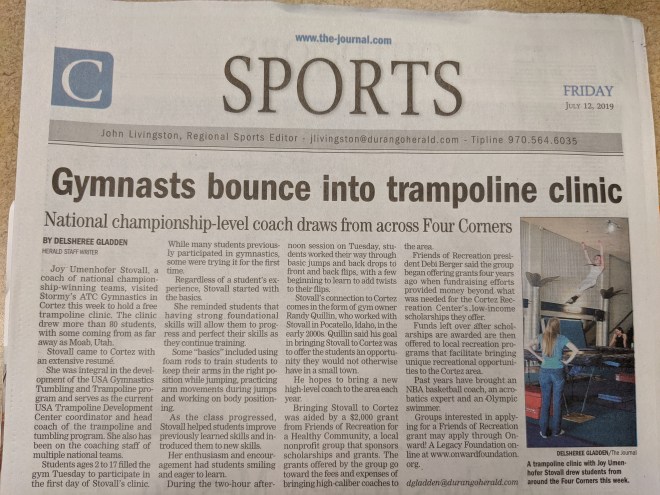
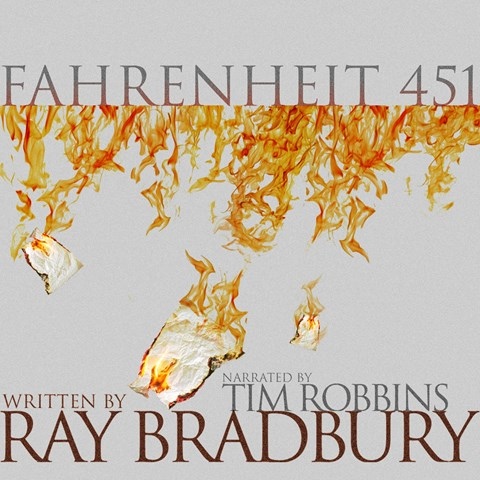 In my continuing quest to read more of the classics, we listened to Fahrenheit 451 on a summer road trip. My kids are 12 and 15, and they really got into the story. It turned out that my son had to read this in school this year, but for some reason I never had to read this in high school. Instead I was slogging through Great Expectations and The Iliad…
 Let me start by saying that after we listened to Fahrenheit 451 we watched the HBO movie version, and I actually enjoyed it quite a bit. No, it was not the original story. That’s okay. BUT…one of the changes we were all most disappointed by was that Guy’s wife Mildred was completely written out of the story.
 Some of my readers probably think I’ve died, or at least been serious maimed and unable to write. I’m not dead. My hands are a bit messed up, but for the most part, still functional.

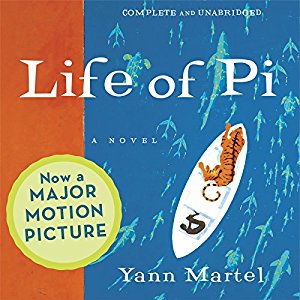 For those who haven’t read or seen Life of Pi, it’s about a young man who survives his ship sinking in the middle of the sea during a journey from India to Canada. He makes it to a life boat, but finds himself in the company of several of the zoo animals his family was transporting…including a Bengal tiger named Richard Parker.
 Infodumping is often a struggle for writers who do in-depth research for a book. You found out all these awesome things about whatever and now you HAVE TO SHARE THEM ALL! Unless you are writing a non-fiction book about your topic that is meant to give a detailed history of whatever, please, please, please for the love of all things bookish DO NOT vomit up every seemingly fascinating tidbit of research you uncovered while preparing to write your book.
 I also struggled to listen at length to the religious discussions, which I usually enjoy quite a bit. I think religion is a fascinating topic and enjoy learning about many different religions. What I didn’t enjoy was, again, too much straight information that took me away from the story, and the sometimes condescending way the information was presented. I don’t hold with any particular religion, but I was still bothered by the sense I got that if a reader didn’t agree with the author’s opinions on eating meat, practicing multiple religions at once, or who or what God or gods might be they were simply wrong or not as smart as the author. I enjoy learning about how others view God, religion, the Universe, etc., but in a way that invites thoughtfulness rather than looking down on others’ beliefs or viewpoints.
 Several years ago on a car ride my family and I started listening to “Unbroken” by Laura Hillenbrand. I downloaded it from Audible after only a cursory glance at the summary and checking the reviews. So, it wasn’t until several hours into the book that my husband and I both turned to look at each other and asked, “Is this book a true story?”
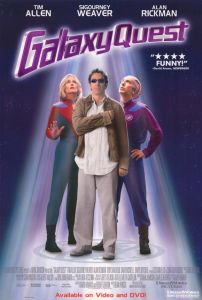 Be mean to your characters all you want. Kill your darlings, right? However, if the end to every situation is a predictable close call or last second escape, readers will not only be annoyed they’ll lose interest. Have you ever watched Tim Allen in “Galaxy Quest”? They parodied this concept beautifully when the alien ship built to model the TV series spaceship is designed to stop its self-destruct sequence at 1 second because “that’s what always happened on the show.” It’s funny because we all now how irritating that “last second” save becomes after a while. While there are rare stories, like Zamperini’s, where people really do beat all the odds and survive the worst situations, most people fail and miss chances and get hurt.
 Louis Zamperini survived an incredible amount of danger and horribleness in his life, BUT there were deep scars left behind because of what he suffered. The last third of the book that deals with the aftermath of being tortured in a Japanese prison camp is very, very hard to listen to because the lasting damage is so real. I’ve read to many novels (especially YA) where the main character has some tragic past or experiences something truly awful…and bounces back like it was nothing. This is not one of those areas where reality needs to be downplayed. Let your characters be as broken as they need to be. Emotional scars are something we all understand. Characters need that element of reality to ring true with readers.