Foreshadowing vs. Foretelling

Foreshadowing is a great way to create anticipation in the reader, but it can easily be confused for foretelling.

ball-625908_1280

Foretelling is to predict or tell the future before it occurs (a prophecy), while foreshadowing is to presage or suggest something in advance. It’s a subtle difference, but it makes a big difference in a story.

Foretelling is direct and explicitly tells the reader what will occur. While this is more common in young children’s literature, it’s usually not the best choice for other fiction forms. Foretelling takes the discovery away from the reader. It doesn’t make them work to understand the hint and can spoil the mystery or anticipation.

Foreshadowing involves the reader more full yin the story by asking them to put in the effort to not only pick up on the hints given, but remember them and fit them into the rest of the information and events. Readers feel more invested in the story when they feel like they are participating in it.

What do these two look like in fiction? Here are a few examples:

detective-152085_1280Foretelling: Had I known the darkness forming in my mind weren’t my own thoughts, I would have attempted to defend myself.


Foreshadowing: These thoughts feel so foreign, but I can’t deny they’re in my mind, constantly nudging and pushing me to see Alex’s words and actions more clearly.

In the first example, the reader is told the dark thoughts come from an external source and the character has lost control of their own mind. This asks the reader to do no work and requires them to simply wait for the character to realize the manipulation or see how it all shakes out. Reader investment and participation is very low.

In the second example, there is a hint that the dark thoughts aren’t usual for the character, but is contrasted by the hint that the change might be needed…if Alex’s words and actions truly are harmful. This creates anticipation because the reader doesn’t know for sure whether the character is being manipulated or is starting to see things more clearly. This creates a sense of wariness and anticipation to figure out the truth. Readers will pay more attention to find more clues and figure out the mystery. Reader engagement and investment is high.

reading-3606441_1280

Tips for writing a great hook

Writing a great hook takes headaches, crying, and endless rewrites.

hook-159682_1280

Below are a few things to keep in mind while crafting a stand-out hook

A great hook catches readers’ attention

• Write something that startles the reader: “Shaye Archer’s life effectively began the night police found her in an alley, beaten and abused and with no memory of the previous fifteen years, not even her name.” Malevolent by Jana DeLeon
• Open with the inciting incident: “When Willow is born with severe osteogenesis imperfecta, her parents are devastated—she will suffer hundreds of broken bones as she grows, a lifetime of pain.” Handle with Care by Jodi Picoult
• Create intrigue: “Inspired by a terrifying true story from the author’s hometown, a heart-pounding novel of suspense about a small Minnesota community where nothing is as quiet—or as safe—as it seems.” Unspeakable Things by Jeffrey Eugenides

A great hook catches readers’ attention

• Introduce something ominous: “A bloodthirsty sheriff is terrorizing a small Texas town where justice has been buried with his victims.” In the Heart of the Fire by Dean Koontz
• Make the characters sympathetic and relatable: “What happens when the most beautiful girl in the world marries the handsomest prince of all time and he turns out to be…well…a lot less than the man of her dreams?” The Princess Bride by William Goldman
• Capture the reader’s heart “Every so often a love story so captures our hearts that it becomes more than a story—it becomes an experience to remember forever.” The Notebook by Nicholas Sparks

woman-945427_1280

Off to enjoy the holidays!

warm-and-cozy-1975215_1280

I hope everyone is enjoying the holiday season and getting a little time off to spend with friends and family! I’m off most of the week to spend time with my hubby and kids, so no other blogs this week, but thank you to all my readers for your support!

If reading is in your holiday plans, I have a gift for all my readers! Grab a FREE copy of one of the books below on Smashwords using the promo code paired with each one.

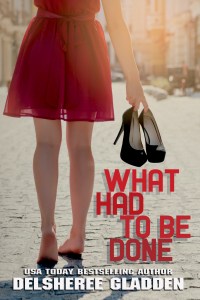
What Had to be Done: ZN49G

WHTBD front

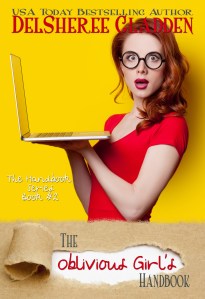
The Oblivious Girl’s Handbook: BX93D

Oblivious Girls Handbook

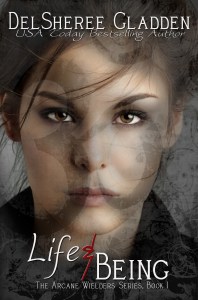
Life & Being: NA84Z

Life and Being

Writing balanced action scenes

Writing action scenes can be extremely challenging due to their chaotic nature, the pacing, and the possible lack of firsthand knowledge. It’s also very easy for action to overtake a scene to the exclusion of the characters and story. Below are some tips to writing strong and balanced action scenes.

Man with Sword

Do NOT write an entire action scene as blow-by-blow description

This becomes tedious and confusing for the reader and slows the pace. Action must be balanced with description, exposition, internal dialogue, and emotional reflection.

Strive for clarity

If the reader can’t understand what’s going on because it’s too chaotic, they will likely miss the point of the scene. Use simple language and shorter sentences. Be clear about who is involved, where it happens, weapons/powers used, risks involved, and consequences.

Focus on the experience, not the individual action

Use all five senses to describe the action. Don’t rely solely on visual and physical elements. Tastes, smells, and sounds are important factors in action scenes. Make the character connect with and react to the devastation going on.

Know the purpose of the scene and write in a way that fulfills the purpose

Why something is happening is just as important, or more important than, what is happening. Makes sure the WHY is clear during an action scene so the reader knows what to pay attention to and absorbs information relevant to the purpose.

Pointing a gun at someone

Avoid the passive voice

The characters are involved in the fight scenes, it’s not happening to them as passive bystanders. The scene should be told through the character’s experience. For example, “Alan was punched by Greg” is a passive description while “Greg punched Alan” is an active description. In the first example, something HAPPENS TO Alan while in the second description Greg actively TAKES action.

Use action scenes as opportunities to explore a character’s motivations and goals

Why do they fight or make the choices they do in the scene and what is the source of that action or decision? Guns are pulled at pointed at people for no reason. It may be a panicked reaction in the moment, or a lifestyle that breeds that type of reaction as instinctual. There are also consequences to taking action. Does the character consider the consequences first, or are they too in the moment to think beyond it?

Make action unique

Use different settings (going into a gunfight from a stairwell presents different challenges than bursting through a window). Vary the number of people involved (a one-on-one fight will play out much differently that two groups battling). Change the tempo (a chase scene has different pacing than a single explosion). Give them different weapons (a spontaneous fight using items lying around has a very different feel than fighters trained to use particular weapons). Create different goals for each scene (rescuing someone requires different types of action than wantonly killing everyone in the room).

Integrate action into a story to drive the plot forward, improve characterization, and provide excitement.

HEA, HFN, and Realism

In most romance subgenres, happily ever after endings are a requirement. What exactly is an HEA ending, and how does it differ from an HFN or happy for now ending?

HEA and HFN both end happily. The main differences between them are for how long and on what terms will the characters be or remain happy?

8c182-coupleholdinghands

HEA’s simplest definition is that everything turns out for the best for the protagonists and any side characters. If there is an antagonist, they get what they deserved. HEA leaves the reader confident the happiness will continue long term with no major roadblocks or disasters.

HFN is often consider a more realistic type of ending. Not everything is perfect, but it’s pretty good for the moment and the circumstances. The protagonists’ lives have improved to a satisfying level, even if it isn’t the end goal and may not be permanent.

Now, let’s discuss making HEAs a little less predictable and, let’s admit it, less cheesy.

Make the characters work HARD for their HEA.

No quick resolutions or easy forgiveness. Leave the reader doubting it will happen right up to the last second. The “work” may be external or internal.

External work might be distance, others who keep them apart, lies or mistrust, etc. Internal work is a character overcoming internal issues, such as past hurts, commitment phobias, or held secrets.

Whatever type of work a character must do to reach their HEA, give them roadblocks and roller coaster ups and downs. Any time it starts to feel like things are getting to easy for them, hit them with another one that pushes them back a few steps.

Put a twist on a trope.

Romance has plenty of tropes to chose from. The difficulty is often making them unique and not just another Disney ending. HEA doesn’t always have to end with a kiss, sex, or a proposal.

What else signifies commitment? Exchanging house/apartment keys, adopting a pet, meeting family, etc.

The important thing to remember here is that the twist has to make sense and be relevant to the character’s arc. If a character is open and welcoming by nature, introducing her new love to her family at the end isn’t much of a twist, or very exciting. However, for a character who’s had to work through major issues with her domineering mother and has trouble opening her private life to people, introducing a new love to her mother would be a big step that showed trust and commitment.

Try unique situation and settings.

Very few real relationships reach the HEA moment over a candle-lit dinner or during a grand romantic gesture. Take a page out of reality and spice up a conversation over pizza or taking a walk and falling in love with a house listed for sale. Look for everyday moments that can be made special.

I love the scene from The Office when Jim proposes to Pam at a gas station. It’s a powerful moment, not only because it’s unexpected, but because his previous attempts at a grand gesture kept getting messed up and he simply couldn’t wait to start his life with her any longer.

Make the reader wait.

Whether this is a planned meeting that gets held up and makes a character doubt, a tough decision that is held off until the last moment, a sacrifice the reader isn’t sure a character will make, or something else, a pause before the HEA can up the reader’s anticipation.

In most romances, the reader knows there will be an HEA, but they don’t know how it will happen. If you’ve developed a strong story arc, every time the MCs get close, they’re pushed back apart, making the reader doubt their ideas of how it will all play out. Keep this up until the big moment. Then you can follow it up with a glimpse of what their HEA looks like long term.

One last note…

Make sure each character has their OWN happy ending before their relationship gets a happy ending. HEAs are even more unrealistic when the characters haven’t shown enough development for a reader to believe “true love” will last forever.

This doesn’t mean they have to be perfect, but they DO have to be capable of sustaining a long-term, committed relationship. Each character should have their own development arc and need to reach the climax of that arc before the story/relationship arc can reach it’s own climax.

Sensual attractive couple

New Release: What Had to be Done

I read “Persaded” by Jane Austen several years ago as part of my ongoing quest to read more classic literature. I’ll be honest and say a lot of the classics I’ve tried have been a challenge to get through. This wasn’t one of them. I really enjoyed reading “Persuaded” by was intrigued by the idea of making it a little more current for younger readers. It took only a couple of months to write, but it’s taken several years to get back to it for editing, cover design, and actually getting it published.

Now, it finally available in ebook and paperback!

What Had To Be Done

WHTBD frontEveryone has bad days. Anna Elizondo is going on three years of bad days.

It started with her mother’s illness and eventual death, continued with a decision that ruined a friendship, and culminated in her father announcing they were broke and moving away right before her senior year of high school.

Maybe a fresh start will turn things around.

Or maybe it will put her face to face with her former best friend Felix and the hatred in he still carries for her.

The only bright spot in Anna’s move to Santa Fe is meeting her new swim coach, a long-time hero who has big plans for her athletic career. The pool is her refuge, but she can’t hide there forever. Living in a small town makes it impossible to stay out of Felix’s way, and unlikely their history will remain just between them for long. If Anna can’t find a way to make things at least tolerable with Felix, it’s going to be a very long summer.

Available now!

Amazon ButtonSmashwords ButtoniBooks ButtonBarnes Noble BttnKobo Button

Writing a well-crafted ending readers will love

One of the worst endings to a TV series, for me, is still “Lost,” but it provides some good lessons in what not to do when crafting the ending of a story or series.

rope-1469244_1920

Every subplot has to be relevant and tied up at the end. Readers hate being left with unanswered questions. When dealing with a series, of course some subplots span multiple books, but they still need to be resolved by the end of the series. Don’t introduce a subplot simply because you feel a chapter is lacking and you need to add something interesting. First, make sure it’s relevant to the main storyline and then follow the subplot to its conclusion to see if it is worth incorporating. Every subplot should have its own complete arc.

chaos-485493_1920

Keep your subplots manageable. Every story has subplots to provide characters with a fuller life and help them grow and move toward their ultimate goal in stages. However, this can easily get out of hand if you try to develop subplots for every little aspect of the story. How many subplots is too many often depends on the length of the story. Novellas or short stories really can’t handle more than one. An average length book of 60-80k words can usually handle 2-3 subplots. 80k and up can handle 4-5 when the story is complex. Anything more than that runs the risk of leaving unanswered questions and upset readers, unless you’re Robert Jordan.

geometry-1023846_1920

Don’t forget what your characters wanted or needed to learn at the beginning. No matter what the story is about, it’s really about the characters. A plotline can’t exist independent of the characters. Maybe the MC needs to solve a mystery, and it’s a plot-driven story, but readers still have to get invested in the character moving through that story, which means the character’s arc has to be tied up as neatly as the story arc. Look back at who the character was at the beginning. Have they changed? Have their achieved their goals? Have they learned something important? If the answer is no to any of these questions, the character hasn’t arrived at the ending along with the plot.

question-mark-1872665_1920

The ending has to make sense! This doesn’t just apply to avoiding Dues Ex Machina endings where something completely outside the story swoops in and fixes everything at the last second. It also applies to endings that don’t match the characters’ stories or personalities, defy logic, or seem completely unreasonable. Sometimes, you start out with an ending in mind, but the characters and plot elements change while writing. The ending needs to adapt to those changes as well.

Understanding and choosing the right point of view

When we talk about point of view, what we’re really discussing is the narrative point of view, or how and by whom the story is being told. Let’s review the basics before diving deeper.

storytelling-4203628_1920

First Person POV has two variations:

First person protagonist where the character narrates his or her own story.

First person observer where a secondary character tells the main character’s story (i.e. Watson narrating Sherlock’s Holmes cases.)

Third Person POV is not told by a character but by an invisible author and has four variations:

Third person omniscient is where an all-knowing narrator tells the story.

Third person dramatic/objective is where the narrator only tells the reader things which could be recorded by a camera or microphone (i.e. no thoughts).

Third person limited is where a narrator tells the story from the perspective of a single character at a time.

Third person deep is where the story is told in the hero’s voice, rather than the author’s voice.

Second person POV is written in present tense and addresses the reader directly:

Second person POV makes the reader the protagonist. The narrator often uses detailed description, shares psychological insights, and tries to anticipate reader reactions.

This in uncommon in teen or adult fiction and is mainly used for young children’s literature.

It’s important to understand why some POVs work better for certain genres or storylines and make changes when something isn’t working. Let’s review points to consider when choosing POV.

one-way-street-1317586_1920

First Person

There are several advantages of writing in first person. It feels natural to many writers, because it’s how we speak about our world and experiences. Dealing with only one narrator’s mind can be easier than writing multiple narrators. It’s an opportunity to create a unique and distinctive internal voice. Because you’re only in one character’s mind at a time, it’s easier to “stay in character.” Readers also get to experience the story vicariously through the character more easily. There is also an opportunity to create an unreliable narrator. First person is also much more intimate than other POVs and can fully immerse a reader in a story.

There are disadvantages as well. You are limited to writing only about what the character can see, know, or hear. The narrator must be in every scene, observing and participating in the story. Minds of other characters are off limits, as is their knowledge about the story unless directly shared with the narrator in some way.

 Second Person

Advantages of this POV are limited. You can create a different feel to a story, and can speak to the reader directly.

The disadvantages are more prevalent, partly because this “uniqueness” often doesn’t sit well with readers and feels too personal. It often gives a juvenile feel to a story.

 Third Person Omniscient

Advantages of this POV include being able write the story as an onlooker watching the full story unfold. You can also add contrasting viewpoints with other characters (NO head hopping, though!). This can give a reprieve to the reader and allow them to see another side of the story. You can expand the scope of the story by moving between settings and viewpoints. You aren’t limited to characters in the story when choosing a narrator, which can provide a unique perspective. This POV also allows the narrator to share his or her own views, but should NEVER slip into second person to do so.

Disadvantages center around the confusion this POV can create when not done with attention to detail. If narrators don’t have a distinct voice, readers may be confused on who is narrating. Switching to other characters can diffuse the tension or excitement when not planned well. It’s also easy to write as the author instead of the narrator. This POV can be more difficult to forge a connection with readers if it comes off as too distant or impersonal.

Third Person Limited

This POV attempts to combine the best of first and third person omniscient. The limited POV allows you to more deeply explore the narrator and forge a stronger connection with the reader without asking them to live out a story with the narrator.

For disadvantages, this POV does limit you to choosing a character as a narrator and limits you to the narrator’s thoughts and experiences.

The distance third person creates between the story and the reader can be an advantage or disadvantage, depending on the story. Some stories may be too raw or personal and distance is needed to allow the reader to remain at a certain comfort level. However, if in order to fully understand or experience a story, the reader needs to be enveloped in it, the distance of third person may prevent that.

 Third Person Deep

The biggest advantage of the deep perspective is that is attempts to remove distance between narrator and reader. The reader can experience more fully what the narrator is thinking and feeling. It feels more like third person to a reader, but uses third person pronouns, which can be important in following genre conventions.

The main disadvantage is that this is a challenging POV to write and is still gaining traction in some genres.

Consider the last book you read and how it would have changed if written from a different POV.

storytelling-4229843_1920

The importance of setting in fiction

It’s always good to review the basics before diving deeper, so let’s talk setting. Setting has three major components: social environment, place, and time.

DeathtoStock_CreativeSpace8 11.45.06 AM

Social environment will impact the thoughts, actions, and decisions of the characters. A child growing up in an extremely conservative/liberal home will see things differently than someone who was raised more moderately. Place will impact the story by how the characters interact with it and how it shapes their worldview, as well as physical limitations (i.e. an island vs. and mountain town.) Time factors into not only technology, but in self-perception and social rules. A 1950s woman would be much different than a teen in modern time.

There are also two main types of setting: backdrop and integral.

A backdrop setting is not terribly important to the story. The scene could take place anywhere, but happens to be taking place in that spot. This may be a hallway, sidewalk, nondescript café, etc. These settings need minimal description and attention.

An integral setting is one where the time and place influences the theme, character, and action of a story in some way. Animal Farm wouldn’t have been quite the same if it were set in a shoe store. These settings need more in-depth description and development and may even act as an antagonist, such as in survival stories.

cross in fog at the cemetary

Setting also helps set the mood and atmosphere of a story. The description and the way characters perceive it and interact with it should help develop that tone. The covered bridge in Sleepy Hollow has a very different feel than the Love Lock Bridge in Paris.

When describing setting, Show Don’t Tell becomes very important. Please, please, please don’t spend paragraph after paragraph describing the setting to your reader. Let the reader explore the setting with your character in a way that reveals insights about the character or story.

For example, you can say something about family dynamic by having a teen look through the half-empty kitchen cupboards for cereal that’s on the verge of going stale. It’s a simple detail, but it says a lot about how this teen is living. A character looking in her closet and staring a the only two dresses she owns while getting ready for a job interview informs the reader about her financial situation without having a long discussion about it.

Use setting to help tell readers a story rather than telling the readers where the story is happening.

Things to consider when writing intimate scenes

Writing intimate scenes, whether they involve a first kiss or sex, should be natural and progress with both the character’s nature and the overall storyline. These types of scenes should impact the characters in some way. If it doesn’t change anything, it either needs to be rewritten, moved, or gotten rid of entirely.

Romantic couple in a hotel room

The intensity of intimate scenes should not detract from the storyline. Take care to lead the reader into the scene with a building intensity, then guide them back down to the main focus of the storyline. If readers only care about the intimate scenes and skim the bulk of the story, either the story is too weak or the intimate scenes are too overpowering.

When describing what takes place during intimate scenes, especially in sex scenes, sometimes less is more and it’s best to let the reader fill in the details. That doesn’t mean you should skimp on the details, particularly sensory details, but give the reader room to craft an intimate scene to their own preferences by not being overly descriptive of every second.

Many writers find it challenge to find new ways or words to use when writing intimate scenes. It is key that these scenes not feel like they were copied and pasted from an earlier scene. Ways to accomplish this is often more about the details surrounding the scene than the actual act. Choose different settings so the description and sensory information is more varied. Change how a couple progresses toward an intimate scene. A kiss or sex after a romantic dinner is going to be much different than right after a soul-bearing admission or a fight. This gives new opportunities for internal dialogue and emotion.

death_to_stock_photography_vibrant-9-of-10-scaled-2560.jpg

When it comes to word choice, don’t be afraid to use standard terminology. Getting too creative with euphemisms can be distracting for readers. Instead, focus on motions and actions involved, and the characters’ responses. Describing where an arm or leg is isn’t what gets most readers attention. The response to where that kiss or finger is placed is what readers pay attention to and want more of. The reader wants to feel what the characters feel much more than they want a diagram of what went where.

Incorporate agency into these scenes to avoid objectifying either sex or treating characters as passive bystanders. In most cases, both characters should be responding to the other’s needs and actions rather than expressing themselves “at” the other person. There should be a give and take in both physical action and mental/emotional responses.

Structure an intimate scene just a you would any other story or scene: foreplay, action, climax, wind down. Whether the characters move through this arc quickly or slowly depends on the circumstances. Regardless, it’s important to hit all points of the arc. Lead into the moment as slowly as is fitting to buildup the reader’s anticipation. Begin the action and capture the characters’ thoughts and reactions to each action. Hit the climax on multiple levels, not just physical. Slowly bring the reader back to the storyline as the scenes concludes with a hint or lead-in to what’s coming next or the repercussions of what just happened.

Keep the focus of intimate scenes on what they mean to the characters and how it impacts them more so than just description of what went where.

Sensual attractive couple