Look what’s FREE for the next 5 days!! Grab Shark Out Of Water now before it goes back to full price 🙂
https://www.amazon.com/dp/B00O3Q1TGQ/

Look what’s FREE for the next 5 days!! Grab Shark Out Of Water now before it goes back to full price 🙂
https://www.amazon.com/dp/B00O3Q1TGQ/

CHRISTMAS PETS & KISSES 2
Continue reading Christmas, Pets & Kisses 2 Release Day!
I’ll start off by saying this post has nothing to do with writing. Maybe that’s because I haven’t done much writing lately. Either way, this is what I felt compelled to write about.
Last week I had kind of a lousy week at work. Patients weren’t showing or there were already holes in the schedule to start with. I only work 12 hours a week, so every hour missed makes a big difference. Then we got to Thursday (last day of the work week for me) and I actually had a full afternoon of patients I always enjoyed seeing.
When my last patient came in, I immediately recognized that on the verge of crying look a lot of young moms get. The one I still get on a fairly regular basis, especially lately. When I asked her how she was doing, she started off by saying it had been a rough week. It snowballed from there. And let me tell you, I totally sympathized with everything she was saying, from struggles with the kids’ school to toddlers refusing to potty train to feeling like your dental cleaning was the highlight of your week because it was the first alone time you’ve had, because I’ve been there many times.
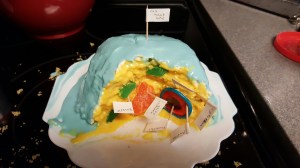
So, I started telling her about the 6 college classes I’m taking and the massive amount of homework they require, the crazy things my kids did when they were little and the crazy things they’re still doing, the many projects my kids have done in the last month-for school and because my daughter really loves YouTube craft videos (FYI: avoid the giant marshmallow), the soccer team my husband and I got suckered into coaching and the crazy ref who started harassing me after I complained to the league about him yelling at the girls all game and taking off without telling anyone after enforcing the mercy rule , and how stressed out my husband has been trying to finish a bunch of work so he can transition into his new position.
We spent most of the appointment laughing with each other.
At some point my patient-still laughing-said she was suddenly feeling better about dealing with her toddler. The funny thing was, I was thinking the same thing after telling her about how hectic things were for us. It wasn’t a competition to see whose life was crazier. Toddler years were tough. I’m glad we’re not in that stage anymore. We have new challenges now, a lot of them just as much of a struggle as trying to keep you little one from climbing up on the table and sucking all the chocolate off the toffee you just made (you can imagine the mess I had to clean up after that one, lol!).
My kids are now 10 and 13 and we’re dealing with mean girls at school instead of potty accidents, but chatting with my patient reminded me that all of these things are temporary. I may not be blogging or writing very regularly for a while, but eventually soccer will end and the semester will finish and all the other stuff will level out. More crazy will line up, it always does, but we’ll get through that, too.
So, if I’m not around much lately, be patient. I’ll be back when the crazy dies down. Thanks for hanging in there with me!
 Mythography has recently introduced a great new service highlighting mythic fiction. Personally, I love mythic fiction, and I know a lot of my readers do to, so I wanted to share a few details about this service.
On the site you can find a variety of mythic fiction books currently on sale or special offer. Because not everyone likes the same mythology, the deals are divided up into specific pantheons, so readers can go right to their interest and see what’s available.
This is brand new, so new titles are being added all the time. Check back often or subscribe to the newsletter to get updates.

http://www.mythographystudios.com/promo/
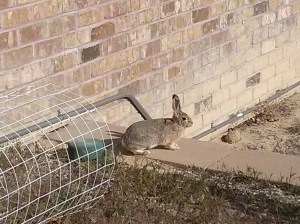 Just to clear up any confusion right off the bat, bunnies are the worst! Sure they may look cute, hopping around with their cotton tails and twitchy noses, but it’s all a trick. They will destroy your grass by eating it down to the roots and by peeing and pooping on it like mad-which also kills the grass. They will also gnaw off the bark of your fruit trees, which is not good for them at all, and those freaky jackrabbits’ giant creepy teeth, I’m pretty sure, could chew through your ankle if it got the chance.
Bunnies are NOT cool.
And, neither are overused genre tropes.
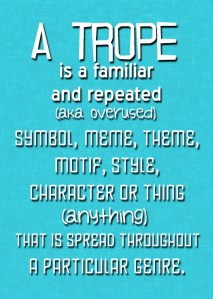 A trope is a familiar and repeated (aka overused) symbol, meme, theme, motif, style, character or thing (anything) that is spread throughout a particular genre.
The problem with tropes is not necessarily that it kills your story, like bunnies will do to your lawn, but they have the potential to kill your readers’ interest in your story.
How?
When a reader picks up a book and sees the same types of characters, the same pattern behind a storyline, the same hints that his 16-year-old nobody is destined to save anything and everything by discovering their deeply buried inner strength/power/importance/etc., they start to see how the story is going to end, because well…they’ve read it before. Maybe the names have changed, or the setting, or the mythology, or whatever, but if the overall concept is something every other genre writer is using, readers are going to pick up on that.
 Of course not. The key is to use them in their barest form. Strip them down to the essence of what makes readers connect with the trope to begin with, and add from there.
Weak, friendless, unimportant teen becomes the hero? Check. We’ve all been there, so we identify with those emotions and frustrations, and especially the hope for something more.
Self-conscious, doesn’t understand her own worth heroine who thinks she’ll never find love. Again, check. Everyone has those moments of thinking they aren’t good enough to find their happily ever after.
If your male lead has commitment issues, give him a REAL reason for his fears or avoidance. Being too awesome to be tied down isn’t going to cut it in most cases.
Your teen hero is going to save the world? Fabulous, but make him or her take a different path to get there than the typical camp/school/mentor/etc.
What new, exciting, difficult, gut-wrenching ways can your characters develop into their final self? It doesn’t have to be so complicated that solving the prime number equation looks easy, but it does need to be unique to your story, character, and plot.
Working with teen writers over the summer, most start out with fan fiction. It’s a great place to start, because a lot of the difficult world and character development is done for them and they can focus on the story and figuring out their style. It’s a great learning experience, and it’s okay that their stories often end up being a mishmash of all their favorite books, because they’re working on their craft.
However, as that writing skill develops, we need to move away from well-worn tropes and begin experimenting with new, fresh concepts that will take a story from something frustratingly familiar to one that stands out from all the others.
 It’s taken me a long, long time to finally get around to cleaning this book up and putting it out there, but Memory’s Edge is finally up for pre-order and will release on Kindle and #KindleUnlimited on August 21st!
Can’t wait to share this one with all my readers!!


https://blab.im/ts-krupa-authorchat-with-delsheree-gladden” target=”_blank”>TS Krupa, author of “The Ten Year Reunion,” invited me to chat on a new-ish platform called Blab. The neat thing about this is that you get audio and video, split-screen, as you watch the chat session. It was so much fun!
The replay of the chat is stored on the site and available to watch at any time!
https://blab.im/ts-krupa-authorchat-with-delsheree-gladden

Wicked Revenge is finally published! Sorry to all my readers who had to wait FOREVER!
I’ve also got the second book in the Handbook Series coming soon. It will first release as a novella in the Christmas Pets & Kisses 2 box set, then as a full novel this winter.
For more details on both, keep reading!
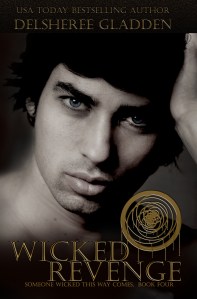
Secrets are unraveling, but they only bring up more questions and not enough answers. While the Roth siblings attempt to recover from the devastating confrontation with the Godlings, each one must overcome their own demons to survive.
In the midst of trying to hold their personal lives together, the captured Richiamos must be rescued from Isolde’s grasp, the Godlings must find a way to battle the traitors intent on tearing them apart, and the truth of the Godlings’ true purpose must be uncovered.
There seems to be no end to the battles they are facing, but if they can just hold onto each other and their sanity long enough to survive, they might just save everyone.






Warm your hearts this holiday season with twelve all-new sweet romances from best-selling authors. If you enjoyed Christmas Pets and Kisses you’ll love following some old friends and meeting some new ones. This delightful collection of pets, from paws and hooves to wings and fins, deliver another round of Christmas magic and true love.
You can now Pre-Order the CPK2 box set for only $0.99!
You can only enter the Rafflecopter giveaway for a chance to win a bunch of awesome prizes!!
 Now that my kids are getting older, children’s museums offer less and less. Their interest in playing with bubbles or making paperclip helicopters has waned. At almost-ten and thirteen, they want something in between appreciating modern art and crawling through the “pretend you’re a bug” exhibit. They want exciting, yet interesting.
During a recent trip to Chicago, we spent some time exploring Shedd Aquarium, and it was one of my kids’ favorite places. There is a little bit of everything at Shedd Aquarium, which makes it work for a wide variety of ages. The exhibits focus on learning, as well as fun and interaction.
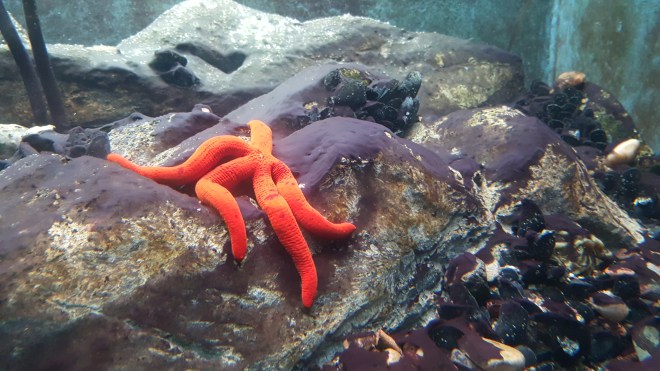
During the summer and early fall, you can visit the outdoor Stingray Touch pool to pet stingrays. The pool contains a good number of stingrays, so everyone has a chance to get up close. After the volunteer explains how to safety touch the stingrays, you’re free to enjoy the experience for as long as you like. My youngest loved this, and also spent time at the indoor touch pool filled with several large species of fish, and the starfish touch pool on the lower level.
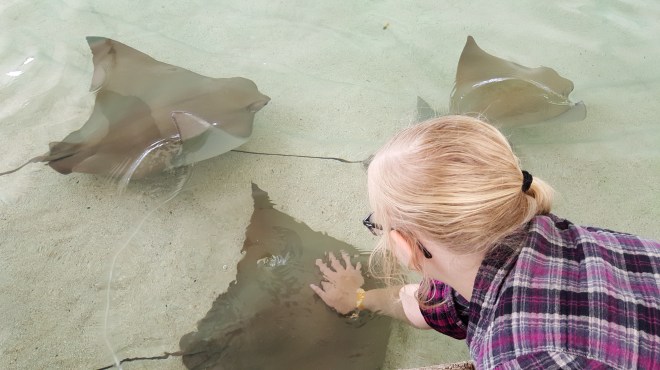
After my daughter petted fish to her heart’s content, we went in to check out the 4-D experience. They had a choice of SpongeBob, Coastal Predators, and Prehistoric Sea Monsters. We bypassed SpongeBob and went with the Coastal Predators movie. While we did get jabbed in the back as one of the special effects, the movie itself was entertaining and educational. Paired with the 3-D visuals, water mists, and wind effects, both myself and the kids enjoyed the show.
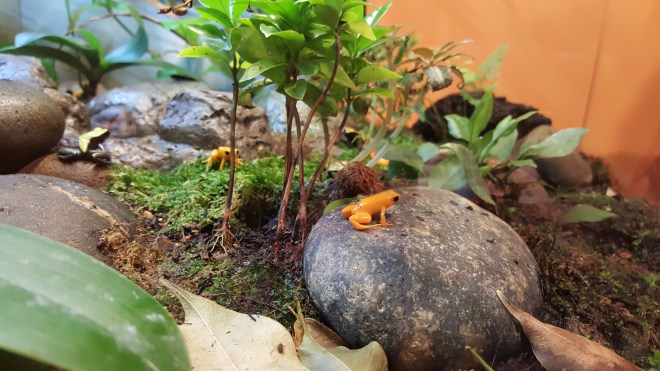
Special experiences done, we moved on to the rest of the aquarium. The amphibian exhibit was listed as a “special exhibit,” but most of the visitors seemed to have tickets which gave access to it, so no one was watching the entrance. For this being a special exhibit, it didn’t seem any better or more exciting than the regular exhibits. Having said that, all the regular exhibits were well put together and interesting, so this one certainly wasn’t disappointing. I had expected something more “special” than an exhibit of frogs, newts, and salamanders I had seen at other zoos or aquariums, though.
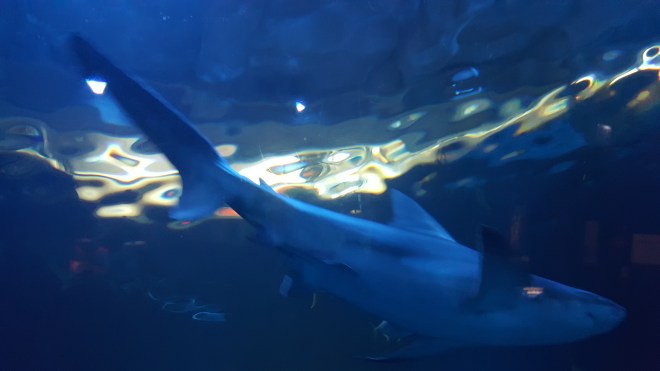
The regular exhibits held a variety of fun and interesting options. The main floor exhibit “Waters of the World”, was divided into corridors which held fish from specific regions. If you were interested in something particular, it was easy to find what you wanted. Centered between these corridors was the Amazon Rising exhibit, a coral reef habitat where you could watch divers feed and interact with the fish at scheduled times throughout the day. In the basement, the “Wild Reef,” is home to a large number of sharks, coral, and tropical fish. You get to view the 400,000 gallon tank from a huge viewing window that makes you feel like you’re in the water with them.
The “Polar Play Zone” was partially closed when we visited, due to the upper level viewing deck being closed off to allow the recently born baby dolphin and its mother time to bond. However, at the lower level viewing area, you could see both the dolphins and several beluga whales. The last, largest exhibit was “At Home on the Great Lakes,” which featured environments and fish from the area, while teaching visitors about the local ecosystem. This was a full scale experience you walked through, stopping to observe each habitat as you experienced the simulated Great Lakes area.
If you’re interested in visiting Shedd Aquarium, it is part of Museum Campus in Downtown Chicago. It’s within walking distance of many Michigan Avenue hotels. If you’re staying further away, there are CTA bus and trains stops nearby for easy access, and has paid parking available as well. If you want to make a day of museums, it’s also right next door to both the Adler Planetarium and Field Museum.
Ticket prices for the “Total Experience” package range from $40-$55 for adults and $29-$46 for kids ($2 discount for ordering online). This includes access to the regular exhibits, special amphibians exhibit, 4-D movie, and the Stingray touch pool (open seasonally). There are tickets available to only access the regular exhibits in the $20-25 range, as well. If you’re planning to visit multiple top attractions in Chicago, you can get a Chicago CityPASS (tickets for 3-5 local attractions) for $98 and $82 for adults and kids, respectively, which saves you up to 50% when you use all the tickets.
If you end up at the aquarium for the whole day, which is definitely possible, they have several dining options onsite. The café on the main floor is a sit-down style restaurant. It’s a more expensive option, and the formal set up appeals to adults more than kids, but anyone is welcome. There’s also a small deli right next to the café, as well as cafeteria-style food options on the lower level.
The aquarium is open daily from 9 a.m. to 5/6 p.m. (depending on the season). If you’re planning to do two attractions in one day, get there first thing in the morning, as crowds pick up considerably in the afternoon. When we arrived a little after 9 a.m., we walked right in, but when we came out of the building around 1 p.m., there was a line all the way down the steps and into the courtyard. Plan your second activity for the afternoon to avoid being stuck in a line.
While Shedd Aquarium is one of the pricier downtown Chicago attractions, its large number of exhibits and wide variety of activities makes it appealing to most ages and well worth the price.
Book 3 (Wicked Glory) was supposed to be the last book. There was too much to fit everything in, wrap up all the questions, and not give readers whiplash.
So, a book 4 was needed. Unfortunately, so was the time to write it. Not only was 2015 super busy, I overloaded my writing schedule and got behind on just about everything. Add it the fact that I always go into panic mode about finishing a series, and there’s a reason this book is coming out more than a year and a half after book 3.
SORRY!
Wicked Revenge is going into editing mode, but I’ll have it up for pre-order while that’s happening…which will be soon. But just in case you’re having Ketchup withdrawals, here’s a peek a what’s coming up in the fourth and FINAL (for real this time) installment of this wicked series.
And in advance, yes I know I’m so mean for sharing this excerpt, but I had to…
~*~
“Van,” he says slowly, “we need to go, now.”
“What?” I ask a split second before the glass of both passenger side windows explodes.
Lunging for Ketchup, I drag him down to the wheel wells and throw my body on top of him. Bullets continue to slam into the car, jerking it back and forth as I bite back a terrified scream. Heat sears across my shoulder, and at least one bullet is lodged in my left thigh. It’s only seconds, maybe five, but it feels like a lifetime before the report of gunfire stops and squealing tires replaces it.
As soon as it does, I lift myself off Ketchup and ask, “Are you okay? Ketchup?”
I’m stuck trying to get out from under the steering wheel when a strange choking noise freezes me. Warm fluid bursts against my forearm and suddenly I can’t breathe. “Ketchup? Ketchup? Answer me!” Panicked scrambling gets me out from under the steering wheel and I reach for his half-turned body. Terror and my own pain kept me from recognizing anything else until I saw the blood seeping from his chest.
Tears blur my vision as I start babbling, “No, no, no, no,” over and over again. His pains overwhelms me and my hunger screams at me to lap it up, but I can’t. This is my fault. My doing. I knew how dangerous it was to leave without protection. I didn’t care when I sped away from the house, didn’t put his safety above my own delusional self-importance.
Find the rest of the series HERE
