Effective Outlining: The Purpose of an Outline

Strong planning can help create a strong storyline.

What is a story outline?

An outline includes planning information about:

  • Structure
  • Plot
  • Characters
  • Scenes
  • Events
  • Conflict

Outlines provide a skeleton or map of the full story.

Having skeleton or map can help writers visualize the big picture of the storyline, organize story details and keep the story on track, create full character arcs, plan scenes and structure them in a way that keeps the story moving.

Outlines can also help improve writing efficiency by preventing writing blocks, dead-end plot lines or subplots, and allowing the writer to research needed aspects beforehand rather than during the writing process.

Questions and outline should answer:

  • What is the main contract made with the reader?
  • Are all promises resolved by the end?
  • What pressures are working on the characters?
  • Does the pressure grow more intense as the story progresses?
  • What is at stake for the main characters?
  • Are those stakes high enough that failure inspires stress or anxiety for the reader?
  • Does the ending make logical sense and fit with the rest of the story?

When a question can’t be answered by an outline, dig deeper or step back and consider why a certain question has no answer. Does the storyline need to be altered, or is there an issue with the character that prevents an easier answer? Unanswered questions are prompts for additional development and can provide a writer with new avenues to explore!

Apologies for disappearing from the blog for the past couple months. Writing graduate school and getting through the holidays were kicking my butt and I needed to take a step away.

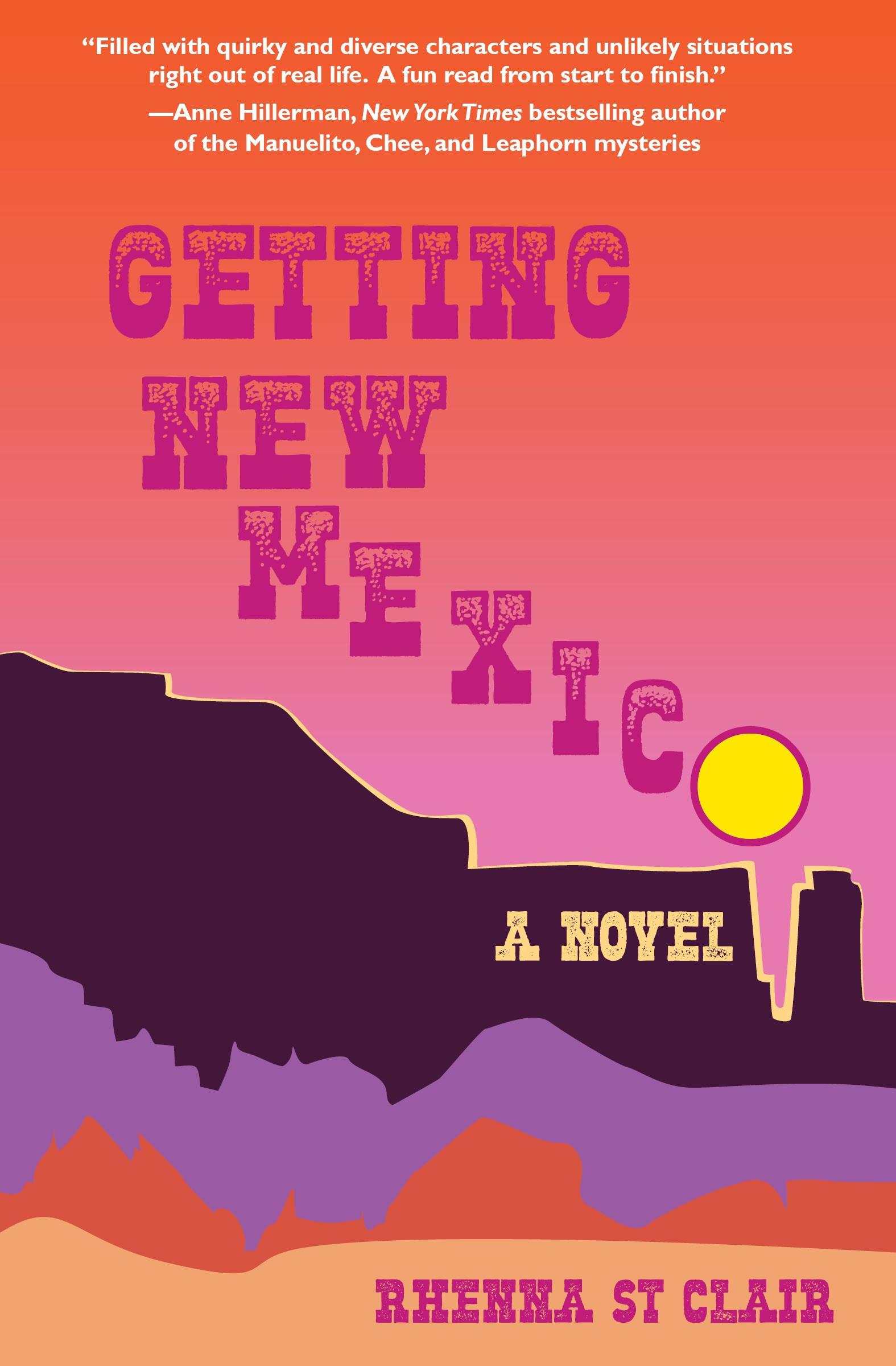
‘Getting New Mexico’ by Rhenna Saint Clair wins New Mexico-Arizona Book Award for Fiction

I’m so excited to share that a lovely friend on mine was recently recognized for her wonderful book!

“Part love story and part comedic hero’s journey, the story is filled with quirky and diverse
characters and unlikely situations right out of real life. A fun read from start to finish.”
—Anne Hillerman, author of the Manuelito, Chee and Leaphorn mysteries.

Getting New Mexico by Taos, New Mexico, author Rhenna St. Clair has won the New Mexico-Arizona Book Award for Fiction, presented by the New Mexico Book Co-Op.

A comic novel about second chances, redemption and finding latein-love love, Getting New Mexico tells the story of Aaron Schuyler, a drunk, cheat, exploiter and — worst of all — a lifelong New Yorker, whose life and character is transformed by the quirky, anti-elitist culture of New Mexico.

After his alcoholism and wayward behavior lose him his family, livelihood and home, Schuyler is forced by his formidable Winston Churchill-worshipping mother to move to Santa Fe. Schuyler finds himself in a culture where self-reliance and compassion counts more than power or status. Stripped of his former wealth and reduced to wearing clothes from Walmart, Schuyler finds that people no longer excuse his bad behavior. With his survival depending on keeping a real job, Schuyler is forced to develop new habits of responsibility and sobriety.

Along the way, Schuyler meets unconventional people unlike any he’s ever known — the enigmatic Indian artist Lone Goose; his aloof landlord who was the lover of Schuyler’s beloved uncle; the blue co llar Sam’s Club workers who accept him as one of their own; and above all, the beautiful and no-nonsense Anita Chatterjee, HR director at Sam’s Club, with whom Schuyler is immediately smitten. For the first time in his life, Schuyler wants to be a better person — and shaking scorpions out of his boots seems like a fair trade.

Upcoming Book Signing

I will be signing copies of my award-winning novel, Getting New Mexico, at Amy’s Bookcase in Farmington, New Mexico on Saturday, November 27 from 10:00 a.m. to 12 noon.

Getting New Mexico was a winner in fiction, and was a finalist for Book of the Year.  I hope to see you at Amy’s!

About the Award and Author

New Mexico Book Co-Op is New Mexico’s largest not-for-profit volunteer organization serving authors and publishing professionals, the New Mexico Book Co-op numbers over 1,200 participants. Since 2004, the New Mexico Book Co-Op has executed its mission to showcase books, authors, presses, and related professionals; to promote literacy; and to raise public awareness of quality books produced in the Southwest. In 2007, the Book Co-op launched an awards program for excellence in books, which is now one of the largest and most prestigious programs in the Southwest, attracting entries from across the region as well as from major national presses.

Rhenna St. Clair, a Portland, Oregon, native, arrived in New Mexico in 1992. Fascinated by the beauty of the land and its history, the archaeological sites and the mix of cultures, she “can’t imagine living anywhere else.” A retired acupuncturist and Doctor of Oriental Medicine, St. Clair has traveled in China as well as in India and other parts of Asia. She now resides in northern New Mexico. Her poetry has been published in Perspective(s) Magazine, the literary journal of San Juan College. Getting New Mexico is her first novel.

Storytelling: Narrative Modes

Narrative modes are individual elements used to relay a story to the reader, and include dialogue, action, description, exposition, thought and scene.

Dialogue

Dialogue is the talk that is exchanged between characters. It is spoken communication and is punctuated with quotations. Dialogue can be used to impart information to the reader, show a character’s personality and unique qualities, or progress the story.

Action

Action is events portrayed as they happen in a story. Action takes time to develop and happens in a specific place at a specific time.

Action is not a “report” of something that happened. It should be described “blow-by-blow” and not as a summary. Action should have meaning and purpose. It should serve to progress the story in some way.

Description

Description is details about how something, a place, or a person looks, behaves, or functions. Description should always have purpose and not be superfluous filler. It should develop setting, characters, situation, and time period.

Description should not be self-serving or irrelevant to the situation or story. It should help orient readers in the scene. Only give the reader enough description to make sure they can accurately picture the image you want them to picture. Leave the rest to the reader’s imagination to fill in.

Exposition

Exposition is the telling of the story through the act of relaying information. It is used to explain, transition between scenes, and offer narrative summary in order to skip details of unimportant but necessary events such as average day-to-day activities like hygiene or traveling to and from locations.

Too much exposition or exposition instead of showing how a character experiences an event is referring to as “telling.” Not every part of the story should be told as exposition.

Thought

Thought, or internal dialogue, is character self-talk or the inner thoughts of a character. It may be only thoughts, or actual talk (self encouragement or disparagement) that a character tells him or her self.

In third person narration, thought is italicized to mark it as different from dialogue. First person wording (“I”) is also used in thoughts. In first person narration, thought is woven into the exposition and narration.

Scene

Scene sets the stage for a particular part of a story or event. It informs the reader of the situation the story section will take place in and offers pertinent details that help develop or provide context for the events taking place.

Special attention should be paid to the opening and closing of each scene so it does not begin or extend beyond what is relevant.

Choosing Which Mode(s) to Use

Every story has a unique balance of narrative modes based on which ones create the most appropriate feel. Modes should be varied. Stories that rely to heavily on one or a select few become monotonous.

Vary modes used to open and close scenes. Break up big chunks of dialogue with action. Avoid long sections of thought. Space out action scenes to give readers a chance to reflect and anticipate what comes next. Keep description to what is relevant and helps develop the story, setting, or characters.

Storytelling: Elements of Narrative Voice

There are three elements of narrative voice that can impact the way a story is told.

Attitude

Attitude has to do with emotion, values, beliefs, worldview, and feelings about a particular person or situation. The attitude of the narrative voice reveals how the narrator speaks, the narrator’s body language, his or her reactions, and the actions taken in a specific situation.

Attitude adds uniqueness to the narrator’s voice and provides deeper characterization. Consider how the phrase, “I can’t believe you two met online!” could change depending on who says it. A friend of the couple who is of a similar age and understands that various facets of online dating might say it with pleasant surprise, happy that their story worked out. An older relative who distrusts the internet might say it with derision and eye the boyfriend/girlfriend skeptically. In both cases, the reader is given further insight into the speaker.

Tone

Tone isn’t just what is said but how something is said, and it can completely change the meaning of the actual words. The phrase, “I’m sure you could,” can be supportive and kind when said in a soft and loving tone, or snarky and dismissive if the “sure” is emphasized in a spiteful tone followed up by an eye roll or huff of annoyance.

Speed of speech, loudness or quietness, word choice, emotion behind words, and physical actions accompanying words all affect tone. Keep in mind that not all body language and connotations are universal, so make sure that what you’re trying to convey with tone is understood by most readers.

Personal Style

Personal style (of the narrator not the writer) includes vocabulary, sentence structure, grammar and technical aspects, cadence, and personal preferences. This can be developed for each character to highlight uniqueness.

Be careful not to over do it with too much slang, jargon, or colloquialisms that reading the narrator’s dialogue or thoughts becomes a chore for the reader. Give just enough that the voice is recognizable to the reader when you switch narrators.

Storytelling: Narrative Tense

Narrative tense tells the reader WHEN a story is taking place, such as present or simple past tense.

This does not necessarily limit verb tense entirely, but it means a large portion of the story relates events in that tense.

How to Choose the Right Narrative Tense

What narrative tense a story is told in can greatly affect how events are related and how easily a reader can connect with the storytelling. Consider each tense carefully before choosing the best fit for your story.

Present tense:

Present tense tells the story as if it were currently happening. This provides immediacy for the reader. It is, however, less common and requires an adjustment period for readers, and some readers dislike it regardless of the story or characters.

Using present tense can make the right story seem more unique or novel, when done well. It creates a level of intensity that can be hard to achieve when using past tense because the reader feels as though they are experiencing or watching events in real time more easily.

Believability, however, can be more difficult because the writing has to convince readers that the events could be happening right then.

Simple Past Tense:

Simple past tense tells the story as though it has already happened.It is the most common tense and is easily accepted by readers. Because it is so common, it requires no adjustment period for readers to acclimate to the style. It’s also accepted in most genres.

It does create more distance between character and reader, because the events have already taken place. That distance can be a good thing for particularly intense subject matter. Some readers simply do not want to feel they are in the story as it is happening, as with present tense, and like having the distance.

Other Tenses:

There are three other narrative tense, which include past continuous, past perfect simple, and past perfect continuous. These tense, however, are not typically used to write an entire story or novel, but are used in particular instances when they are needed.

Past continuous describes action in progress, such “They were walking.”

Past perfect simple describes action that occurred before a character entered the scenes, such as “They had walked.”

Past perfect continuous describes action in progress that occurred as a character entered a scene, such as “They had been walking.”

While it is important to know these tenses and use them appropriately, they are not typically a factor in choose the narrative tense for an entire story or novel.

Storytelling: Second Person POV

Second person point of view is the least most commonly used point of view in fiction.

Second person POV is written in present tense and addresses the reader directly, using the address of “You.”

This POV makes the reader the protagonist. The narrator often uses detailed description, shares psychological insights, and tries to anticipate reader reactions.

This in uncommon in teen or adult fiction and is mainly used, though there have been authors who have used it successfully.

Advantages and Disadvantages of Second Person POV

Advantages of second person are limited. It is very difficult to do well and most readers find it jarring and difficult to connect with while reading.

One advantage is that you can create a different feel to a story, and can speak to the reader directly. This story has to be a good fit for this type of narration.

The disadvantages are more prevalent, partly because this style of narration can feel too personal. It can give a juvenile feel to a story if not done well.

Second Person POV Considerations

Before committing to a whole novel in second person, try writing a single scene and getting feedback from other writers and target readers.

Study those few examples of well written second person POV stories, such as “Bright Lights, Big City” by Jay McInerney.

New Release: Memory’s Edge 2

It’s taken me years longer (literally) than I planned to finish this book and get it published, but it’s finally available! The second part of the Memory’s Edge Duet completes the series!

Memory’s Edge Series

PART TWO

Most people only have one life-changing experience, but John and Gretchen are on round two of having their lives sent into utter chaos.

After a year of living with Gretchen after being attacked and left for dead with no memory of his former life, John’s memory returns when his wife and children find him. Leaving Gretchen weeks before their planned wedding breaks both their hearts. Being reunited with his family is a balm to that loss, but John quickly realizes the old adage that you can never go home again is even truer when you still don’t remember huge sections of your former life. A spotty memory compounds family infighting, a risk of financial ruin, and having no idea how to step back into a marriage that is complicated by his lingering love for Gretchen.

Even though Gretchen was the one to release John and step aside, going home to her friends and family and the curiosity and pity of an entire community quickly overwhelms her. Friend and neighbor Carl has been in love with Gretchen nearly since the day they met. She knows he would be more than willing to help her forget the pain of losing John, but diving into a new relationship is the last thing Gretchen needs. Feeling lost, broken, and confused leaves Gretchen floundering to figure out how to move on.

As they both face starting over, again, the pull to fall back into the familiarity of each other’s arms weighs heavily against facing the struggle to move forward.

Memorys Edge Maybes

Storytelling: Third Person POV

Third person point of view has four variations.

Third person omniscient has an all-knowing narrator who tells the story. The narrator can share the thoughts and feelings of all characters at any point in a scene and knows information that the characters do not.

Third person objective has a narrator who can only tell the reader things which could be recorded by a camera or microphone. The narrator cannot share thoughts or feelings of the characters, and cannot reveal information to the reader that is not communicated, discovered, or shown directly by a character.

Third person limited has a narrator who tells the story from the perspective of a single character at a time. The perspective can switch to another character in a different scene. The narrator is limited to sharing what the character sees, hears, experiences, etc.

Third person deep tells the story in the hero’s voice, rather than the author’s voice. The narrator can share internal thoughts and feelings of the character, but if limited to only that character’s experiences.

Advantages of Third Person Omniscient

The story can be written as an onlooker watching the full story unfold.

You can add contrasting viewpoints with other characters, but you cannot “head hop,” or bounce between characters’ thoughts and experiences within the same scene. This can give a reprieve to the reader and allow them to see another side of the story.

You can expand the scope of the story by moving between settings and viewpoints.

You aren’t limited to characters in the story when choosing a narrator, which can provide a unique perspective.

It allows the narrator to share his or her own views, but don’t slip into second person to do so.

Disadvantages of Third Person Omniscient

Disadvantages center around the confusion this POV can create when not done with attention to detail. If narrators don’t have a distinct voice, readers may be confused on who is narrating or which character knows what.

Switching to other characters can diffuse the tension or excitement when not planned well.

It’s easy to write as the author instead of the narrator.

It can be more difficult to forge a connection with readers if it comes off as too distant or impersonal.

Advantages of Third Person Limited/Objective

It attempts to combine the best of first and third person omniscient.

The limited/objective POVs allow writers to more deeply explore the narrator and forge a stronger connection with the reader without asking them to live out a story with the narrator.

Disadvantages of Third Person Limited/Objective

It limits you to choosing a character as a narrator and limits you to the narrator’s thoughts and experiences.

The distance third person creates between the story and the reader can be an advantage or disadvantage, depending on the story. Some stories may be too raw or personal and distance is needed to allow the reader to remain at a certain comfort level. However, if in order to fully understand or experience a story, the reader needs to be enveloped in it, the distance of third person may prevent that.

Advantages of Third Person Deep

The biggest advantage of the deep perspective is that is attempts to remove distance between narrator and reader by getting inside the character’s head and experiences.

The reader can experience more fully what the narrator is thinking and feeling.

It feels more like first person to a reader, but uses third person pronouns, which can be important in following genre conventions.

Disadvantages of Third Person Deep

The main disadvantage is that this is a challenging POV to write and is still gaining traction in some genres.

Storytelling: First Person POV

Narrative point of view is the perspective through which a story is communicated. If you want to tell the story from the direct perspective of the main character or an observer, first person might be the right POV.

First Person POV

There are two variations of first person POV.

First person protagonist is when the character narrates his or her own story. This is very common in popular fiction. This allows the reader a close, personal look into the character’s experience, thoughts, and emotions.

First person observer is when a secondary character tells the main character’s story, such as Dr. Watson narrating Sherlock’s Holmes cases. This is less common in modern popular fiction, but is still used by some writers. This is a useful style when you don’t want the reader to be directly inside the main character’s mind and when the story is better served being told by someone who can somewhat objectively tell the main character’s story.

Advantages of First Person

It feels natural to the reader, because it’s how we speak about our world and experiences to others in real life.

Dealing with only one narrator’s mind can also be easier for the writer than writing multiple narrators. It is also usually easier for the reader to follow the story and keep track of events.

It also creates a unique and distinctive internal voice. Being in only in one character’s mind at a time makes it easier to “stay in character” as well. This is a popular POV for new or young writers for that reason.

Readers also get to experience the story vicariously more easily in first person, which may or may not be a benefit to the story and should be a factor in considering what POV to use.

There is also opportunity to create an unreliable narrator, however, this is a very challenging character to write and must be well planned from the beginning to be successful.

It is much more intimate and can fully immerse a reader in a story, which might be too much for some stories that have triggers or are highly intense or emotional.

Disadvantages of First Person POV

Writers are limited to writing only about what the character can see, know, or hear. This makes it difficult to hide things from the main character, or to reveal information to the reader without the main character knowing as well.

The narrator must be in every scene, observing and participating in the story. This limits what scenes the reader can observe and what information the reader is privy to.

Minds of other characters are off limits, as is their knowledge about the story, unless directly shared with the narrator in some way.

Storytelling: Narrative Mode and Point of View

This writing craft series will focus on choosing the right Narrative Mode and Point of View.

Telling the right story means telling it from the best POV and with the best narrative modes.

What is Narrative Mode?

Narrative Mode and Narration are easy to confuse.

Narration is the use of commentary to convey a story to an audience.

Narrative Modes in fiction are the methods used to tell a story. Methods that are commonly used include narrative point of view, narrative tense, and narrative voice. This series will delve into each mode, beginning with the one that writers and readers or most familiar with, Point of View.

Narrative Point of View

Narrative POV links the narrator to the story. It reveals who is telling the story and what their relationship is to the story events and characters.

The narrator is often a character, but can also be an unknown observer who conveys thoughts or opinion, or a completely unknown observer who only relates the events without additional commentary.

Writing from the point of view of a character is very common in modern popular fiction, but telling a story from an observer’s perspective is still used, though it is seen more often in literary fiction. It is not often a reader comes across a contemporary book written from the perspective of an observer who offers no commentary.

Point of View

When we talk about point of view, what we’re really discussing is how and by whom the story is being told. Narrative point of view is the perspective through which a story is communicated to the reader, and it can great affect how a story is told and how a reader connects with the story and its players.

There are multiple point of views through which to tell a story, including first person (protagonist or observer), second person (the reader is the character and is addressed directly), and third person (omniscient, objective, limited, and deep).

Each type will have a different impact on the story, including how close a reader can get to the characters, what limitations a particular POV places on storytelling, and what the reader can know through the character.

In the next several posts, I’ll break down each of these point of views and their advantages and disadvantages.