My characters were not who I thought they were…
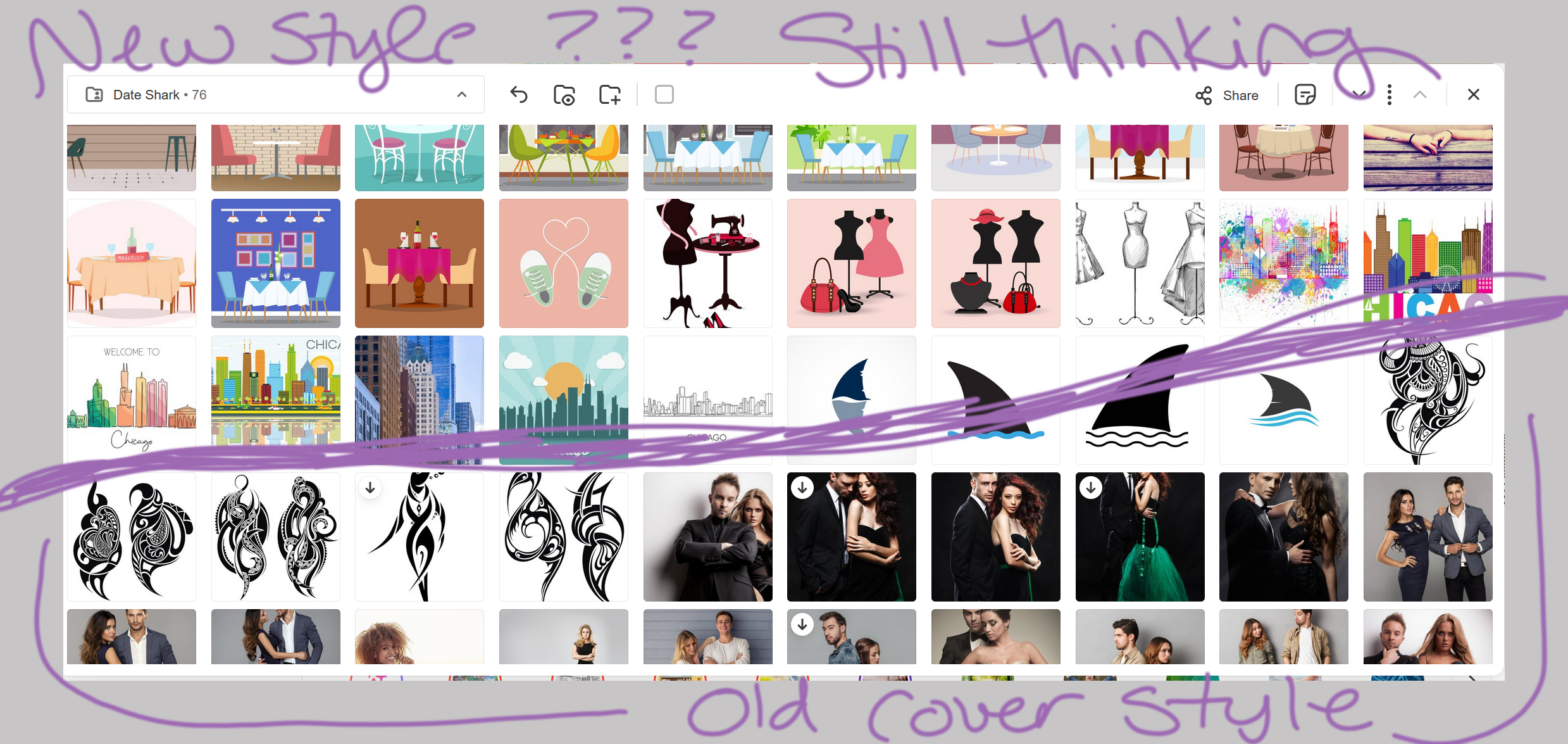
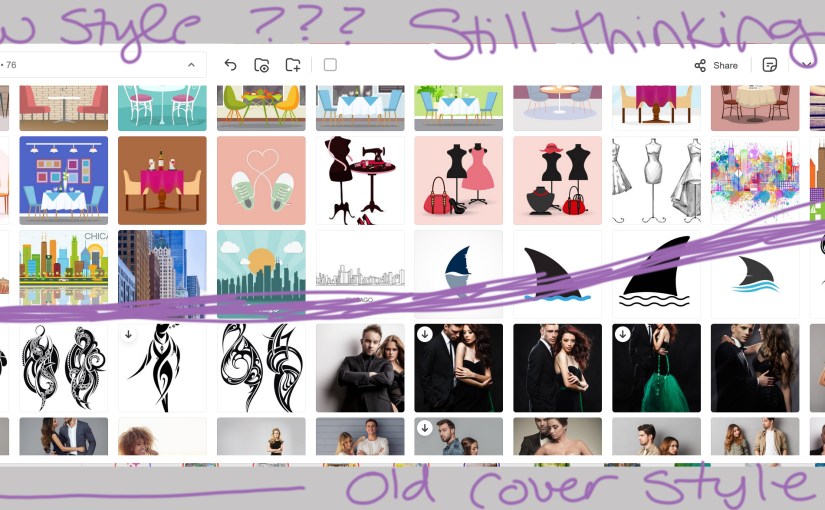
I recently started revising Date Shark as part of my plan to overhaul my previous books before republishing under my married name (DelSheree Spinner) and my new publishing company (DelSheree Press LLC).
Date Shark seemed like a good place to start because it’s romance, which I have a better sense of how to market, it’s a complete series, and it’s had good response over the years so I thought it would probably need the least amount of work.
I’m about halfway through the first book, Date Shark (which will be getting a title update once I figure out what exactly that will be), and it did not take more than a page for me to realize I was way wrong on the whole “least amount of work” idea. The story structure is there and won’t require any major changes, but the characters are a different story.
They are not who I thought they were.
Let’s start with Leila, who has some issues but less so than Eli. I remember writing Leila to be sweet, naive, lacking in confidence, and talented and hardworking.
Some of that remains true looking back at her about 10 years later. What reads completely differently to me now is that she seeks out people who tell her who to be and how to live and she takes their advice with too little thought.
This creates stark inconsistencies in her character over the first half of the book. She’s eager to improve herself but doesn’t think through the suggestions she gets and allows herself to be bossed around and manipulated. It painted those as positive characteristics without meaning to. She’s supposed to be the heroine of her story, but others are driving the plot.
My main revisions with her character so far are to make her more thoughtful, even with her early naivete and low self-image. I know from the beginning that her character arc needs to involved recognizing when others are pushing her to bend to their will and plans and develop strength to stand up for her needs and desires. The area where she bends and wobbles in the early chapters are intentional now, allow Leila to learn from mistakes, not me mistaking gaslighting for compromise.
Who I remembered Eli being was charming, caring, a bit obsessive thanks to some personal demons, but a near-perfect best friend with the potential for more.
Upon this most recent reading, I realized he was basically none of those things. He was manipulative from just about page one, controlling, demanding, sneaky, and intrusive. I was genuinely shocked to realize I had written a character that was so unlike what I was trying to accomplish. My view of relationships was so skewed at that time that I didn’t see how un-Prince Charming Eli was behaving.
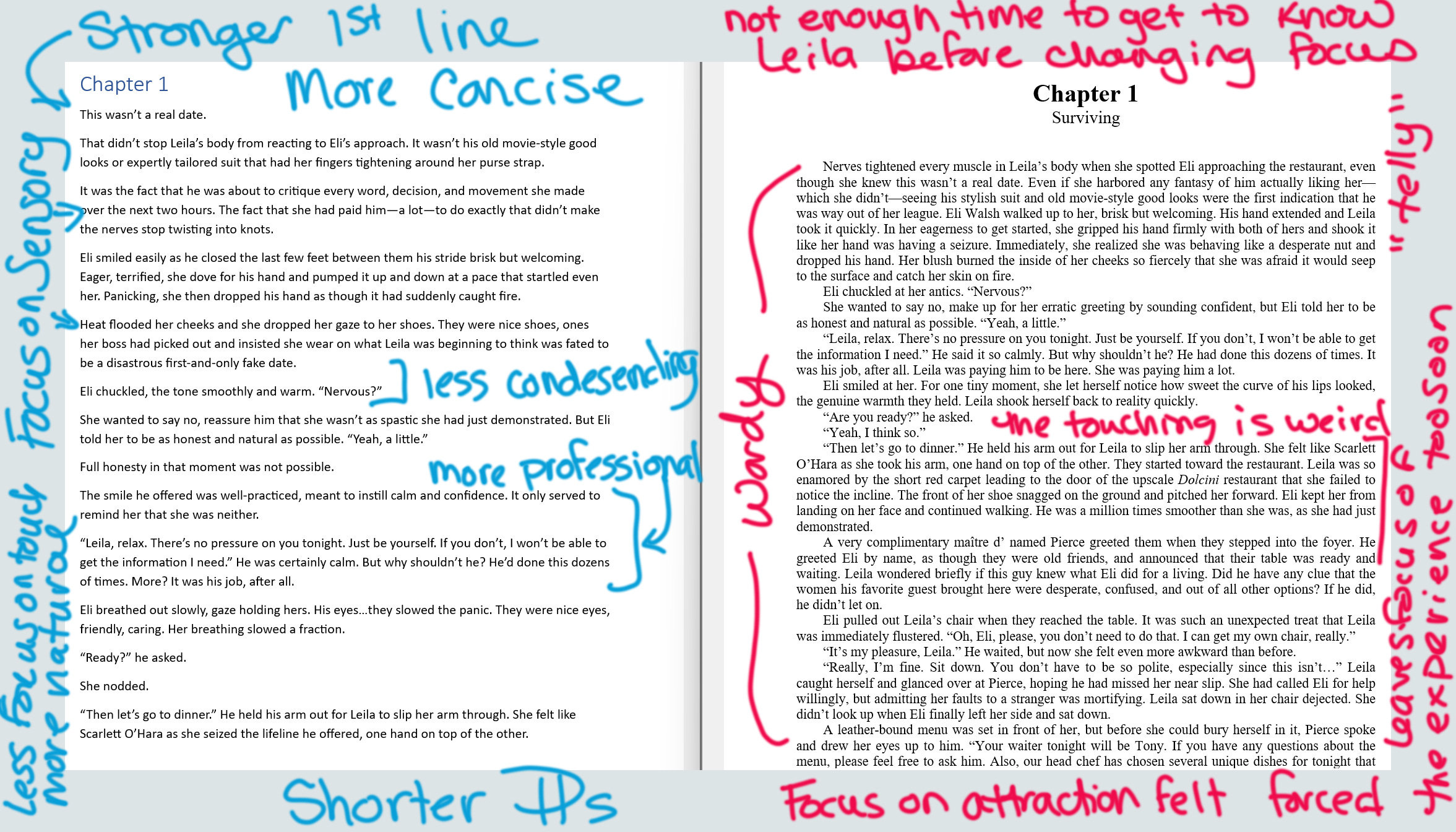
There was a scene early in the book when they meet to discuss their initial “fake” date where Eli basically diagnosis her dating life troubles. She is understandably anxious and demoralized in this scene after he’s laid out everything she did that could set off warning bells for a date. It’s forgivable that she doesn’t speak the thoughts in her head that explain her intentions or contradict the man she hired to provide advice for improvement. That’s part of her growth arc.
What’s not forgivable is how Eli attempts to manipulate the situation more than once through touch and by telling her what to do even after he has admitted to himself that he doesn’t understand why she came to him. He wants to manufacture ways to spend more time with her, claims it’s to help her grow under his tutelage, yet almost withholds an invitation from a friend that would give her an opportunity to test out his advice purely out of jealousy.
I was so unhappy with this scene that I had to step away to think about it before I could begin revising. I narrowed down what was bothering me most about the scene to Eli’s manipulative behavior. I despise manipulation. I know exactly how detrimental it is to self-worth and relationships. If I wanted readers to believe this relationship could last, it couldn’t be based on manipulation.
So, I cut the touching. I’ve cut quite a bit of touching so far. That may seem weird for a romance novel, but it wasn’t the right kind of touching. It crossed professional boundaries in ways I hadn’t recognized before and now created an icky feeling when I read it. Yes, Eli is struggling to balance his attraction to Leila and his desires to touch her with his role as a mentor of sorts, so his internal struggle remains at the forefront of his thoughts. That’s where it needs to stay, though.
I also went line-by-line reevaluating his dialogue and Leila’s responses. I change what came off now as commands to suggestions or recommendations, things she might consider trying. I made him more honest about the limitations of his advice and had him ask more questions to increase his understanding. This helped develop the scene into more of a conversation than a patriarchal talking down session.
Eli still doesn’t come off as perfect in the scene, but that’s now on purpose. I highlight his internal flaws elsewhere to show the reader where his improvement path leads. He doesn’t know how to manage the emotions he feels for Leila, particularly in light of his history with his mother. He has to battle the desire to maintain control over his life while being dragged toward opening up to someone he cares about. He’s terrified of the pain that might bring.
I’d originally used the tagline “When it comes to choosing between obsession and passion, some lines should be crossed.” This completely missed the point of Eli’s growth arc. He’s not obsessive in his personal life nor his pursuit of Leila.
His life once spun completely out of control because of someone else’s choices and he coped by taking control of everything he could. It makes him successful in his professional life, but has kept him from having any meaningful romantic relationships. He sees a possibility of breaking out of that pattern with Leila, but it’s terrifying and selfish to put his needs before hers.
Revising the first half of this book has really helped me solidify who these characters are, what growth is needed to achieve the right ending, and how I can more accurately portray them to the reader.
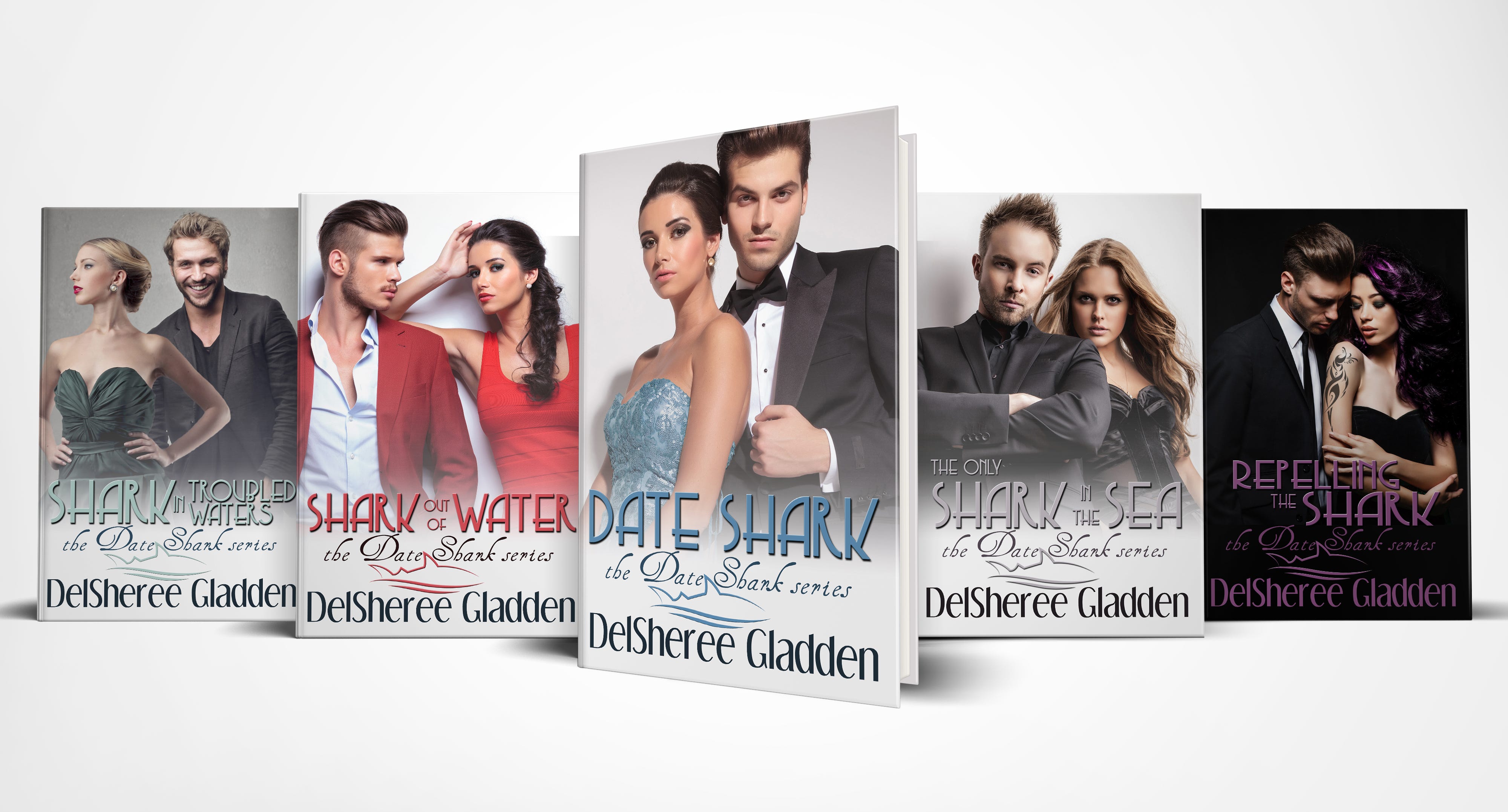
A little relevant history with this book: it was the first non-paranormal book I wrote and I wasn’t sure if it was any good. It was meant to be a standalone and I didn’t send it to beta readers or friends before submitting it to a publisher that was interested in my work. The publisher offered a contract and then I didn’t hear from them for months. When I asked about editing, they said it was so clean it didn’t need anything and had already been moved on to formatting. They were way wrong on that, even before I realized how off-base the characters were. Reviews frequently mentioned poor editing. Even when I got my rights back and re-edited it, the character problems were still lurking. This book really never went through a full editing process, and it clearly needed it.
I started revisions knowing I wanted to touch up the characters and relationship arc. I seriously underestimated what that would require, but having that focus has been very helpful in guiding me. If I find typos, I of course fix them, but I really like the idea of editing for something specific and not just “editing.” I’m finding that I am much more productive and zeroed in on specific goals with this style of editing. I’ll take this approach into revisions on my other books as well.
I’ll wrap up with a note about the series, which I’m sure I’ll revisit in the future as I continue working on this series. A problem with read-through on this series I noticed when analyze sales data for the last 15 years was that of my main series, this one had the lowest read-through rate. Individual books had good reviews, so this puzzled me at first. What I realize now is that across the series there is inconsistency in the spice level, the tone, and the focus of the romances.
As I work on the series as a whole, another editing goal is to improve consistency across all five books so reader get a good sense of what the series is in this first book and that is delivered across the full series. This wasn’t something I really thought about while writing them, but I’m taking a more business-minded approach to my series while still making sure the books stay true to the characters and story overall. It will be an interesting balance to strike.